Showing posts with label #IraqiDinar
#Frank26
#DinarRV
#MiddleEastConflict
#StraitOfHormuz
#IraqEconomy
#GlobalOilMarket
#CurrencyReset
#EconomicUpdate
#Geopolitics. Show all posts
Showing posts with label #IraqiDinar
#Frank26
#DinarRV
#MiddleEastConflict
#StraitOfHormuz
#IraqEconomy
#GlobalOilMarket
#CurrencyReset
#EconomicUpdate
#Geopolitics. Show all posts
Wednesday, March 4, 2026
THE FRAMEWORK IS MEETING WITHOUT MALIKI: ACCELERATING GOVERNMENT FORMATION AND SECURING EMBASSIES – URGENT
THE FRAMEWORK IS MEETING WITHOUT MALIKI: ACCELERATING GOVERNMENT FORMATION AND SECURING EMBASSIES – URGENT
The Coordination Framework held its periodic meeting No. (264) at the Government Palace in Baghdad, on Tuesday afternoon, March 3, 2026, to discuss national, regional and international developments, in a meeting that witnessed the absence of the leader of the State of Law Coalition, Nouri al-Maliki.
In a statement received by Al-Sa’a Network, the participants stressed “the need to expedite the completion of constitutional requirements, particularly the formation of a government that serves the national interest and strengthens political consensus,” emphasizing “the importance of reaching a national consensus that preserves the unity and stability of the country.”
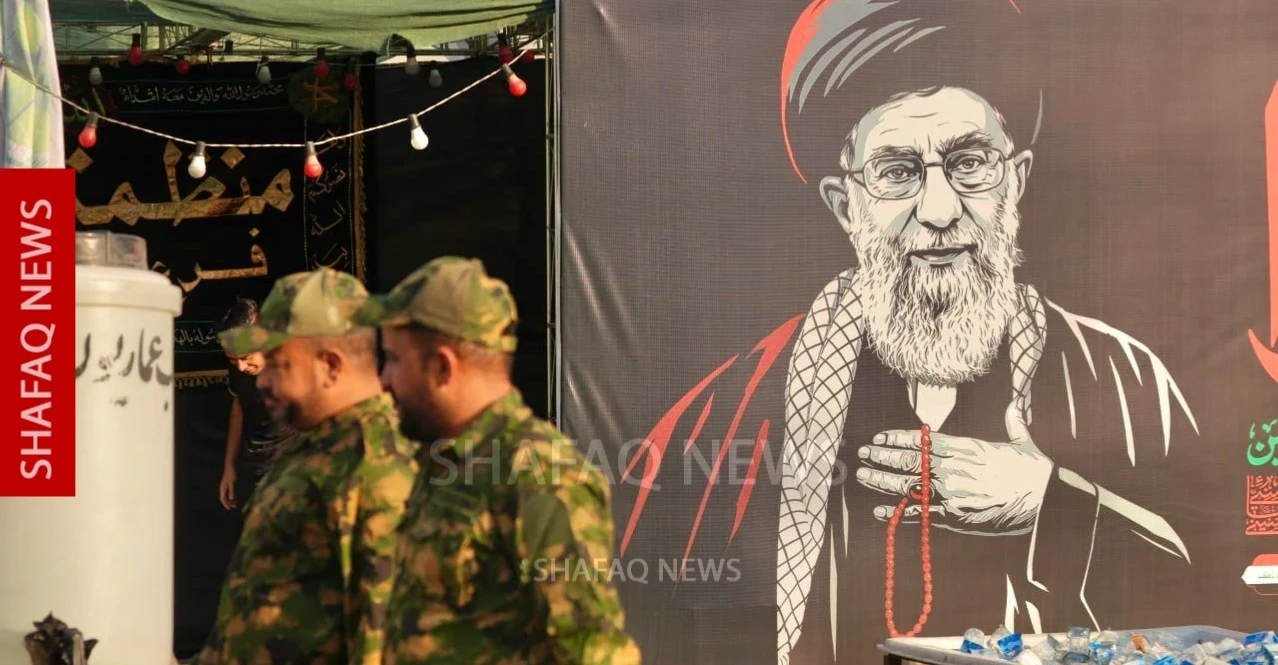
The framework praised what it described as “popular condemnation of the crime of targeting Imam Khamenei,” calling for “expressing grief and solidarity with the Iranian people within the legal frameworks and freedom of expression.”
He also renewed his support for the government and security forces in all their formations, stressing “the need to preserve sovereignty, enforce the law, and protect public and private property, in addition to providing protection for diplomatic missions and embassies, in light of the current security tensions.”
The framework called for “an immediate halt to what it described as aggression against the Islamic Republic, and called on international bodies to assume their responsibilities in supporting stability and security in the region.”
The stormy meeting of the Coordination Framework comes at a highly sensitive political moment, following an article by the head of the Supreme Judicial Council, Judge Faiq Zaidan, which reopened one of the most controversial files since 2005, namely the interpretation of the concept of the “largest parliamentary bloc” contained in Article (76) of the Constitution.
In 2010, the Federal Court interpreted that the largest bloc could be formed after the election results were announced through alliances within the House of Representatives, not necessarily the list that won the largest number of seats. This interpretation later became a point of frequent political conflict, as it is directly linked to the process of assigning a candidate to form the government.
In his article, Zaidan criticized what he described as the flaws of the previous interpretation, considering that it contradicted the apparent meaning of the text and weakened political stability. He proposed three paths for addressing the issue: an explicit constitutional amendment linking the largest bloc to the electorally winning list, amending the House of Representatives law to establish the definition of the bloc in the first session only, or the Federal Court reconsidering its previous interpretation
.
This proposal coincided with escalating controversy within the framework regarding the nomination of Nouri al-Maliki for the premiership, amidst political objections and pressing regional and international circumstances.
According to reports, any amendment or reinterpretation of the concept of the largest bloc could completely rearrange the landscape, especially if the right to form the government is granted to the electorally winning list, which could reopen the door for the current Prime Minister, Mohammed Shia al-Sudani, whose coalition won the largest number of seats.
Thus, the debate is no longer purely legal, but has become intertwined with the balance of power within the Shiite political establishment, and with the calculations of the next stage, in light of a clear conflict between those who adhere to the 2010 interpretation and those who push for readjusting the constitutional equation in a way that redefines the “largest bloc” and changes the course of government formation.
🚨 Frank26 Iraq Dinar Update: Middle East Conflict, Strait of Hormuz Tensions & What It Means for the Iraqi Dinar
The latest commentary from Frank26 presents a comprehensive perspective on the evolving geopolitical and economic landscape involving Iraq, Iran, and the United States.
The March 2, 2026 discussion blends spiritual reflection, geopolitical analysis, and economic observations, particularly focusing on the pressures currently affecting the Iraqi dinar and the broader Middle East.
Below is a structured breakdown of the key developments discussed and what they could potentially mean for regional stability and currency markets.
Spiritual Reflection and the Beginning of the Broadcast
The presentation begins with a prayer emphasizing faith, patience, and reliance on divine guidance during uncertain times.
Frank highlights 2026 as the 250th anniversary of the United States, yet stresses that spiritual awareness and reflection are more important than political celebrations during turbulent global events.
This opening sets the tone for a discussion that combines faith, geopolitical analysis, and financial insights.
Escalating Middle East Conflict
One of the central themes in the broadcast is the rapidly evolving military situation involving Iran and the United States.
According to the commentary:
U.S. forces reportedly destroyed nine Iranian naval vessels
Iranian naval headquarters were allegedly targeted
The operations are framed as efforts to stop Iran’s nuclear advancement
These claims, while discussed within the commentary, should be considered analysis and opinion rather than confirmed military reports.
The situation reflects broader tensions that have long defined the geopolitical dynamics of the Middle East.
The Strategic Importance of the Strait of Hormuz
A major point of discussion is the Strait of Hormuz, one of the most critical oil shipping lanes in the world.
Key claims mentioned include:
Iran allegedly attempting to close the strait
Potential global oil supply disruptions
Economic losses estimated around $280 million per day
However, according to the commentary, ships are still navigating the waterway cautiously, often escorted by U.S. forces.
Because approximately one-fifth of global oil supply passes through the Strait of Hormuz, any disruption can have serious implications for global energy markets.
Political Instability Inside Iraq
Internal political tensions remain another major factor influencing Iraq’s economic environment.
The discussion references the ongoing rivalry between:
Nouri al-Maliki
Mohammed Shia' Al Sudani
According to the commentary:
Sudani reportedly declared himself commander-in-chief of Iraqi armed forces by proxy
Political factions continue competing for control
Militia influence remains a destabilizing factor
These power struggles are widely seen as obstacles to broader economic reforms.
Protests and Militia Influence
The video also addresses violent protests reportedly occurring near Baghdad, particularly around a southern bridge area.
According to the analysis:
Many protests may involve Iran-backed militias
Some demonstrations are described as politically orchestrated
Regional factions are attempting to influence Iraq’s internal stability
Political protests and militia activity have historically been part of Iraq’s complex political landscape since the early 2000s.
Pressure on the Iraqi Dinar
Another major topic discussed is the continued pressure on the Iraqi currency.
The Iraqi dinar is reportedly facing challenges due to:
Black market currency trading
Political instability
Regional conflict concerns
The commentary emphasizes that the current weakness of the dinar is not necessarily caused by war damage but rather by currency manipulation and informal trading markets.
Bartering Suggested as Temporary Economic Strategy
One of the more practical suggestions offered in the broadcast involves adopting bartering systems in times of currency instability.
Bartering allows individuals and businesses to exchange:
Goods
Services
Agricultural products
Labor
without relying on unstable currency values.
Historically, barter systems often emerge in economies experiencing:
Currency volatility
Inflation
Supply disruptions
Oil Prices and Global Energy Markets
Despite fears of dramatic oil price spikes due to the regional conflict, the commentary notes that global oil markets have remained relatively stable.
Economic indicators mentioned include:
| Commodity | Value |
|---|---|
| Gold | $5,385 |
| Silver | $96 |
| Natural Gas | $3.28 |
| WTI Oil | $73 per barrel |
The stability of oil prices is attributed in part to ongoing efforts to maintain shipping routes and energy supply flows.
Estimated Timeline of the Military Campaign
According to the commentary, the current regional military campaign could last approximately:
4 to 5 weeks or longer
The discussion suggests that the United States may be progressing faster than expected in achieving strategic objectives.
However, geopolitical conflicts rarely follow precise timelines, and developments can evolve quickly.
Cultural Reflection and Personal Stories
In a lighter segment of the broadcast, Frank shares cultural insights related to tropical fruits connected to his heritage.
Fruits mentioned include:
Kumquat
Lychee
Cocoa bean
These fruits are discussed in connection with rainforest ecosystems and ancient traditions associated with Aztec civilization.
The segment provides a cultural pause from the intense geopolitical analysis.
Featured Snippet: Why Is the Iraqi Dinar Under Pressure?
The Iraqi dinar is currently under pressure due to:
Black market currency trading
Political instability in Iraq
Regional tensions involving Iran
Economic uncertainty in global energy markets
These factors can influence investor confidence and currency stability.
Q&A: Iraq Dinar and Middle East Developments
Is the Iraqi dinar collapsing?
No official collapse has been confirmed. The currency is experiencing pressure mainly from black market trading and political instability.
Why is the Strait of Hormuz so important?
The Strait of Hormuz is one of the world’s most vital oil shipping routes, with roughly 20% of global oil supplypassing through it.
Are protests in Iraq affecting the economy?
Political protests and militia activities can disrupt economic stability, especially when they affect infrastructure or investor confidence.
Could geopolitical tensions affect oil prices?
Yes. Conflicts in major oil-producing regions often influence global energy markets, although prices may stabilize if supply routes remain open.
Key Takeaways
The March 2026 commentary highlights several interconnected factors shaping the region:
Rising tensions between Iran and the United States
Political instability within Iraq
Black market pressure on the Iraqi dinar
Strategic importance of the Strait of Hormuz
Economic uncertainty tied to global energy markets
While these issues continue to evolve, observers remain closely focused on developments in Iraq’s political leadership and financial reforms.
Stay Connected for More Dinar Updates
📊 BLOG:
https://dinarevaluation.blogspot.com/
📢 TELEGRAM:
https://t.me/DINAREVALUATION
👍 FACEBOOK:
https://www.facebook.com/profile.php?id=100064023274131
🐦 TWITTER / X:
https://x.com/DinaresGurus
🎥 YOUTUBE:
https://www.youtube.com/@DINARREVALUATION
Hashtags
#IraqiDinar
#Frank26
#DinarRV
#MiddleEastConflict
#StraitOfHormuz
#IraqEconomy
#GlobalOilMarket
#CurrencyReset
#EconomicUpdate
#Geopolitics
FRANK26:
Summary of Video Content
The video, dated March 2, 2026, features a speaker known as Frank delivering a detailed commentary on the geopolitical and economic situation involving Iraq, Iran, and the United States. The content is a mix of spiritual invocation, political analysis, and practical advice for those affected by regional instability and currency fluctuations, particularly focusing on the Iraqi dinar.
Key Themes and Insights
Spiritual Opening and Reflection:
The video begins with a prayer and spiritual reflection, emphasizing reliance on God and seeking divine guidance amid the unfolding events in the Middle East. The speaker highlights the significance of 2026 as America’s 250th anniversary but chooses to focus on the “Holy Spirit” rather than secular celebrations.Geopolitical Situation in the Middle East:
- Conflict and Military Actions:
The speaker discusses ongoing military conflict involving Iran and the United States, mentioning that the U.S. has sunk nine Iranian ships and destroyed Iranian naval headquarters as part of a campaign to prevent Iran from advancing its nuclear weapons program. - Iranian Military Leaders Seeking Immunity:
Iranian military factions reportedly seek immunity amid escalating tensions, signaling internal pressures and fears within Iran. - Straits of Hormuz:
There are claims that Iran has closed the Straits of Hormuz, a critical global oil transit point, costing the U.S. approximately $280 million daily. However, the speaker asserts that ships continue to pass cautiously, escorted by U.S. forces, suggesting Iran’s threats outweigh their actual capabilities. - Political Instability in Iraq:
The speaker details internal strife involving Iraqi political figures Maliki and Sudani, with Sudani declaring himself commander-in-chief of the armed forces by proxy amid ongoing power struggles. - Protests and Militias:
Violent protests, especially around Baghdad’s southern bridge, are attributed mostly to Iranian-backed militias rather than genuine civilian dissent. The speaker claims protests in the U.S. are similarly orchestrated by far-left groups and terrorist cells aiming to destabilize.
- Conflict and Military Actions:
Impact on Iraqi Economy and Currency (Iraqi Dinar):
- Currency Devaluation and Black Market Activity:
The Iraqi dinar is losing value primarily due to black market pressures rather than direct war damage. The speaker advises adopting bartering systemsas a practical way for Iraqi citizens and businesses to cope with currency instability until the dinar’s value recovers. - Oil Prices and Economic Effects:
Despite predictions of oil prices soaring above $100 per barrel due to conflict, prices have only risen moderately thanks to U.S. efforts to maintain stability in the region. - Economic Indicators Shared:
Data points include gold at $5,385, silver at $96, natural gas at $3.28, and WTI crude oil at $73 per barrel, with stock market concerns tied to inflation and Federal Reserve policies.
- Currency Devaluation and Black Market Activity:
Military Campaign Timeline and Outlook:
The conflict is expected to last four to five weeks or longer, with U.S. forces reportedly ahead of schedule in their objectives. The speaker compares the prolonged nature of military operations to personal health battles requiring multiple treatments, emphasizing patience and resolve.Social Commentary and Practical Advice:
- Protest Dynamics:
The speaker stresses that many protests are orchestrated events rather than organic public outcry. - Bartering as an Economic Survival Strategy:
Encourages local communities to exchange goods and services directly to mitigate the impact of currency devaluation and black market trading. - Encouragement Amid Hardship:
Calls for patience and faith, reassuring listeners that despite current hardships, the situation will improve.
- Protest Dynamics:
Additional Personal and Cultural Content:
- Frank shares insights into tropical fruits such as kumquats, lychee, and cocoa seeds, connecting these to his Mexican heritage and the Aztec culture.
- He offers a lighthearted and engaging segment on these fruits, linking cultural history to natural products that originate from rainforest regions.
Community Engagement:
Frank mentions a Canadian contact, Dan, offering assistance to audience members, illustrating efforts to provide practical help and maintain community support.
Timeline of Key Events and Statements
| Time Frame | Event/Statement |
|---|---|
| Early March 2, 2026 | U.S. military action destroys 9 Iranian ships and naval HQ; ongoing conflict in Middle East. |
| Morning of March 2 | Sudani declares himself commander-in-chief of Iraqi armed forces by proxy. |
| Throughout the day | Iranian militias cause violent protests near Baghdad bridge; U.S. consulate and embassy closed. |
| Ongoing | Iran allegedly closes Straits of Hormuz, impacting global oil trade; ships continue to pass. |
| Forecast | Military campaign expected to last 4–5 weeks, possibly longer; U.S. ahead of schedule. |
| Economic data shared | Gold: $5,385; Silver: $96; Natural Gas: $3.28; WTI Oil: $73; Inflation concerns noted. |
Quantitative Data Table
| Commodity/Metric | Value | Notes |
|---|---|---|
| Gold | $5,385 | Indicative of market conditions |
| Silver | $96 | |
| Natural Gas | $3.28 | |
| WTI Crude Oil | $73 per barrel | Slightly elevated due to regional tensions |
| U.S. Loss Due to Hormuz | $280 million/day | Estimated cost due to Iranian closure of the straits |
| Duration of Conflict | 4–5 weeks+ | Military campaign timeline according to President Trump |
Key Terms and Definitions
| Term | Definition/Context |
|---|---|
| Iraqi Dinar | Currency of Iraq, currently devaluing due to black market pressures. |
| Straits of Hormuz | Strategic waterway critical for global oil shipments. |
| Proxy | Person authorized to act on behalf of another, used in military command context here. |
| Bartering | Exchange of goods or services without using money, suggested as coping strategy. |
| Militias | Armed groups often aligned with political factions, involved in local violence. |
| ISM Manufacturing Price Gauge | Economic indicator related to inflation and manufacturing costs. |
Conclusions and Recommendations
- The ongoing Middle East conflict is complex, involving military, political, and economic dimensions, with significant impacts on Iraq and Iran.
- The Iraqi dinar is currently weakened, largely due to black market activities rather than direct war damage. A bartering system is recommended as a practical interim solution for Iraqi citizens.
- The U.S. military campaign is progressing faster than expected but is anticipated to last multiple weeks, during which economic hardships will persist.
- Protests and political instability are often manipulated by various factions and foreign interests, requiring critical discernment by observers.
- Economic indicators show mixed signals with inflation concerns but relative commodity stability, influenced by geopolitical events.
- Community support and resilience, grounded in cultural heritage and practical strategies, are emphasized as vital for enduring the crisis.
This summary reflects the video’s content faithfully, emphasizing the speaker’s viewpoints, factual updates, and practical advice without any extrapolation beyond the source material.
Subscribe to:
Posts (Atom)
🇮🇶 IRAQ APPROACHES SEPTEMBER 30: A NEW PHASE FOR STATE AUTHORITY
🇮🇶 IRAQ APPROACHES SEPTEMBER 30: A NEW PHASE FOR STATE AUTHORITY 📰 NEWS SUMMARY Iraq is intensifying efforts to bring weapons under st...
-
Bank appointment for Currency EXCHANGE Instructions/Checklist Bank Name_________________________________________ Bank 800#____________...
-
Reports are rapidly circulating within the currency community that Tier 4B exchanges may be quietly moving into an active preparation phas...
-
🚨 WEEKLY GCR UPDATE – August 3-15, 2025 🚨 Sun, Aug 3: Wolverine confirms 💸 “Money has been deposited into paymasters’ accounts. Everyt...