Sunday, March 8, 2026
THE PATRIOTIC UNION OF KURDISTAN: THERE IS NO JUSTIFICATION FOR DELAYING THE SELECTION OF THE PRESIDENT OF THE REPUBLIC
THE PATRIOTIC UNION OF KURDISTAN: THERE IS NO JUSTIFICATION FOR DELAYING THE SELECTION OF THE PRESIDENT OF THE REPUBLIC.
Ahmed al-Harki, a member of the Patriotic Union of Kurdistan (PUK), confirmed on Tuesday the existence of escalating political activity aimed at resolving the issue of the presidency. He expressed his hope that this activity would translate into practical steps in the coming days leading to the selection of a president.
Speaking to the Information Agency, al-Harki said, “The coordination framework meeting held last Monday discussed this issue frankly,” urging the two Kurdish parties to expedite its resolution. He added that this is a significant indicator, especially given previous reports that some parties within the framework were unwilling to proceed with the matter before Nouri al-Maliki’s nomination for prime minister was finalized.
He pointed out that “the Kurdish forces are now required to take serious and responsible action that would break the political deadlock, accelerate the process of selecting a president, and translate political understandings into tangible reality in the coming phase.”
(Mnt Goat: As we know that the hold up of selecting a Kurdistan president has been done to intentionally delay the selection of Maliki for prime minister. Kurdistan is now waiting for the formal letter stating that the Coordination Framework as withdrawn him and then for the next candidate to be announced, which should be al-Sudani if the ruling of the Supreme Judiciary is enforced. Please see my 3/3/ Newsletter as I described the flow of events leading up the Maliki withdrawal and how it was orchestrate.)
FRANK26 & OMAR: Security Tensions vs. Banking Stability in Iraq
Security Tensions vs. Banking Stability in Iraq
Recent discussions among Iraqi dinar observers have highlighted reports of security tensions inside Iraq, including drone activity in certain regions. However, analyst Frank26 argues that while physical security incidents may occur, the true focus for monetary reform remains the stability of Iraq’s banking system.
A boots-on-the-ground report shared by a contact named Omar described a challenging situation involving drone activity in parts of the country.
According to the report, some of the incidents have occurred in areas around Kurdistan Region and areas near Baghdad, raising concerns among residents about short-term security conditions.
Despite these reports, Frank26 emphasized that the type of security required for financial reforms is primarily economic and institutional stability, especially within the banking sector.
Featured Snippet (Quick Explanation)
Does security instability stop Iraq’s monetary reform?
Short-term security incidents do not always halt financial reforms. Analysts often distinguish between physical security events and long-term institutional stability—particularly within banking systems and government financial structures.
Boots-on-the-Ground Report: Drone Concerns
The report from Omar described ongoing tensions involving drones being launched across certain areas of Iraq.
According to the account:
Drone activity has been reported in the Kurdistan Region
Additional incidents were described near southern parts of Baghdad
Residents have expressed concerns about temporary instability
These types of events highlight the complex security environment that can exist in parts of the Middle East.
Some reports have linked the activity to regional tensions involving Iran, although official confirmations regarding specific incidents are often limited.
Physical Security vs. Financial Stability
Frank26 responded to the report by clarifying an important distinction.
According to his perspective, when analysts discuss “security and stability” in relation to Iraq’s currency reforms, they are typically referring to:
Banking System Stability
The operational strength of Iraq’s financial institutions.
Regulatory Control
Oversight of banking transactions, compliance systems, and anti-corruption measures.
Monetary Infrastructure
Reliable digital systems that support financial transactions and currency management.
These institutional factors are considered critical for economic reform, even when occasional security incidents occur.
Why Banking Stability Matters for Monetary Reform
Modern monetary reform depends heavily on a stable financial system.
Before implementing large financial changes, governments typically ensure that:
Banks can process large transaction volumes
International banking connections are secure
Financial compliance systems meet global standards
Digital infrastructure is reliable
If these systems are strong, economic reforms can proceed even while governments continue addressing physical security challenges.
Technology and Counter-Drone Measures
Frank26 also suggested that security agencies are actively working to neutralize drone threats.
Modern military and defense technology allows governments to:
Track drone signals
Jam communication systems
Reverse engineer captured drones
Develop counter-drone defense systems
According to the commentary, such technological responses could reduce the impact of these incidents relatively quickly.
Why Investors Watch the Bigger Picture
While security headlines can draw attention, long-term investors often focus on broader economic indicators.
These include:
Banking modernization
Oil revenue stability
Infrastructure development
Foreign investment flows
Government financial reforms
These larger trends tend to have greater long-term influence on economic growth and currency stability.
Q&A: Security and the Iraqi Dinar
Q: Do security incidents automatically stop currency reforms?
Not necessarily. Governments often continue economic reforms while addressing security challenges.
Q: What type of stability is most important for monetary reform?
Financial stability within the banking system and government institutions.
Q: Why is Iraq’s banking sector so important?
Banking infrastructure supports currency circulation, international trade, and financial policy implementation.
Q: Are regional tensions common in economic development phases?
Yes. Many emerging economies experience periods of geopolitical tension while continuing to develop economically.
Final Thoughts
Reports of drone activity in areas of Iraq highlight the complex security environment within the region. However, analysts like Frank26 emphasize that banking stability and financial infrastructure remain the primary factors for economic reforms.
As Iraq continues modernizing its banking sector and strengthening financial institutions, observers will likely continue monitoring both security developments and economic progress.
The intersection of these factors will ultimately shape Iraq’s financial future and its role in global markets.
Follow the Latest Dinar Updates
Stay connected with our community for breaking news, analysis, and ongoing updates about the Iraqi dinar.
📊 BLOG:
https://dinarevaluation.blogspot.com/
📢 TELEGRAM:
https://t.me/DINAREVALUATION
📘 FACEBOOK:
https://www.facebook.com/profile.php?id=100064023274131
🐦 TWITTER / X:
https://x.com/DinaresGurus
▶️ YOUTUBE:
https://www.youtube.com/@DINARREVALUATION
Hashtags
#IraqiDinar
#DinarRV
#DinarRevaluation
#IraqSecurity
#MiddleEastNews
#Baghdad
#KurdistanRegion
#GlobalFinance
#ForexNews
#EconomicReform
Frank26
[Iraq boots-on-the-ground report]
OMAR: It's bad over here. Iran is shooting drones all over. The were doing it in Kurdistan now they're hitting in the southern parts of Baghdad. We are under security instability.
FRANK: Yes but that's different. Physical security we will take care of it. What I was talking about [security and stability] of your banks. I'm sorry about the drones. The drones are being reversed engineered. Hopefully in about 3 or 5 days those drones will no longer be a problem.
RIGHTS: KURDISH FORCES MUST QUICKLY NOMINATE A PRESIDENTIAL CANDIDATE TO END THE CRISIS
RIGHTS: KURDISH FORCES MUST QUICKLY NOMINATE A PRESIDENTIAL CANDIDATE TO END THE CRISIS
The spokesperson for the Parliamentary Rights Movement, Miqdad al-Khafaji, confirmed on Wednesday that the country is experiencing a worsening political, economic, and security crisis, stressing that the American-Zionist attacks constitute a serious violation of national autonomy. Speaking to the Information Agency, al-Khafaji said, “The current situation requires a responsible national stance,” adding that “the Kurdish forces must expedite the nomination of their candidate for the presidency to overcome the current stalemate and emerge from the crisis.”
He added that “the delay in resolving this constitutional entitlement negatively impacts the country’s stability and further complicates the political landscape,” noting that “the next phase requires a comprehensive national consensus that prioritizes Iraq’s interests above all else.”
Al-Khafaji emphasized that “protecting national autonomy and confronting external aggression must be the government and parliament’s top priority,” stressing that “nominating the president is a fundamental step in completing the constitutional process and ending the political deadlock.”
MILITIAMAN: How Digital Infrastructure Could Allow a Fast Exchange Rate Adjustment
How Digital Infrastructure Could Allow a Fast Exchange Rate Adjustment
Discussions around the Iraqi dinar (IQD) and potential changes to its exchange rate continue to evolve as Iraq modernizes its financial system.
According to commentary from analyst Militia Man, modern digital banking systems could make a currency exchange rate adjustment far simpler than many people expect.
Rather than requiring a massive physical exchange of banknotes, technological upgrades in Iraq’s banking infrastructure may allow a change to occur electronically and almost instantly across the entire financial system.
Featured Snippet (Quick Answer)
Could the Iraqi dinar exchange rate change electronically?
Yes. Modern banking infrastructure allows central banks to adjust exchange rates digitally. Once updated, the new rate can propagate instantly through banks, financial institutions, and electronic payment systems.
Digital Banking Changes Everything
One of the biggest misconceptions about currency adjustments is the belief that physical banknotes must be exchanged nationwide.
In reality, modern banking systems rely heavily on electronic ledgers and digital transactions.
When a central bank adjusts a rate:
The new value is updated in financial systems
Banks automatically reflect the change
Electronic payments use the updated rate instantly
According to Militia Man, Iraq’s financial infrastructure may already be capable of supporting such a transition.
The Role of the Central Bank
The Central Bank of Iraq manages monetary policy and currency regulation within the country.
If an exchange rate adjustment were to occur, it would likely be implemented through the bank’s digital financial systems.
These systems handle:
Interbank transfers
International settlement networks
Government financial operations
Digital payment infrastructure
Because of this, any official rate change could potentially be applied quickly and efficiently across the banking system.
Why Massive Currency Exchanges May Not Be Necessary
Historically, currency reforms sometimes required citizens to exchange old notes for new ones.
However, modern financial systems reduce the need for that process.
Instead:
Bank balances update digitally
Electronic payment networks adopt the new rate
Physical cash remains usable while gradually circulating
This approach allows financial systems to transition smoothly without disrupting everyday economic activity.
Infrastructure for Large-Scale Transactions
Another point raised in the discussion is that Iraq’s banking infrastructure has reportedly been tested for large-scale electronic transactions.
Financial systems must be able to process:
Millions of daily transactions
Government payment systems
International banking transfers
Currency settlements
If such systems are fully operational, they could support a rapid adjustment to exchange rates.
Market Confidence and Global Investors
Militia Man also emphasized watching where global investment capital is moving.
Large institutional investors typically conduct extensive research before entering or exiting a market.
Indicators that analysts often monitor include:
Foreign direct investment
International banking partnerships
Infrastructure development
Energy sector investments
When large investors maintain their positions, it can signal confidence in long-term economic developments.
Why Global Investors Matter
Major institutional investors—such as hedge funds, sovereign wealth funds, and multinational corporations—often influence economic trends.
Their involvement can help provide:
Liquidity in financial markets
Infrastructure investment
Economic stability
International partnerships
For this reason, analysts frequently track the behavior of large investors to understand the broader financial narrative.
Understanding Market Uncertainty
Even with positive developments, markets always contain uncertainty.
Economic reforms can be influenced by:
Political decisions
Regional geopolitics
Global economic conditions
Energy markets
Because of this, observers often advise watching long-term economic indicators rather than short-term speculation.
Q&A: Iraqi Dinar Exchange Rate Changes
Q: Can a central bank change an exchange rate electronically?
Yes. Modern central banks update exchange rates digitally within financial systems, allowing banks and payment networks to reflect the change instantly.
Q: Would people need to exchange their physical dinar notes?
Not necessarily. In many cases, existing banknotes continue to circulate while electronic systems adopt the updated rate.
Q: Why are digital banking systems important?
Digital systems allow central banks to implement policy changes quickly and efficiently across the entire banking network.
Q: Why do analysts watch big investors?
Large investors often signal market confidence because they invest significant resources after extensive research.
Final Thoughts
As Iraq continues modernizing its financial infrastructure, discussions about the potential for rapid electronic currency adjustments are becoming more common.
If the banking systems are fully prepared, changes in exchange rate policy could theoretically be implemented with minimal disruption.
For now, observers continue watching economic reforms, banking upgrades, and international investment trends to understand the direction Iraq’s financial future may take.
Follow the Latest Dinar News and Updates
Stay connected with our community for updates, analysis, and breaking developments related to the Iraqi dinar and global finance.
📊 BLOG:
https://dinarevaluation.blogspot.com/
📢 TELEGRAM:
https://t.me/DINAREVALUATION
📘 FACEBOOK:
https://www.facebook.com/profile.php?id=100064023274131
🐦 TWITTER / X:
https://x.com/DinaresGurus
▶️ YOUTUBE:
https://www.youtube.com/@DINARREVALUATION
Hashtags (SEO + Viral Reach)
#IraqiDinar
#DinarRV
#DinarRevaluation
#CentralBankOfIraq
#ForexMarkets
#GlobalFinance
#DigitalBanking
#FinancialNews
#IraqEconomy
#CurrencyMarkets
Militia Man
Real effective exchange rate as a simple adjustment can...be simple and electronic. The digital infrastructure ...allows instant nationwide propagation. There will be no need for massive physical note exchanges...The CBI can adjust the rate with minimal friction. The system is already tested for large-scale electronic transactions...
Sadly the scare that we've had, anything can happen still...Pay attention to that but also pay attention to where the money is. The money is the big investors in the world. They're not jumping ship...Keep watching the real story...
Iraq tells US Envoy it seeks to stay out of regional war
Iraq tells US Envoy it seeks to stay out of regional war
Iraqi Foreign Minister Fuad Hussein told the US chargé d’affaires Joshua Harris on Thursday that Iraq is working to avoid being drawn into the widening regional war, according to Iraq’s Foreign Ministry.
He warned that the fighting threatens broader regional stability and said Baghdad is trying to keep the conflict from spilling into Iraq.
Hussein also outlined the war’s potential economic impact on the country and reiterated that Iraq will protect diplomatic missions operating on its territory.
facebook post
Fuad Hussein, during his meeting with the US Chargé d'Affaires, affirmed Iraq's commitment to shielding itself from the repercussions of the war.
Arabic | English
On Thursday, March 5, 2026, Deputy Prime Minister and Minister of Foreign Affairs, Mr. Fuad Hussein, received the Chargé d'Affaires of the Embassy of the United States of America in Iraq, Mr. Joshua Harris.
During the meeting, they discussed developments in the war in the region and its repercussions on the regional situation. Mr. Fuad Hussein emphasized the seriousness of the continued war and its consequences for the security and stability of the entire region.
The minister stressed that the Iraqi government is making continuous efforts to keep the repercussions of the war away from Iraq, and to prevent it from slipping into the cycle of conflict, in order to preserve its security and stability.
The Minister also gave an explanation of the financial and economic effects of the war and its repercussions on Iraqi society, in light of the challenges facing the region.
In a related context, Mr. Fuad Hussein affirmed the Iraqi government’s commitment to protecting diplomatic missions operating in Iraq and ensuring their security in accordance with international agreements and norms.
He also reiterated that Iraqi territory would not be used as a launching pad for any hostile acts against neighboring countries. In this context, he referred to the Kurdistan Region leadership's declaration that the regional authorities would not allow any party to exploit its territory to organize acts of violence against neighboring countries, including the Islamic Republic of Iran.
Fuad Hussein Affirms Iraq's Determination to Keep the Country Away from the Repercussions of War During Meeting with the US Charge d'Affairs
Deputy Prime Minister and Minister of Foreign Affairs of the Republic of Iraq, HE Mr. Fuad Hussein, received on Thursday, 5 March 2026, the Chargé d’Affairs of the Embassy of the United States of America to the Republic of Iraq, Mr. Joshua Harris.
During the meeting, the two sides discussed the developments of the war in the region and its repercussions on the regional situation. HE Mr. Fuad Hussein stressed the seriousness of the continued war and its consequences for the security and stability of the entire region.
HE the Minister emphasized that the Iraqi government is making continuous efforts to keep Iraq away from the repercussions of the war and to prevent the country from being drawn into the circle of conflict, in order to preserve its security and stability.
HE the Minister also provided an explanation of the financial and economic impacts of the war and their repercussions on Iraqi society, particularly in light of the challenges currently facing the region.
In this context, HE Mr. Fuad Hussein reaffirmed the Iraqi government's commitment to protecting diplomatic missions operating in Iraq and ensuring their security in accordance with international agreements and diplomatic norms.
HE also reiterated that Iraqi territory will not be allowed to be used as a launching point for any hostile acts against neighboring countries. In this regard, HE referred to statements by the leadership of the Kurdistan Region affirming that the authorities of the Region do not permit any party to exploit its territory to organize acts of violence against neighboring states, including the Islamic Republic of Iran.
more of the article:
He added that Iraqi land will not be used to launch attacks against neighboring states.
The minister also referred to statements from Kurdistan Region authorities that the region will not allow its territory to be used for attacks against neighboring countries, including Iran.
The meeting comes as the United States and Israel continue strikes inside Iran, which Tehran has answered with attacks on Israeli targets and US interests across the region. link
ARIEL: Analysts Say Iraq May Be Entering a Critical Phase
Analysts Say Iraq May Be Entering a Critical Phase
Discussions surrounding the Iraqi dinar (IQD) and its potential currency revaluation continue to intensify as geopolitical developments and economic reforms unfold in the Middle East.
Recent commentary from analyst Ariel and insights shared by commentator Prolotario1 suggest that Iraq may be approaching a critical stage in its monetary reform process—a phase that could eventually influence the future value and international role of the Iraqi dinar.
While many details remain speculative, the broader argument centers on one key concept: security and stability are essential prerequisites before Iraq can fully participate in international financial markets.
Featured Snippet (Quick Explanation)
Why do some analysts believe Iraq is approaching a currency revaluation phase?
Some observers argue that Iraq’s monetary reform policy requires security and political stability before the country can fully integrate into international trade systems. As these conditions gradually improve, analysts believe Iraq could move closer to broader currency reforms involving the Iraqi dinar.
Iraq’s Potential Rise as a Regional Economic Power
One argument presented in the discussion is that Iraq could eventually emerge as a stronger economic force in the Middle East.
Several factors contribute to this viewpoint:
Massive Energy Resources
Iraq remains one of the world's largest oil producers, providing significant economic leverage.
Strategic Geographic Position
The country sits at a crossroads connecting Asia, Europe, and the Middle East, making it important for regional trade routes.
Reconstruction and Economic Reform
Years of rebuilding and economic modernization could allow Iraq to expand its role in global markets.
Supporters of the revaluation theory believe these factors could strengthen the country’s financial position over time.
Why Security and Stability Are Essential
According to discussions surrounding Iraq’s monetary reform policies, stability is considered a prerequisite for full international economic participation.
Before major currency adjustments occur, governments and financial institutions typically seek:
Political stability
Secure financial infrastructure
Reliable banking systems
Investor confidence
Without these elements, significant monetary changes can become difficult to implement.
For that reason, many observers closely watch security developments and government policy decisions in Iraq.
Investor Confidence in the Iraqi Dinar
Some investors remain strongly confident in the long-term potential of the Iraqi dinar.
Ariel notes that certain supporters of the revaluation concept continue to accumulate IQD whenever possible, anticipating potential future changes in the currency's role or value.
This investment approach is based largely on the belief that Iraq’s economic reforms will eventually lead to broader financial integration.
However, it’s important to note that currency speculation carries risk, and outcomes remain uncertain.
Speculation About Large IQD Holdings
Another topic that frequently appears in discussions involves speculation about whether prominent individuals may hold large reserves of Iraqi dinar.
Some commentators have suggested that figures such as Donald Trump might possess significant foreign currency holdings.
However, there is no publicly confirmed evidence detailing the size or purpose of any such holdings.
Still, the theory raises questions about how foreign currency reserves could potentially be used in future financial scenarios.
Banking System Preparations: What Some Claim
Over the years, several individuals have reported conversations with banking professionals who suggested that financial institutions may be preparing systems for potential global monetary changes.
These claims often include:
Upgrades to banking software
Liquidity planning strategies
International settlement preparation
While these stories circulate widely in financial communities, they remain largely anecdotal and unconfirmed by official banking authorities.
Precious Metals and Liquidity Discussions
Another component of the discussion involves the possibility of precious metals establishing stronger pricing floors in global markets.
If such a scenario occurred, some analysts believe it could increase demand for liquidity within the financial system.
In theory, higher demand for liquidity could lead financial institutions to seek additional capital sources.
However, these ideas remain speculative and depend on numerous global economic variables.
Why the Global Economy Is Watching the Middle East
Regardless of speculation around currency revaluations, Iraq’s economic development continues to attract attention.
The Middle East remains a key region for:
Energy markets
Trade corridors
Infrastructure investment
Geopolitical strategy
Because of these factors, economic developments in Iraq could have regional and global implications.
Q&A: Iraqi Dinar and Currency Revaluation
Q: What is a currency revaluation?
A revaluation occurs when a government officially increases the value of its currency relative to other currencies.
Q: Is a dinar revaluation confirmed?
No official confirmation has been issued by Iraqi authorities regarding a currency revaluation.
Q: Why is stability important for currency reforms?
Political and economic stability helps ensure that markets react positively and investors maintain confidence.
Q: Could Iraq become a stronger economic power?
Many analysts believe Iraq has significant economic potential due to its natural resources, strategic location, and reconstruction efforts.
Final Thoughts
The idea that Iraq may be entering a critical phase of monetary reform continues to generate discussion among analysts and currency observers.
While speculation about a revaluation remains widespread, the most widely agreed-upon factor is the importance of security, stability, and economic reform in shaping Iraq’s financial future.
As developments continue across the Middle East, many observers will remain focused on Iraq’s progress and the potential role its currency could play in global markets.
Follow the Latest Dinar Updates
Stay informed with the latest news, analysis, and updates on the Iraqi dinar and global financial developments.
📊 BLOG:
https://dinarevaluation.blogspot.com/
📢 TELEGRAM:
https://t.me/DINAREVALUATION
📘 FACEBOOK:
https://www.facebook.com/profile.php?id=100064023274131
🐦 TWITTER / X:
https://x.com/DinaresGurus
▶️ YOUTUBE:
https://www.youtube.com/@DINARREVALUATION
Hashtags
#IraqiDinar
#DinarRevaluation
#IQD
#IraqEconomy
#MiddleEastEconomy
#GlobalCurrencyReset
#PreciousMetals
#FinancialNews
#DinarCommunity
#EconomicReform
Ariel: Very Critical Phase of the Currency Revaluation that will Start in Iraq
Summary:
The argument made by @Prolotario1 suggests that Iraq is poised to become a new power in the region, and this is closely tied to the currency revaluation that’s expected to start with the Iraqi Dinar (IQD).
The user points out that security and stability are prerequisites for Iraq to trade internationally, as stated in their monetary reform policy. This is a crucial point, as it highlights the importance of creating a stable environment before any significant economic changes can take place.
The user’s confidence in the revaluation of the IQD is evident in their investment strategy. They’ve been buying more Iraqi Dinar at every opportunity, and they’re not alone in this approach.
The claim that Donald Trump is holding billions in IQD, not just as collector’s items, raises interesting questions about the potential use of these foreign reserves.
If not for collecting, the purpose of holding such a large amount of IQD can only be speculated upon, but it’s likely linked to the anticipated revaluation.
The narrative that banks are being prepared for a significant event is not new. Several individuals have come forward sharing their experiences from private meetings with bank management, where they’ve been told that banks are gearing up for a major change.
The expectation is that once precious metals are given a floor price, the inevitable outcome will be a surge in demand for liquidity. Banks will be “begging for liquidity,” as @Prolotario1 puts it, and it’s likely that those holding significant reserves, including potentially Donald Trump, will be the ones providing it.
The prospect of a currency revaluation, starting with Iraq, has significant implications for the global economy.
It suggests a shift in the balance of power, with Iraq potentially emerging as a major player in the region. As the situation continues to unfold, it’s clear that security and stability will be crucial in determining the outcome.
While it’s impossible to predict with certainty how events will unfold, the insights shared by @Prolotario1 offer a compelling perspective on the ongoing developments in the Middle East.
As the world watches with bated breath, one thing is clear: the currency revaluation is coming, and Iraq is likely to be at the forefront of this change.
Whether you’re an investor, a currency enthusiast, or simply someone interested in global economics, the next few months promise to be fascinating.
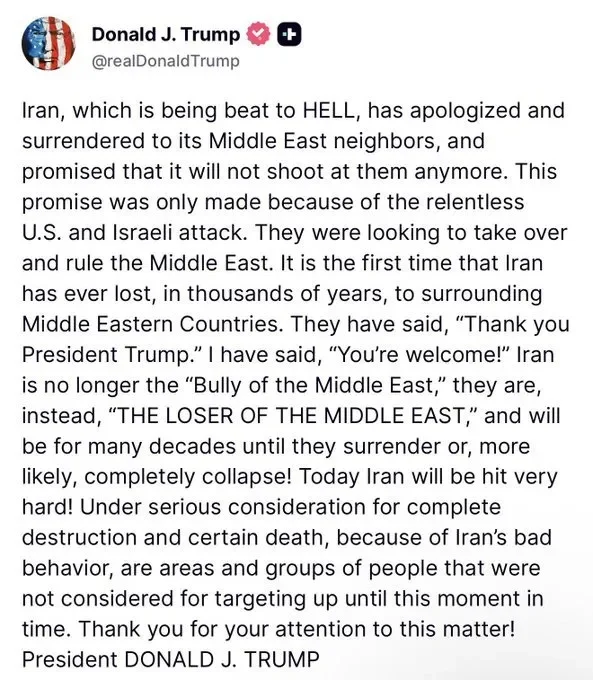
This Post from Donald Trump should further solidify my assertions regarding Iran being used to subjugate other Middle Eastern regions. Especially Iraq given that they are in position to become the new power in the region.
This is how you know we are in a very critical phase of the currency revaluation that will start with Iraq.
Security & Stability is a requirement before Iraq is allowed to trade internationally that is written as a prerequisite in their monetary reform policy.
This is why every opportunity I have I buy more Iraqi Dinar. D. Trump is not holding billions in IQD just for collectors items. What other purpose will these foreign reserves have if not for the revaluation?
There are many people who have shared their stories for the past few years from bank meetings in private discussions with management who have reported that banks are being prepared for this event.
Because once precious metals get a floor price the inevitable is going to happen and banks will be begging for liquidity. Guess who’s going to be the ones providing that? You!
Subscribe to:
Posts (Atom)