Monday, May 26, 2025

NADER FROM MID EAST: Need cash out of the street

 NADER FROM MID EAST: Need cash out of the street

Summary

The video transcript highlights the critical challenge posed by the massive hoarding of cash outside formal banking channels in Iraq, with around 87-90% of the country’s currency supply held in homes rather than banks.

 This situation undermines Iraq’s financial stability, economic growth, and modernization efforts. 

Senior financial adviser Mazar Muhammad Sali emphasizes that this phenomenon is driven primarily by public distrust in banks, cultural and religious concerns, and the population’s unfamiliarity with formal financial services. 

While the Iraqi economy has ample liquidity, banks remain liquidity-poor and ineffective. The public’s cash hoarding disrupts the income cycle and restricts investment opportunities, resulting in a stagnant economy despite the availability of funds.

To address this issue, strategic reforms are essential, including enhancing deposit insurance schemes to rebuild trust, promoting investment in government bonds, and accelerating digital financial inclusion through electronic payment systems. Such reforms aim to draw idle cash into the regulated financial system, enabling banks to support productive investment rather than relying on central bank foreign currency auctions for profit. However, the banking sector faces deeper challenges, including structural weaknesses, lack of modernization, corruption, restrictive legal frameworks, and a limited range of banking services primarily centered on government-related operations. Despite some progress in digital banking initiatives, infrastructure and regulatory systems remain insufficient, causing most Iraqis to favor physical cash over digital transactions. This entrenched “cash is king” mindset hampers the country’s financial sector development and overall economic modernization.

Highlights

  • πŸ’° Up to 90% of Iraq’s currency is held outside the formal banking sector, vastly limiting financial circulation.
  • 🏦 Public distrust, cultural factors, and religious concerns (like prohibition of usury in Islam) drive cash hoarding.
  • ⚠️ Banks in Iraq are liquidity-poor despite the economy’s ample cash reserves, hampering investment.
  • πŸ”’ Strengthening deposit insurance and clear communication are vital to restore confidence in banks.
  • πŸ“± Digital financial inclusion and payment solutions are crucial to reducing cash hoarding behaviors.
  • ⚖️ Iraq’s banking sector suffers from structural weaknesses, corruption, limited services, and weak legal protections.
  • πŸš€ Despite digital banking initiatives, lack of infrastructure and regulation slows progress and encourages cash use.

Key Insights

  • πŸ’‘ Massive Cash Hoarding Undermines Economic Growth:
    The startling fact that nearly 90% of Iraq’s currency circulates outside banks exposes a fundamental obstacle to economic development. When funds remain idle in homes rather than channeled through the banking system, capital becomes unavailable for productive investments, limiting business expansion and government financing. This leakage disrupts the monetary flow crucial for economic vitality.

  • 🀝 Public Distrust and Cultural Barriers Shape Financial Behavior:
    The population’s reluctance to engage with banks is rooted in both distrust and cultural-religious issues, including fears around usury prohibited in Islam. This signals that any reform must go beyond technical banking solutions and also address social and religious concerns through tailored communication strategies and trust-building efforts.

  • 🏦 Iraqi Banks Lack Modernization and Viable Business Models:
    Most banks depend on foreign currency auctions by the Central Bank to generate income instead of providing diverse financial products or stimulating credit growth. This indicates a stagnant banking sector unable to support economic diversification or robust private sector financing, which prolongs Iraq’s economic underdevelopment.

  • πŸ” Improving Deposit Insurance is a Key Trust Mechanism:
    Strengthening deposit insurance—to explicitly guarantee depositor safety in case of bank failures—and widely communicating these guarantees can significantly reassure the public. This can reduce the perceived risks that contribute to cash hoarding and encourage people to deposit funds within banks.

  • πŸ“² Digital Financial Inclusion is a Game-Changer:
    Implementing electronic payment systems and encouraging digital banking can fundamentally alter Iraq’s financial landscape. Digital inclusion would make banking more accessible and convenient, reduce physical cash dependency, and foster transparency while integrating more people into the formal economy.

  • ⚖️ Regulatory and Legal Weaknesses Hinder Banking Progress:
    Outdated, restrictive regulations and poor legal protections create an environment where banks cannot innovate or extend long-term credit effectively. Moreover, allegations of corruption and weak enforcement erode public confidence and prevent Iraq’s banking system from aligning with international standards.

  • 🚫 Cash “King” Mentality Slows Modernization Despite Potential:
    Despite the Central Bank’s initiatives for digital enrollment, most Iraqis convert their digital earnings back into cash, indicating a deep-rooted preference for physical money. This behavioral pattern fosters continual liquidity bottlenecks within banks and stalls Iraq’s broader financial modernization, reducing the potential economic dividends of digital finance.

This comprehensive overview underscores the multifaceted nature of Iraq’s banking challenges. Tackling them requires coordinated efforts to rebuild trust, modernize regulatory frameworks, leverage technology, and address cultural-economic dynamics concurrently to unlock the country’s economic potential.

MARKZ: Rates would fluctuate between $4.05 to $5 on the dinar!! @DINARREVALUATION #iraqidinar


SCOP Completes Gas Pipeline Crossing Under Tigris River

 The State Company for Oil Projects (SCOP) has completed a major horizontal directional drilling (HDD) operation to lay a 42-inch gas pipeline beneath the Tigris River in the Sayafiyah area, as part of the Mahmudiya-Bismayah project.

The crossing spans 600 metres in length and reaches a depth of 22 metres, making it the longest and most significant crossing in the project. It was executed by Baghdad Projects Directorate, the team assigned to carry out the drilling operations.

Ali Ward Hamoud, Director General of SCOP, described the project as a key component of the government programme to supply power stations with essential natural gas. The initiative is receiving direct oversight from Prime Minister Eng. Mohammed Shia' Al-Sudani and field supervision by Deputy Prime Minister for Energy Affairs and Minister of Oil, Eng. Hayan Abdulghani Al-Sawad.

Hamoud highlighted the company's technical competence in executing strategic infrastructure projects to international standards, on schedule, and with full adherence to occupational health and safety regulations.

(Source: Ministry of Oil)

TIDBIT FROM CLARE

 Clare  

 Article:   "Three reasons behind it... Al-Sudani's advisor to Rudaw:  About 90% of Iraq's monetary mass is hoarded outside banks."  

Quote:  "Saleh, economic advisor to Iraqi Prime Minister Mohammed Shia al-Sudani, believes that approximately 90% of Iraq's monetary mass is outside the banking sector and hoarded in homes.. .

The currency issued outside the central bank and circulated outside banks is called external leakage,"


IQD RV🚨ELECTRONIC SYSTEMS COMPLETE!!: IMPLEMENTATION OF RATE CAN NOW PROCEED!! @DINARREVALUATION


Foreign Minister: Iraq is working to achieve self-sufficiency and energy independence.

 Foreign Minister: Iraq is working to achieve self-sufficiency and energy independence. 

Foreign Minister Fuad Hussein affirmed on Saturday that Iraq is working towards achieving energy self-sufficiency and independence, while expressing his regret that a number of Western countries continue to classify Iraq as a high-risk country.

This came during his meeting with US Senators Angus King, an independent from Maine, and James Lankford, a Republican from Oklahoma, according to a statement issued by the Ministry of Foreign Affairs.

The statement quoted Hussein as saying that Iraqi-American relations are strategic, extending from partnership in the war on terrorism to cooperation in reconstruction and enhancing stability in the region, as well as other vital areas, including energy and education.

He also noted Iraq's aspiration to expand the horizons of these relations and increase the presence of American companies to take advantage of promising investment opportunities and contribute to construction and development efforts.

In a related context, the minister affirmed that Iraq is working rapidly to achieve self-sufficiency and energy independence by investing in associated gas, enhancing electricity interconnection projects with neighboring countries, and exploring new gas fields. This will position it as a gas-producing country, in addition to being a major oil producer. In this context, he called on specialized American companies to invest in this strategic sector.

He also pointed out that Iraq is set to hold its sixth legislative elections in November of this year, reflecting the consolidation of the democratic experience among the population and contributing to achieving stability and reconstruction.

Hussein expressed his regret that a number of Western countries continue to classify Iraq as a high-risk country in travel advisories for their citizens, which negatively impacts foreign companies' entry opportunities and hinders the development of tourism and cultural exchange.

On the other hand, the two sides affirmed that the terrorist organization ISIS continues to pose a significant threat to countries in the region and the world alike, and emphasized the importance of unifying international efforts to eliminate it and prevent its return.

They also discussed developments in the ongoing negotiations between the United States and Iran, agreeing that dialogue is the best way to resolve outstanding issues, achieve stability, and avoid escalation and confrontation.

In conclusion, the two parties affirmed their support for a political process in Syria that ensures the establishment of a comprehensive democratic process that reflects the aspirations of the Syrian people and leads to the formation of an elected government that represents the various components of society and protects their rights.  link


BROTHERS TECHNOLOGY: Where’s The Public Visibility Of The New Rate?πŸ’₯

 BROTHERS TECHNOLOGY

In cooperation with the International Air Transport Association, the Ministry of Transport announces that Iraqi Airways has completed 65% of the requirements for lifting the European ban.

----

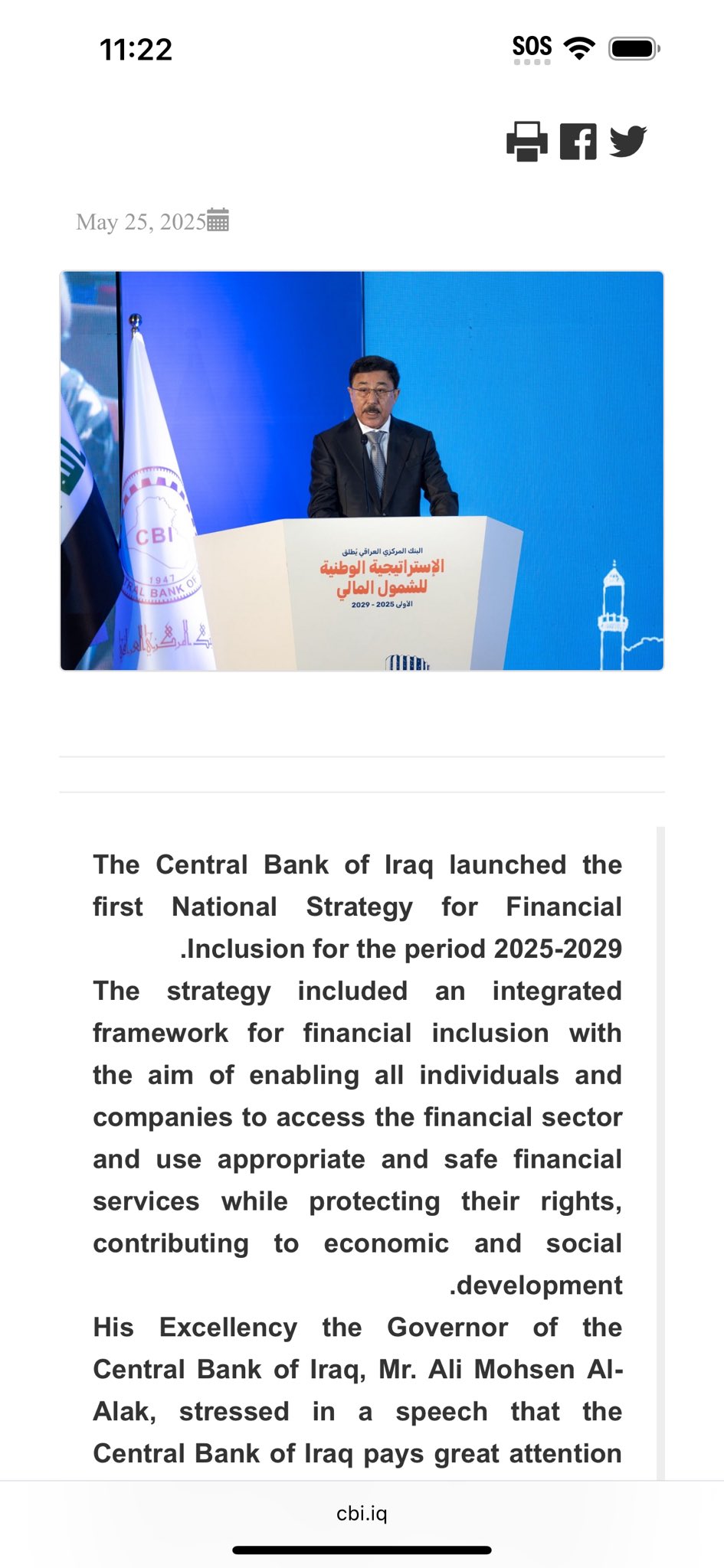
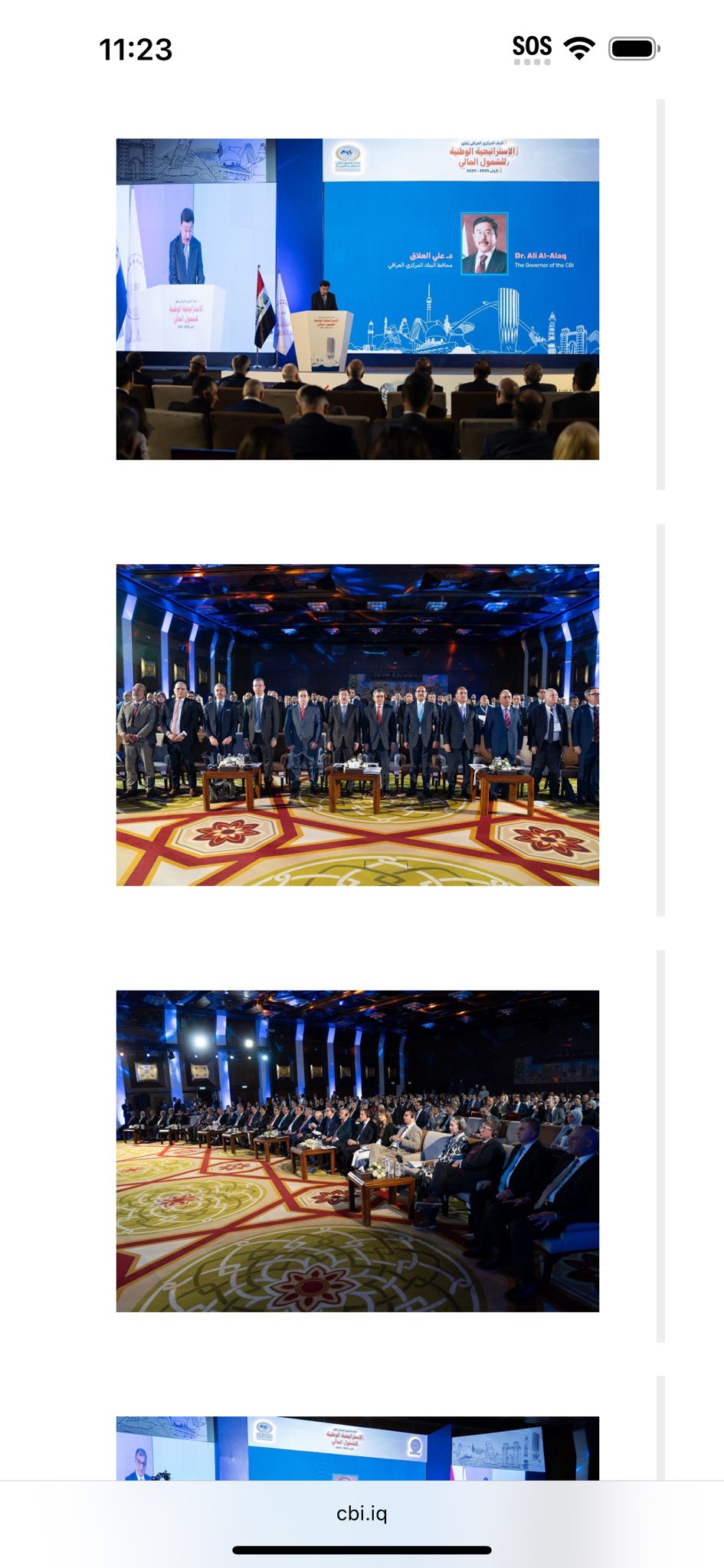
Where’s The Public Visibility Of The New Rate?πŸ’₯ The Central Bank of Iraq launched the first National Strategy for Financial Inclusion for the period 2025-2029.
The strategy included an integrated framework for financial inclusion with the aim of enabling all individuals and companies to access the financial sector and use appropriate and safe financial services while protecting their rights, contributing to economic and social development.
His Excellency the Governor of the Central Bank of Iraq, Mr. Ali Mohsen Al-Alak, stressed in a speech that the Central Bank of Iraq pays great attention to promoting financial inclusion in Iraq as well as cooperation at the regional, Arab and international levels, as the Central Bank of Iraq worked with international partners to develop a financial inclusion strategy according to the best international practices in partnership with the World Bank Group,

the Arab Monetary Fund, the International Financial Inclusion Union and the German Agency for Development Cooperation (GIZ), as well as local partners from public and private bodies and agencies.
The Bank is working to achieve a number of goals in raising the percentage of bank accounts, enhancing the protection of the consumer dealing with the financial sector, using the latest electronic payment methods and developing infrastructures and regulations to enhance financial inclusion.   Central Bank of Iraq Media Office 25 May 2025
Image
Image
Image

MARKZ: 🚨 Bond Market Buzz: Funding Reportedly in Place πŸ’ΌπŸ’°

  🚨 Bond Market Buzz: Funding Reportedly in Place πŸ’ΌπŸ’° ✨  Key Highlights: πŸ”Ή Bond contacts report  recent high-level meetings  with very po...