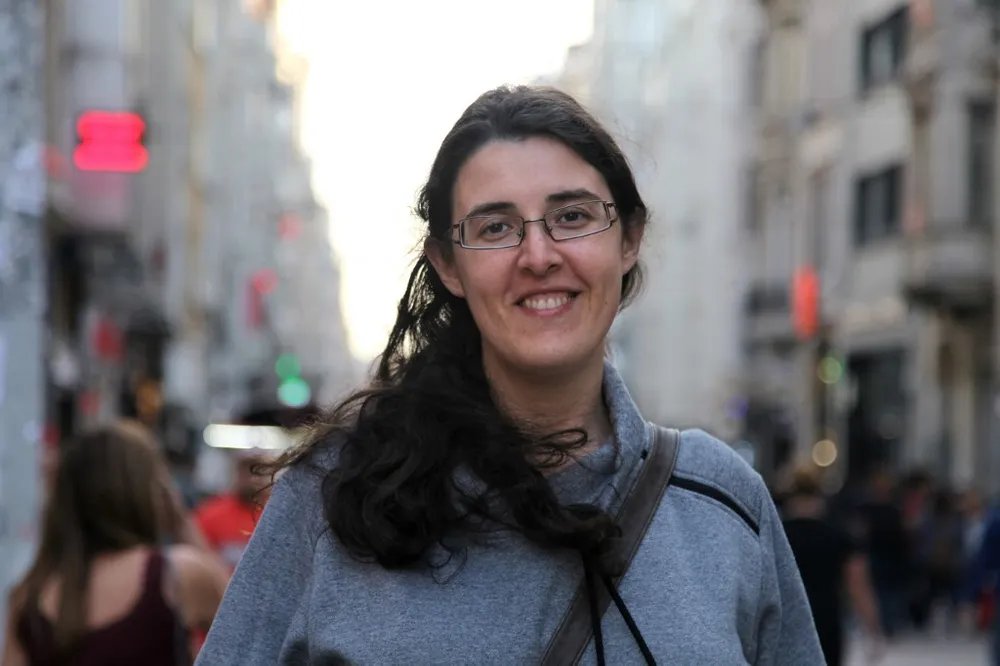
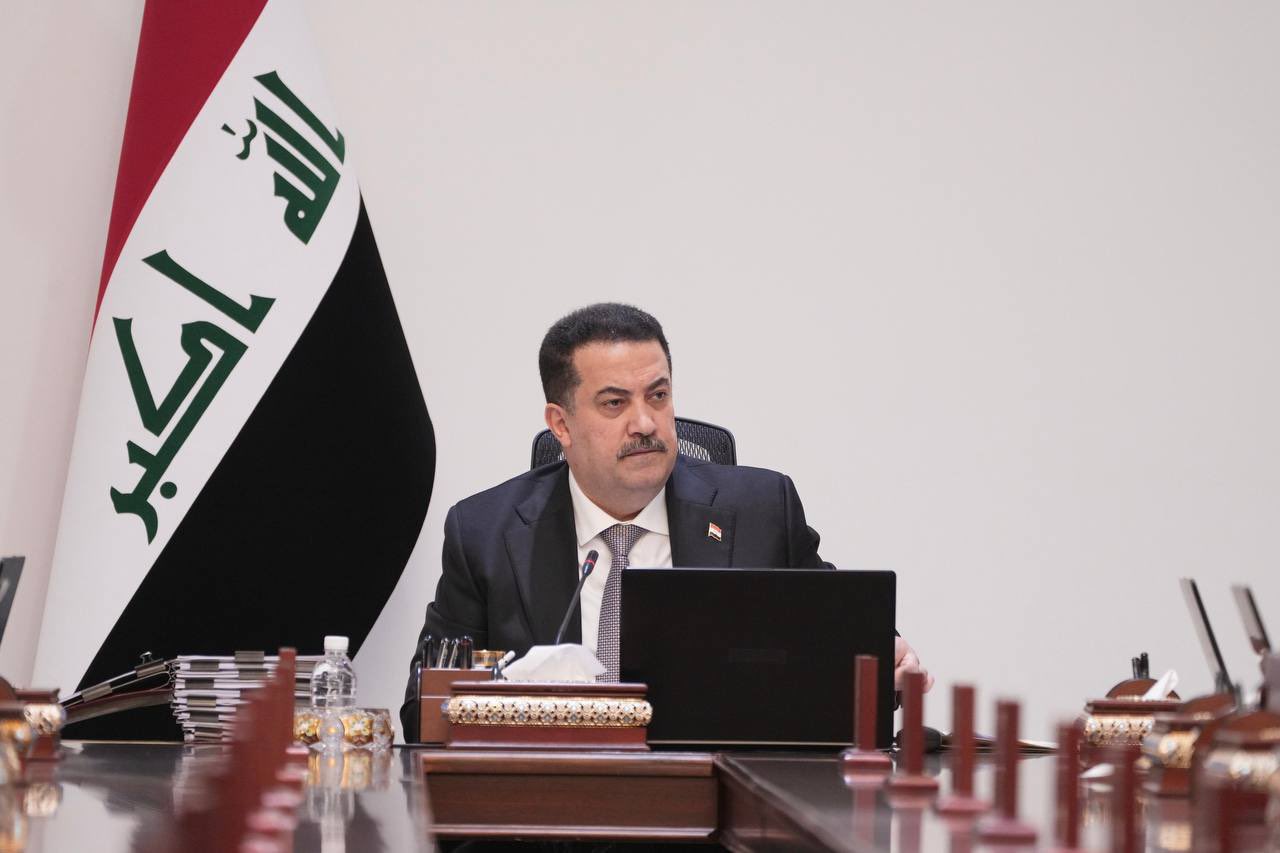
Trump’s special envoy for hostages, Adam Boehler, accused Iraqi Prime Minister Mohammed Shia al-Sudani of repeatedly making "false promises" regarding the release of Elizabeth Tsurkov,
an Israeli-Russian researcher held in Iraq since 2023 by Kataeb Hezbollah. Boehler stated, if she does not come home now, Sudani "is either incapable and should be fired or, worse complicit."
: AFP
🌍 Economic Dependency: Iraq’s economy is heavily reliant on oil revenue, making it vulnerable to global market fluctuations.
📉 Consequences of Oil Price Drops: Past declines in oil prices have resulted in severe economic hardship for Iraq, affecting essential services like healthcare and education.
🌱 Need for Diversification: There is a pressing need for Iraq to diversify its economy to create jobs and reduce dependence on oil.
💡 Reinforcement Mechanism: This new approach encourages countries to maintain healthy foreign currency reserves and promotes financial stability.
🔄 Shift from Dollar Auctions: Countries are moving away from unpredictable dollar auctions toward more reliable economic strategies.
🌟 Investment Opportunities: A diversified Iraqi economy could attract foreign investment, leading to job creation and economic growth.
📢 Public Engagement: The video encourages viewers to share their opinions on Iraq’s economic strategy and the importance of a sustainable future.
Key Insights
📊 Understanding Rentier Economies: A rentier economy, like Iraq’s, relies heavily on external income sources—in Iraq’s case, oil. This means that while oil prices are high, the economy may appear stable, but when prices fall, the country faces significant challenges. The reliance on a single resource contributes to a lack of job diversity, leaving skilled workers without adequate employment opportunities.
🛢️ Instability from Oil Price Fluctuations: The historical context of oil prices showcases the severe impact on the Iraqi economy during downturns, such as from 2014-2016, which resulted in diminished funding for essential services. This volatility underscores the urgency for Iraq to seek alternative revenue sources to ensure economic resilience.
🌾 Diversification Strategy: By investing in sectors like agriculture, technology, tourism, and renewable energy, Iraq could create a more balanced economy. This diversification would not only generate job opportunities but would also stabilize the currency, making it more appealing for trade and investment.
🌐 International Representation: As Iraq aims to present itself as more than just an oil-dependent economy, it can attract foreign investments by showcasing its potential in various sectors. This could lead to stronger economic relationships and a more stable economic environment.
💰 Reinforcement Mechanism Explained: The reinforcement mechanism serves as a strategic approach for countries looking to stabilize their foreign exchange reserves. By maintaining a certain level of reserves, countries can avoid reliance on a single currency, thus enhancing their economic stability.
📈 Government’s Role in Economic Strategy: Governments need to take an active role in establishing guidelines for financial institutions to promote stability. This can create a safer environment for investors, which ultimately leads to job growth and improved public services.
🔍 Investment Implications: Understanding these economic shifts is crucial for investors. Countries adopting the reinforcement mechanism may provide a more stable investment climate, suggesting that investors should pay attention to these strategies when making decisions.
The Kurdistan Region’s Council of Ministers, in its regular Wednesday session, directed the Ministry of Natural Resources to coordinate with the federal Oil Ministry and international oil companies to resume oil exports through the Iraqi State Organization for Marketing Oil (SOMO), reaffirming its commitment to the law and ensuring that oil revenues are transferred to the Iraqi treasury.
---
Iraqi Prime Minister Mohammed Shia al-Sudani has pledged to ensure consistent funding for the Kurdistan Region’s civil servants throughout 2025, emphasizing that most disputes between Baghdad and Erbil are technical rather than political.
: PM office
Here are the key components [of the new training happening now]: First, Cross Border Payments - Iraq did a very poor job of remittances across borders which branded it as untrustworthy and undependable.
This training will give Iraqi banks the necessary tools to completely eliminate the former days of suspicion. This will open up the wide world of trade which will in turn continue to drive up demand for this valuable currency.
Second, Financial Integrity - The banking industry has struggled with corruption and inefficiency...No one wants to take a chance on countries that cannot be trusted.
This training is tackling these problems head on. Adherence to AML standards is a must. (Anti-Money Laundering) The mere involvement with K2 Integrity consultants, the gold standard...sends a clear message that Iraq is serious about becoming a global partner. This is the final piece of the RV puzzle.
o what does this mean to you as a Dinar investor?
It means the groundwork is being laid for the RV of the Iraqi Dinar. It is no longer a question of "IF" but but one of "WHEN"?
Only the most serious of potential global traders are tutored in the protocols of the Integrity and Cross Border Payments regimen.
The RV has always been a matter of speculation but now we have tangible proof that it is about to happen. The INI wouldn't bother nor would the K2 consultants, if they didn't believe that Iraq is ready. We can now relax and wait for Iraq to acquire this training and apply it to the RV which has already been established.
Experts in the Iraqi economic affairs saw that the Mesopotamian reserves and its investment portfolio, after the reserves recorded 106.7 billion dollars during the year 2024,
fortified Iraq and its incubator in providing overall stability and protecting the national economy from external shocks that are reflected on the Iraqi balance of payments, as well as its role in stabilizing the general level of prices internally through policies of intervention in the organized monetary market.
Iraq ranked third in the Arab world in terms of foreign exchange reserves for 2024, as this reserve is considered “very large” and “reassuring” because it represents 20-40% of the volume of the exporting currency,
and the foreign reserves of any country contribute to maintaining the value of the local currency and liquidity to meet international financial obligations, as well as financing internal projects and reassuring investors, in addition to diversifying investment portfolios.
Cash reserves are defined as the total deposits and bonds of foreign currencies held by central banks and monetary authorities in the state with the aim of supporting the local currency and paying the outstanding debts of the state.
Monetary reserve usually consists of several elements, namely foreign currencies, such as the dollar, the euro, the Japanese yen and other currencies, as well as gold.
Semi-fund for sovereign wealth
In this context, the financial adviser to the Iraqi Prime Minister, Mazhar Muhammad Saleh, says that Iraq’s foreign reserves, their composition and management are a semi-sovereign wealth fund (which is currently managed by a diversified investment portfolio in different currencies and short-term derivative investment instruments), and the aforementioned portfolio of reserves performs two basic functions simultaneously.
Saleh reviewed these two functions by saying to the “Jabal” platform: “The first is to protect macroeconomic stability, that is, stabilizing the general level of prices
internally by adjusting the levels of domestic liquidity in accordance with the real flows of goods, services and benefits that finance part of those reserves and their consequences are called here as international reserves, by affecting the control of growth in the money supply by intervening in the money market by withdrawing excess liquidity by exchanging it for foreign currency,
in order to finance foreign trade for the private sector specifically, indicating that these activities are called in monetary policy (cash sterilization) using a mechanism called open market operations, which is the operational (quantitative) aspect of monetary policy objectives Called operational objectives to combat the growth of monetary inflation rates and the stability of cash flows.
The second is the use of these foreign reserves in part by intervening in the monetary market to provide (price) stability in the exchange market by adhering to (signals) the fixed and stable exchange rate, which is the regular exchange market in foreign currency the basis of that market and the leader of the stability of the exchange rate itself, according to the valid.
In his talk to “Al-Jabal”, the adviser stressed that there is a specialized central management of these reserves, as the foreign portfolio is subject to high-precision investment criteria in the adoption of short-term international financial instruments that generate interest returns, including investment in treasury bonds for central countries in the world that are guaranteed high-rated return, but they are semi-liquid, and this is what distinguishes the sovereign wealth fund from stability funds. I mean the foreign reserve portfolio, which requires it to be almost liquid to cope with fluctuations in the national balance of payments when needed.
Cash gold, which may constitute a percentage of more than 10% of those reserves, is also a safe haven within the aforementioned investment portfolio for the reserves that are subject to research against the risks of currency fluctuations and the interest that make up the portfolio itself,
because the gold asset cycle is one of relatively long-term and stable cycles, as monetary authorities can issue gold bonds guaranteed in the same reserve gold and at interest when needed, which are globally desirable bonds, according to the advisor to the Iraqi government.
Saleh added that “Iraq currently enjoys foreign reserves that are high in the efficiency scale, especially in the issue of its coverage of the cash supply in its broad sense, which covers 75% or more, which is the global measure required to measure the efficiency of foreign exchange reserves in preserving the stability of the national economy, as well as the fact that the said foreign reserve covers about 15 months of import trade, which is a measure superior to the global scale, which indicates 3 months of commercial efficiency,” and thus “Iraq’s reserves and investment portfolio are Iraq’s fortress and incubator in providing overall stability and protecting the national economy from external shocks that are reflected on the Iraqi balance of payments as well as their role in stabilizing the general level of prices Internally, through policies of intervention in the regulated monetary market.”
It gives Iraq the ability to control the exchange rate of the dinar
On the other hand, the professor of international economics, Nawar Al-Saadi, acknowledged that “these reserves go beyond just numbers registered with the Central Bank, as they represent the basis on which the state relies in the face of economic crises, whether they are caused by the decline in oil prices, which is the main source of revenue, or due to turmoil in global financial markets that may affect cash flows and investments.”
Al-Saadi added in his talk to “Al-Jabal” that “having strong foreign reserves gives Iraq the ability to control the dinar exchange rate, which reduces its violent fluctuations, which may lead to high inflation rates and an increase the cost of living for citizens. These reserves are used to finance vital import operations, especially basic goods such as food and medicine, which ensures the continued flow of these materials to Iraqi markets without much affected by external conditions.”
He added that “the level of foreign reserves directly affects Iraq’s credit rating and the confidence of international financial institutions in the local economy. The higher these reserves, the greater the confidence of investors, which enhances the opportunities to attract foreign capital and supports investments in non-oil sectors, which is what Iraq needs to reduce its dependence on oil as the only source of revenue.”
He considered that “the existence of large reserves alone is not enough to ensure economic stability, as they must be accompanied by sound financial and economic policies. These reserves cannot be considered a resource consumed just to cover the fiscal deficit, calling for “investing them wisely to promote economic development and support the productive sectors, because the use of the reserve ill-considered may lead to its depletion over time, exposing the country to great risks when unexpected economic shocks occur.”
Al-Saadi concluded his speech by saying that “Iraq needs a clear strategy in managing its foreign reserves, so that they are employed in a way that balances monetary and financial stability on the one hand, and supports development and investment projects on the other hand. Keeping these reserves at secure levels enhances the resilience of the Iraqi economy in the face of crises, and gives decision-makers more room to maneuver in the face of future economic challenges.
 : AFP
: AFP