Showing posts with label Walkingstick. Show all posts
Showing posts with label Walkingstick. Show all posts
Monday, July 21, 2025
Parliamentary Finance Committee: OPEC informed SOMO that 280,000 barrels smuggled from the region are counted against Iraq's share.
Parliamentary Finance Committee: OPEC informed SOMO that 280,000 barrels smuggled from the region are counted against Iraq's share.
The head of the Parliamentary Finance Committee, MP Atwan al-Atwani, confirmed on Friday that OPEC informed the State Oil Marketing Organization (SOMO) that approximately 280,000 barrels of oil smuggled daily from the Kurdistan Region are counted as part of Iraq's quota.
Al-Atwani said in a televised interview followed by ( IQ ): "The region is smuggling oil and exporting about 280,000 barrels per day in an undeclared manner. A message arrived from OPEC to SOMO stating: 'We are receiving oil from your side. It is true that it is not in your name, but it is your oil.' It is estimated at about 280,000 barrels per day."
The MP pointed out that "our share has been reduced. We are now exporting about 3.2 million barrels per day, but this smuggled oil from the region is counted within the amount allocated to Iraq, and therefore is considered part of the revenue reduction link
MNT GOAT: 🌈 “Stop Wishing on a Rainbow” – Mnt Goat Says Dinar Reinstatement Is Closer Than You Think! 🇮🇶💥
Mnt Goat
...As investors in the dinar, we have to fully understand here what is going on and stop wishing on a rainbow for the RV...it is coming and sooner than you think, I assure you! ...
When the time is ready for the reinstatement it will kick off with the Project to Delete the Zeros, then monitor for inflation and then if all goes well they will move to reinstate the dinar back to FOREX.. .
Today’s articles once again only confirm what I have been hearing from my CBI contact and what other past articles have told us...
Since 2011 there was a vision developed for Iraq and it took years to push Iraq in the direction needed, if they ever wanted to get their currency back. But this is the time and we are watching this vision play out...
Even though the vision for Iraq has changed since the Dr. Shabibi time, the process to move the currency back to FOREX has not.
Has The Central Bank Destroyed The Private Banking Sector In Iraq Forever?
Has The Central Bank Destroyed The Private Banking Sector In Iraq Forever?
A dysfunctional banking sector in an oil country July 17, 2025 Last updated: July 17, 2025
Al-Mustaqilla / Investigative Report / - Although Iraq possesses vast oil wealth, its banking sector remains primitive, lacking depth and reliability. This is clearly demonstrated by the weakness of financial inclusion, with only 19% of citizens owning a bank account, one of the lowest rates in the region.
This weakness reflects a profound structural flaw in the relationship between citizens and banks and
raises fundamental questions about the effectiveness of monetary policies and banking supervision
in Iraq.
Controversial Monetary Policies
In recent years, the Central Bank of Iraq has pursued erratic monetary policies, most notably uncontrolled monetary expansion.
The money supply increased from 46 trillion dinars to more than 100 trillion dinars in just two years, without corresponding real economic growth.
This led to inflation exceeding 7.5%,prompting the Central Bank to raise interest rates to 7.5% before later reducing them to 5.5%, a move that had no tangible impact on the market.
Furthermore, a large gap remained between the interest rate on loans, which exceeds 10%, and
the interest rate on deposits, which barely reaches 7%, deepening citizens' reluctance to deposit and weakening banks' ability to provide financing.
Out-Of-System Criticism And Loss Of Trust
The problem lies not only in policies, but also in the grim reality that the vast majority of cash in circulation is outside the banking system.
This massive leakage weakens banks' ability to perform their role as financial intermediaries and reflects a genuine crisis of confidence between citizens and banks.
Following banking bankruptcy scandals, the dominance of partisan figures in some private banks,
declining services, and the absence of any effective deposit insurance system, citizens have come to view banks as a threat rather than a refuge.
Consumer Loans Without Real Development
One of the most notable failures is that most of the loans granted by banks in recent years have been
directed toward consumption, not production.
Car financing, personal loans, and installments for recreational purposes have gone unmet,
with no real focus on supporting productive projects or small businesses.
This has led to increased speculation in the real estate market and rising land prices,
without any real production or job creation. Instead, it has led to population growth and urbanization without a corresponding economic structure.
Government Monopoly And Administrative Laxity
The Iraqi banking sector revolves around Rafidain and Rashid Banks, which control most of the sector's assets.
However,
their performance is weak,
their administrative structures are clearly lax, and
their branches are not electronically connected and lack a modern technical infrastructure.
Meanwhile, the Central Bank has failed to
develop a strict regulatory framework or
impose governance on bank boards of directors,
allowing small financial institutions to operate outside regulatory control for many years.
Currency Window As An Entry Point For Money Laundering
One of the most dangerous tools that contributed to undermining the banking system is the foreign exchange window.
The central bank sells dollars at the official rate to private banks,
then resells them on the parallel market at a significant profit margin.
This mechanism provided an ideal environment for money laundering and smuggling abroad,
exploiting
weak banking oversight and
duplicate names and documents in transfer requests.
Many banks exploited these differences to make illicit profits, and
some had their licenses later revoked following international intervention.
International Sanctions Indicate A Defect
Beginning in 2022, the United States began imposing a ban on a number of Iraqi banks from dealing in dollars due to suspicions of suspicious transfers and money laundering.
The list was later expanded to include new banks,
disrupting a significant portion of foreign trade and remittance operations and
negatively impacting the Central Bank of Iraq's credibility with international institutions and correspondent banks.
Banking Licenses Without Clear Controls
In recent years, the Central Bank of Iraq has granted unprecedented numbers of new banking licenses,
bringing the number of private banks to over 70,
without any economic justification or genuine assessment of market needs.
This quantitative expansion has come
at the expense of quality and oversight,
contributing to the fragmentation of the banking market and the
creation of fragile entities, both financially and administratively weak,
often exploited as fronts for partisan agendas or foreign interests.
Negligence Of Banking Sovereignty
Although the Private Banking Law clearly sets a maximum foreign ownership limit in Iraqi banks,
not exceeding 25%, the Central Bank has unjustifiably overlooked this restriction.
Foreign financial institutions have been allowed to own significant stakes in a number of banks,
either directly or through local front companies.
This has
led to an imbalance in the ownership structure and
created external financial dependency that
threatens Iraq's economic decision-making and
undermines the independence of the national banking system.
Bleeding Profits Abroad Without Investment
In a dangerous precedent, the Central Bank allowed bank managements—most of which are owned by foreign institutions—to transfer more than 75% of their annual profits abroad in the form of dividends, without requiring them to reinvest a portion of these profits within the Iraqi market.
This behavior
violates the most basic rules of development banking and
should have been countered by clear measures
compelling these banks to
develop their services,
strengthen their capital, or
contribute to national investment projects,
rather than becoming mere channels for transferring hard currency abroad.
Urgent International Advice For Reform
Several international institutions, including the US Treasury, the International Monetary Fund, and the World Bank, have made clear recommendations.
Prominent among them are:
stricter compliance with anti-money laundering and counter-terrorism financing laws,
enhanced transparency in dollar transactions,
strengthened internal and external oversight of banks,
reviewed asset quality, and modernized the sector's digital infrastructure.
These institutions also called for raising minimum bank capital and merging or liquidating distressed banks to create a more robust system.
Direct Responsibility Of The Central Bank
The Central Bank is not only a neutral supervisory body; it is also a genuine partner in the crisis.
It has
allowed the currency window to continue despite its risks,
failed to require banks to adhere to international governance standards,
been lax in enforcing controls on foreign ownership, and
failed to establish an effective legislative framework to protect depositors or regulate the banking structure.
Its responsibility is not merely technical, but also ethical and institutional in the face of an economy being drained.
The Opportunity For Reform Still Exists.
Despite the bleak outlook, there is still a chance to save the Iraqi banking system.
This requires
political and professional will, beginning with legislative reform,
imposing strict oversight,
enhancing transparency, and
cooperating with international institutions to restore confidence.
There can be no real development without a strong banking sector,
and no successful banking sector without an independent and effective central bank that understands that it is not just a guardian of liquidity, but also a stabilizing force.
https://mustaqila.com/القطاع-المصرفي/
🔥 TONY: Banks on Standby, Iraq Ready to Launch New Rate – Any Moment Now!
Tony says, in the mosques today in Iraq, they were told a big announcement was being made today. This evening they were told the new economy will begin in the morning, their world will change.
"This is what we've been waiting for."
Tony talked to a lot of people. A lot is happening. Bank people are on standby or notified they will be working tomorrow. Some are not. The banks say they are waiting for an announcement to release. Tony thought this would be between 3 and 5 but now it might be in the morning.
From the 3-letter agencies, he was told the announcement was to be made upon signing of the Genius Bill. Now waiting for the Secretary of the Treasury to make an announcement TODAY.
All banks are waiting, prepared, with this showing on Bloomberg and other screens. Therefore an unnecessary precaution to wait until Sunday. So it should be any moment, waiting to go. Waiting on the Treasury Secretary. Will it be one of their regular emails? Something on CNN? Tony doesn't know.
Ray said something about 8 a.m. Iraq time, Tony laughed! When they wake up, it will be a new world. It didn't mention purchasing power but we know what that is. Their typical day starts at that time. Tomorrow is the first day of business. They are 7 hours ahead of EST/DST. It should start before they go to their markets, which is around 5:00 a.m. So, in another 2 or 3 hours.
The Treasury Secretary announcement will be to the banks. The rate is out there. Iraq made its announcements. There is nothing more to do. People do not think this will extend past this weekend.
Tony is waiting for the 800 numbers. The people sending them to him have said it is all done, which we've heard before, we're just waiting. All banks are waiting to be given the green light.
Could they have posted the rate on Forex just before it closed, to make small banks comfortable? Or will they wait until Forex opens on Sunday? The next 3 hours will tell whether we go today or Sunday.
Advisor To The Prime Minister: Economic And Disciplinary Factors Behind The Stability Of The Exchange Rate And The Decline Of Dollarization
Advisor To The Prime Minister: Economic And Disciplinary Factors Behind The Stability Of The Exchange Rate And The Decline Of Dollarization
Time: 2025/07/17 13:55:21 Reads: 750 Times {Economic: Al Furat News} The financial advisor to the Prime Minister, Mazhar Muhammad Salih, confirmed that the
decline in the "dollarization" phenomenon and the
stability of the Iraqi dinar exchange rate
are due to a combination of decisive economic and disciplinary factors.
Saleh explained in a statement to Al Furat News Agency that "the disciplinary factors included
tightening controls on the use of the dollar in domestic transactions and completely prohibiting its use in local settlements and payments, in accordance with the law.
He pointed out that these measures included bank deposit mechanisms for real estate transactions,
which had previously been the focus of demand for cash dollars, and which the dinar had replaced with remarkable success.
He noted that this success is credited to the Central Bank of Iraq and its monetary policy, despite the criticism it has faced. Saleh added that the exchange rates in the parallel market would have been in line with the official markets had it not been for the recent geopolitical tensions in the Middle East, which caused a difference of 142 dinars per dollar."
The financial advisor explained that
Financing Foreign Trade and Monetary Enhancing Mechanisms
"one of the most important success factors that led to the decline in the strength of the parallel market was the direct financing of foreign trade for small traders from official dollar outlets at a rate of 1,320 dinars per dollar, without the need for intermediaries.
He pointed out that imports by small traders constitute more than 50% of the total foreign market trade in Iraq."
Saleh did not neglect to point out that the mechanisms for strengthening Iraqi banks' foreign currency reserves with correspondent banks have become easier as an alternative to the Central Bank's window and previous platforms,
which were abolished at the beginning of the year. He emphasized that these mechanisms have proven successful in dominating the official exchange market as a whole in foreign transfer transactions at the fixed exchange rate of 1,320 dinars per dollar.
Trade Policy and the Use of Electronic Payments
Saleh also emphasized the role of trade policy, which intervened for the first time by opening giant shopping centers and expanding in this direction (hypermarkets),
describing it as a "price defense policy in favor of the official exchange rate," and weakening market demand for financing some of its trade from the parallel market, which has become "highly expensive."
Finally, the financial advisor noted the growing trend among the public toward the widespread use of electronic payment cards funded at the official exchange rate (1,320 dinars), which has become "one of the modern travel customs and traditions in Iraq."
He added that travelers now receive a share of cash dollars when traveling, according to very transparent and strict controls.
https://alforatnews.iq/news/مستشار-رئيس-الوزراء-عوامل-اقتصادية-وانضباطية-وراء-استقرار-سعر-الصرف-وتراجع-الدولرة
FRANK26: 💥 Frank26: “1:1 Rate is Useless – Fix It and Float It!” | The Truth About Sudani & The Dinar
Frank26
I always like the idea of a 1 to 1 pairing with the American dollar, instead come out at its real effective exchange rate, fixed rate and let it float at that rate so that it helps the other Middle Eastern currencies in that basket because at 1 to 1 it wouldn't help anybody...
Fixed rate now, under these conditions, is the way to go.
Community comment: "If you just get rid of Sudani then we'll have the new exchange rate." That is the compete opposite. That is a moronic statement.
That is a weak statement in the sense you don't know what you're talking about. You have not idea what Sudani's been doing.
I don't like to talk about any other currency except the Iraqi dinar. But when Trump became the president on the 20th of January, all of a sudden he started to do something that we didn't expect. And it was tied into the Iraqi dinar. The same thing that he wants from the Iraqi dinar is the same thing that he wants from every currency on this planet Earth. Play fair with my dollar and stop using it. How long has Iraq been using our dollar? Over 20 years.
Exchange Rate Arrangement
Iraq’s de jure and de facto exchange rate arrangements are classified as a conventional peg arrangement. The Central Bank Law gives the Board of the Central Bank of Iraq (CBI) the authority to formulate exchange rate policy.
Effective February 8, 2023, the official exchange rate was set at ID 1,320 according to the closing prices of the daily bulletin of gold & main currencies published on the CBI website (www.cbi.iq).
There has been a change to Iraq’s exchange system since the last Article IV Consultation.
Iraq continues to avail itself of the transitional arrangements under Article XIV, Section 2
but no longer maintains any restrictions under this provision.
Iraq does not maintain any current account exchange restrictions or MCPs.
Starting January 2025, all international transactions have been routed through commercial banks via their correspondent banking relationships (CBRs).
The Central Bank of Iraq (CBI) replenishes these balances weekly based on foreign exchange demand and conducts audits to ensure that the allocated funds are used in compliance with AML/CFT regulations.
Private banks are also encouraged to broaden their CBR networks, particularly with non-U.S. financial institutions.
FUND RELATIONS (As of April 7, 2025) page 2
https://www.imf.org/-/media/Files/Publications/CR/2025/English/1irqea2025001-source-pdf.ashx
BROTHERS TECHNOLOGY: 🚚💰 Armored Cash Convoy: Baghdad Sends Billions to Erbil for Kurdistan Salaries! 🔥
BROTHERS TECHNOLOGY INC
Armored Delivery
A local source in Kirkuk province reported on Saturday that cars belonging to the Iraqi Ministry of Finance began to arrive in Erbil, loaded with funds allocated to pay the salaries of employees of the Kurdistan Region.
The source told Shafaq News Agency that “cars loaded with funds entered today the borders of Kirkuk province coming from Baghdad, heading towards Erbil,” noting that “these funds are transferred through armored cars belonging to the Ministry of Finance, accompanied by a security force to ensure their safe arrival at its destination.”
The source pointed out that "this step comes in implementation of the agreement recently concluded between the federal government and the regional government with the aim of disbursing the salaries of employees in Kurdistan directly from Baghdad, within an agreed timetable."
A source in the Ministry of Finance and Economy of the Kurdistan Regional Government revealed earlier on Saturday that the distribution of the salaries of the region's employees for the month of last May, starting tomorrow, Sunday.
The source, who asked not to be named, told Shafaq News Agency that "the Ministry of Finance and Economy in the regional government will, tomorrow, Sunday, deposit 120 billion dinars, as local revenues, in the account of the Federal Ministry of Finance through the branch of the Central Bank of Iraq in Erbil."
He added that "the Federal Ministry of Finance will deposit next Monday the amount of 960 billion dinars in the account of the Ministry of Finance and Economy in the regional government, as the salaries dues for May," noting that "the ministry will start distributing salaries to employees from Tuesday to next Thursday."
The source pointed out that "the Ministry of Finance and Economy will deposit another amount of 120 billion dinars on Sunday following Sunday, in the account of the Federal Ministry of Finance, as local revenues, provided that the latter deposits 960 billion dinars to cover the salaries of June, where the distribution of salaries in the region will begin from Tuesday to Thursday in the same week."
Sunday, July 20, 2025
SANDY INGRAM: 🇮🇶💰 Iraq vs. U.S. Treasury: SWIFT Showdown Over Sanctions & Sovereignty! ⚠️
Sandy Ingram
Iraq is in trouble with the US Treasury Department...Officially Iraq is a member of SWIFT but in practice...
many of the country's banks have been incredibly slow to get on board preferring to stick with older more opaque methods of moving money including cash...
One of the primary reasons for this hesitation is a profound concern over privacy and sovereignty. Iraq's financial system has traditionally operated with a level of discretion fundamentally incompatible with the kind of radical transparency SWIFT demands...
The United States Treasury...sees Iraq's incomplete SWIFT usage as a gaping loophole that undermines their entire sanctions regime on the region and they are losing patience.
This puts Iraq in an incredibly difficult position, trying to appease a powerful ally without completely alienating a powerful neighbor.
Saturday, July 19, 2025
SANDY INGRAM : "🚨 What Is Article VIII — And Why Iraq Needs It for a True Dinar Revaluation!"
Sandy Ingram
What is Article VIII?
Article VIII outlines key rules for countries in the IMF framework...
Member countries agree not to hinder international transactions for trade, services or travel. They can't block money flowing in or out without IMF approval. It forbids discriminatory currency actions.. .It ensures convertibility of foreign held currency.
Read also:
TIDBIT FROM SANDY INGRAM
Member nations must convert foreign held balances into their own currency or special drawing rights (SDRs) when used for acceptable currency transactions.
Accepting Article VIII signals a country is committed to open and fair currency practices.
It boosts trade, builds investor trust and integrates the nation into the global economy. Iraq does not yet have Article VIII status.
BETWEEN IMF RECOMMENDATIONS AND BAGHDAD’S AMBITIONS… IRAQ PLANS A NEW ECONOMY
BETWEEN IMF RECOMMENDATIONS AND BAGHDAD’S AMBITIONS… IRAQ PLANS A NEW ECONOMY
Prime Minister’s advisor, Mazhar Mohammed Saleh, confirmed on Monday that the government’s reform policy has not deviated from the recommendations of the International Monetary Fund, while explaining that the government seeks to transform the rentier economy into a diversified, productive economy.
“Despite the significant financial exposure to oil revenues, which has made the financing of public spending, especially investment, dependent on oil price fluctuations and the oil asset cycle, as well as the pressure of employment in the government sector, which has absorbed the state’s resources without creating parallel productivity in the real economy,
these are facts that put pressure on the growth paths of the rentier economy.
However, it can be said that Iraq possesses promising economic components if they are employed within a realistic and gradual development vision,” Saleh said in a statement to the official media, followed by “Al-Mutalaa”.
He added, “Strengthening the non-oil sector requires a real shift from a rentier economy to a diversified productive economy, something the current government is seeking to achieve within the framework of its government program. The reform policy currently being adopted by the government has not departed from the recommendations of the International Monetary Fund, which are repeated in most of its meetings, official gatherings, and reports.” He pointed out that the government program approved by the Council of Representatives in October 2022 serves as a guide and vision that has been implemented in the work of the Iraqi reform government.
This has been embodied in the transformations in the country’s economic policy, despite the heavy social and economic legacy accumulated over the past years, such as stalled projects, thousands of employment contracts with the government that lead to permanent employment, and the poverty alleviation program, which required reaching two million families in the social welfare budget. He explained that:
“The government has paved its way with the non-oil economy in an exceptional way since it announced that it is a government of services, as it began implementing dozens of service infrastructure projects that were suspended, including starting to build one million housing units and hundreds of school buildings, hospitals, bridges, roads, electricity and water networks.
And announcing a partnership program, especially in the industrial and energy fields, with the private sector, by granting the private sector sovereign guarantees to interact in technologically advanced industrial investment, without neglecting the agricultural support policy that provided sufficient security from the production of grain crops. This is what indicated the decline in unemployment to 13 percent after it was 17 percent, in addition to the high stability in the general price level, which did not exceed 3 percent.”
He continued, “The government is proceeding with banking structural reforms without interruption, in addition to its successes in bringing Iraq into the digital age by improving digital payment systems, and the progress achieved in the gas sector and its exploitation within the development of the energy sector and natural resources, all of which constitute key factors for sustainable economic growth, which reflects the stability of Iraq’s credit rating, with the adoption of the Development Path Strategy as a program to achieve the goals of generating a leading economic sector in development outside the oil sector, to shape the coming economic future in sustainable development in our country without interruption.”
WALKINGSTICK: "🔥 Iraq Is FREE! IMF Lifts All Currency Restrictions — Dinar Unchained!"
Walkingstick
There are no sanctions on Iraq anymore in any way, shape or form. There are no sanctions. You have the IMF today giving permission for Iraq to do whatever they want to do with their exchange rate. ..
The IMF has confirmed what is going on inside of the CBI and...inside of Iraq...The handcuffs on their currency is gone.
That's why you're seeing all of this now being said...Now, they're still in transition legally and that's ok because we can keep them under our wing and protect their currency... But there are no active restrictions that remain right now on the CBI or their currency.
IRAQ IS QUIETLY DISTANCING ITSELF FROM IRAN. HOW IS BAGHDAD BUILDING A BALANCED FOREIGN POLICY?
IRAQ IS QUIETLY DISTANCING ITSELF FROM IRAN. HOW IS BAGHDAD BUILDING A BALANCED FOREIGN POLICY?
For more than two decades, Iraq has been trapped between foreign occupation and Iranian hegemony, navigating foreign policy without a clear identity and exploited as a tool rather than a state.
However, recent years, particularly since the events in Syria and the transformations taking place there, have opened a rare strategic window for Baghdad to quietly redraw its regional positioning with measured steps. Baghdad today is not turning against anyone, but it also no longer accepts its decisions being dictated by those outside its borders.
In this context, a valuable opportunity is emerging for the West: Iraq, as it has not been for years, is establishing an independent position among the conflicting powers. If the West wants sustainable stability in the Middle East, it must heed the voice of the new Baghdad.
From blind dependence to balance
For many years, Iraq’s foreign policy was characterized by submission to axes of coercion. Its foreign policy decisions were either reactive or conditional, governed by a fragile internal balance imposed by the reality of illicit weapons and regional pressure.
However, the current Baghdad government, taking advantage of the moment of Iranian instability in Syria and Lebanon, has begun a clear repositioning; a repositioning that does not sever bridges, but one that rejects the possibility of these bridges being built unilaterally without its input and interests.
Baghdad is operating today with a different logic: “a state with constitutional institutions, seeking partnerships, not dependencies.” This balance doesn’t mean passive neutrality, but rather independence of decision-making and openness to all from a position of sovereignty, which the country is trying to regain, even if it means disrupting its previous internal and external foundations.
Actual transformation indicators
This transformation is no longer just rhetoric or intentions, but has taken on concrete manifestations on the ground:
In Syria
When fires broke out in Latakia this summer, Baghdad acted with rare speed, dispatching full firefighting teams through the Iraqi Ministry of Interior. This move attracted attention not only for its humanity, but also because it was independent of traditional Iranian coordination and reflected a direct approach to its relationship with Damascus, without intermediaries or parallel military wings. This is especially true given that Baghdad’s move toward Damascus and the Doha meeting that preceded it surprised everyone.
Internationally
Baghdad has reactivated its cooperation with Interpol and handed over internationally wanted individuals after years of procrastination. It also did something more symbolic: it removed the obstacles that had been hampering the BICES information-sharing system with NATO, which had been used politically for internal balances. This demonstrates a genuine commitment to the international system, far removed from the game of axes.
In addition to security issues, Baghdad has begun to chart the contours of a new regional discourse. It no longer acts as an arm of any axis, but rather as a state that thinks in terms of interests and speaks the language of institutions.
In Syria, wheat shipments were sent despite local shortages, as a message of political and humanitarian solidarity that transcended dictates. In Lebanon, it supported the government and state institutions after the recent war, instead of glorifying the logic of illegitimate weapons. At the Arab Summit, the Iraqi delegation played a pivotal role in bringing viewpoints closer together and refusing to politicize contentious issues.
In Yemen, Baghdad hosted the internationally recognized legitimate government and allowed its discourse to resound from the heart of the capital, a clear shift from the balance of power that had previously tended toward ambiguity or passive neutrality.
Why should the West listen?
Because Iraq is not just a “security problem” or an “area of influence” as it has traditionally been viewed, but rather has a real opportunity to become a balancing state in a turbulent environment.
Continuing to ignore this transformation, or treating it with suspicion or patronage, will reproduce the same failures that have characterized Western relations with Iraq for decades. Conversely, however, building a realistic partnership—based on supporting institutions, not individuals—may give Iraq the strength to fully liberate itself from the grip of transnational groups and projects.
If the West wants a stable partner in the region, it will find no more opportune moment for Iraq to become its highest democratic experiment in shaping the new Middle East.
Baghdad is quietly distancing itself from Tehran, without provocation, but it is doing so with determination. It is rebuilding its external legitimacy with rational, non-confrontational rhetoric, but at the same time, it refuses to accept a return to the squares of subordination.
This is a truly Iraqi moment, and the West must listen carefully. Iraq is no longer a forsaken arena or a no-man’s land, but a country learning the lessons of its past and confidently advancing toward a balanced role that reshapes the regional landscape, far removed from blind alignments and vengeful rhetoric.
If Baghdad is given a real chance, it may regain its status as a central state that leads rather than is led, that balances rather than is dragged. But it needs to be treated as a head, not a tail, a partner, not an appendage, and viewed as a potential anchor in the new global economic system, not as a marginal state subject to the blackmail that has exhausted it for half a century.
CLARE: "💥 Central Bank Exposes 13 Iraqi Banks for Dollar Violations — Only 11 Cleared!"
Clare
Article: "The Central Bank embarrasses Iraqi banks: 13 of them are on the violations list!”
Quote: "official data issued by the Central Bank of Iraq revealed that only 11 of the 24 private commercial banks licensed to operate have not faced any punitive measures related to their transactions in US dollars. ..
Full list of non-sanctioned banks: Bank of Baghdad, United Investment Bank, National Bank of Iraq, Iraqi Credit Bank, Economic Bank for Investment and Finance, Warka Bank for Investment and Finance, Gulf Commercial Bank, North Bank for Finance and Investment, Mansour Investment Bank, International Development Bank for Investment and Finance, Arab Iraqi Bank..."
Subscribe to:
Posts (Atom)
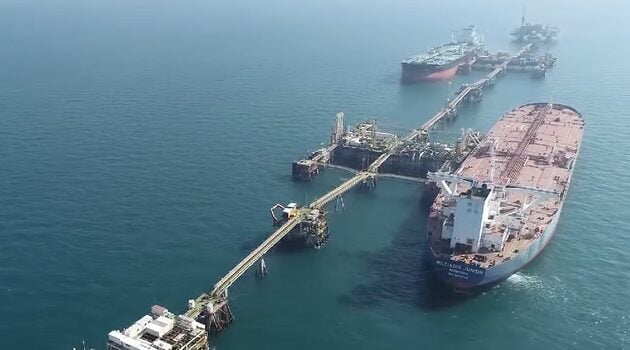
🇮🇶🛢️ IRAQ’S OIL EXPORTS REBOUND — AND IRAN’S ROLE RAISES QUESTIONS
🇮🇶🛢️ IRAQ’S OIL EXPORTS REBOUND — AND IRAN’S ROLE RAISES QUESTIONS A new report from Iraq Business News/AGBI , dated September 30, says ...
-
Bank appointment for Currency EXCHANGE Instructions/Checklist Bank Name_________________________________________ Bank 800#____________...
-
Reports are rapidly circulating within the currency community that Tier 4B exchanges may be quietly moving into an active preparation phas...
-
💥 Iraqi Dinar Shake-Up: Could 1 Dinar = 1 USD? 💥 Video Highlights: 🔥 Discussion on the controversial proposal to cancel the Iraqi curren...
