Sunday, August 9, 2026

🇮🇶🛢️🔥 KURDISTAN’S OIL EXPORTS FALL — AND BAGHDAD’S RESPONSIBILITY IS NOW UNDER THE SPOTLIGHT!

 CHANNEL8

Combined oil exports from the Kurdistan Region and Kirkuk through the northern pipeline network have dropped to 114,000 barrels per day, according to data obtained by Channel8. The reduction follows security challenges and regional war impacts that have kept several oil fields offline.

----

🇮🇶🛢️🔥 KURDISTAN’S OIL EXPORTS FALL — AND BAGHDAD’S RESPONSIBILITY IS NOW UNDER THE SPOTLIGHT!

📰 NEWS SUMMARY

Combined oil exports from the Kurdistan Region and Kirkuk through Iraq’s northern pipeline network have fallen to approximately 114,000 barrels per day, according to data obtained by Channel8.

The decline is linked to security challenges and the impact of regional conflicts, which have left several oil fields offline.

⚠️ WHY IS THIS IMPORTANT?

This is not simply an oil-production problem. It touches one of the most sensitive issues between Baghdad and Erbil: who controls Iraq’s oil, who protects the infrastructure, and who is responsible when exports are disrupted?

🛡️ THE BIGGER POLITICAL ISSUE

If Baghdad wants strong federal control over Iraq’s national oil resources, then that control also comes with responsibility.

Baghdad must be able to respond quickly and effectively when strategic oil fields, pipelines, and energy infrastructure are threatened.

Because the reality is simple:

🏛️ FEDERAL CONTROL
⬇️
🛡️ FEDERAL RESPONSIBILITY
⬇️
🛢️ PROTECT THE OIL FIELDS & INFRASTRUCTURE
⬇️
🚢 KEEP EXPORTS FLOWING
⬇️
💰 PROTECT REVENUES FOR ALL OF IRAQ

🔥 AND THIS IS WHERE ERBIL’S POSITION BECOMES INTERESTING

The KRG has argued that attacks and security problems have affected energy infrastructure and that the response has not been sufficient.

Whether or not the current reduction should be described as a deliberate “punishment” of Baghdad, the economic reality is clear:

When Kurdish oil production and exports fall, Baghdad also loses potential revenue.

That means this is not simply a problem for Erbil.

🇮🇶 BAGHDAD NEEDS ERBIL.
🇹🇯 ERBIL NEEDS BAGHDAD.

Baghdad needs Kurdish oil flowing through the national export system to maximize Iraq’s revenues.

Erbil needs a stable relationship with Baghdad to secure payments, investment, infrastructure, and a sustainable mechanism for exporting its oil.

🤝 THE LESSON FOR BAGHDAD

If Baghdad wants the authority to manage Iraq’s oil as a national resource, then it must also demonstrate that it can protect the infrastructure that generates those national revenues.

Otherwise, Erbil can legitimately argue:

“If you want federal control over our oil, you must also accept federal responsibility for protecting it.”

🛢️ WHAT DOES THIS MEAN FOR THE HCL?

This situation could increase the pressure for a permanent agreement covering:

✅ Who controls oil production
✅ Who protects the fields and infrastructure
✅ How exports are managed
✅ How revenues are transferred and distributed
✅ How oil companies are paid
✅ What happens when security disruptions occur

That is why the current situation may be bigger than a temporary drop in exports.

🔥 MY TAKE

The real issue may not be simply whether Kurdistan is exporting more or less oil.

The deeper question is:

Can Baghdad and Erbil build a system where control, responsibility, security, exports, and revenues are all clearly connected?

Because if Baghdad wants centralized authority over Iraq’s oil, it must also be efficient, responsive, and willing to act when those assets are threatened.

And if both sides lose money when oil stops flowing, then both sides have a powerful financial reason to finally find a lasting solution.

🇮🇶🛢️ CONTROL WITHOUT RESPONSIBILITY WILL NOT WORK.

⚠️ Analysis: The available report does not establish that the KRG deliberately reduced exports to punish Baghdad. The political interpretation above is based on the broader implications of the security-related production disruptions.


🔗📢 FOLLOW & JOIN OUR COMMUNITY

📌 TELEGRAM: https://t.me/DINAREVALUATION

📌 X (TWITTER): https://x.com/DinarWatchTeam

📌 BLUESKY: https://bsky.app/profile/dinaresgurus.bsky.social

#Iraq #Kurdistan #KRG #Baghdad #Erbil #IraqiOil #OilExports #HCL #IraqNews #IraqEconomy #EnergySecurity #IraqPolitics #KurdistanRegion

🚨 IRAQ MONETARY REFORM UPDATE: CBI INSIDER REVEALS WHAT’S REALLY HAPPENING! 🇮🇶


🔗📢 FOLLOW & JOIN OUR COMMUNITY

🇮🇶🔥 IRAQ AT A CROSSROADS: A SOVEREIGN IRAQ OR A PROXY STATE? 🇮🇶

 🇮🇶🔥 IRAQ AT A CROSSROADS: A SOVEREIGN IRAQ OR A PROXY STATE? 🇮🇶

🚨 THE SHOWDOWN FOR IRAQ’S FUTURE IS HERE! 🚨

Prime Minister Al-Zaidi is sending a powerful message: Iraq must not become a failed state. The mission is clear — rebuild the nation, fight corruption, strengthen state institutions, attract massive foreign investment, and put Iraq’s security and sovereign decisions firmly in the hands of the Iraqi government. 🇮🇶💪

⚔️ One of the biggest battles is over who controls the weapons and security forces. Iraq cannot fully exercise its sovereignty while powerful factions operate outside the authority of the state.

💰 At the same time, the fight against corruption is moving to center stage. Calls to expose the “corruption kingpins”responsible for stealing public funds show that accountability is becoming a major part of Iraq’s transformation.

🌎 Iraq is also opening the door to stronger partnerships with the United States, Turkey, and international investors, creating the foundation for major economic development and infrastructure projects.

🚆 The Development Road is a huge part of this vision — connecting Iraq to regional and global markets while creating jobs, investment, infrastructure, and long-term economic growth.

🔥 But the battle for Iraq’s future will not be easy.

The pressure is building. The political establishment is being challenged. The issue of weapons, corruption, sovereignty, and government authority is bringing the real power struggle in Baghdad into the spotlight.

🇮🇶 A stronger, sovereign Iraq means stronger institutions, greater economic opportunity, more investment, and a completely different future for the Iraqi people.

💵 And for those watching the Iraqi dinar, the bigger picture is impossible to ignore: political stability, economic development, investment, and monetary reform are all pieces of the same transformation.

🚨 THE PARADIGM IS SHIFTING. IRAQ’S FUTURE IS BEING DECIDED NOW! 🇮🇶🔥💵


🔗📢 FOLLOW & JOIN OUR COMMUNITY

📌 TELEGRAM: https://t.me/DINAREVALUATION

📌 X (TWITTER): https://x.com/DinarWatchTeam

📌 BLUESKY: https://bsky.app/profile/dinaresgurus.bsky.social

📌 YOUTUBE: https://www.youtube.com/@DINARREVALUATION

#Iraq #IQD #IraqiDinar #AlZaidi #IraqNews #IraqReform #MonetaryReform #EconomicReform #SovereignIraq #DevelopmentRoad #IraqInvestment #Corruption #IraqFuture #RV #Revaluation

🇮🇶🔥 IRAQ’S SEPTEMBER 30 DEADLINE: THE SOVEREIGNTY SHOWDOWN IS HERE! 🔥🇮🇶

 🇮🇶🔥 IRAQ’S SEPTEMBER 30 DEADLINE: THE SOVEREIGNTY SHOWDOWN IS HERE! 🔥🇮🇶

🚨 54 DAYS AND COUNTING! 🚨

Iraq is moving toward a major turning point as the government pushes to bring all weapons under the authority of the Iraqi state.

The September 30 deadline is putting unprecedented pressure on armed factions that have refused to surrender their weapons, while the government continues working toward a solution through political dialogue, security guarantees, and gradual integration. 🇮🇶⚔️

💥 The message is becoming increasingly clear:

Iraq wants the final say over Iraq.

Control of weapons.
Control of security decisions.
Control of national sovereignty.
Control of the country’s economic future. 🇮🇶💪

🤝 Prime Minister Al-Zaidi is also working to prevent an internal confrontation, with talks continuing between the government and influential factions. The goal is to find a path that protects Iraq while bringing security decisions firmly into state institutions.

🌎 At the same time, Iraq is positioning itself for greater regional cooperation, foreign investment, infrastructure development, and economic expansion.

🚆 Development Road.
💰 Foreign Investment.
🏗️ Infrastructure.
🛡️ State Security.
🇮🇶 National Sovereignty.

These pieces are coming together as Iraq enters a critical phase of transformation.

🔥 September 30 could become a defining moment for Iraq’s political, security, and economic future.

🇮🇶 A stronger state. A stronger economy. A stronger Iraq.

💵 And for those watching the Iraqi dinar, the developments surrounding sovereignty, stability, investment, and economic reform are certainly worth watching closely.

🚨 THE COUNTDOWN HAS BEGUN. IRAQ’S NEXT CHAPTER IS TAKING SHAPE! 🇮🇶🔥💵

🔗📢 FOLLOW & JOIN OUR COMMUNITY

📌 TELEGRAM: https://t.me/DINAREVALUATION

📌 X (TWITTER): https://x.com/DinarWatchTeam

📌 BLUESKY: https://bsky.app/profile/dinaresgurus.bsky.social

📌 YOUTUBE: https://www.youtube.com/@DINARREVALUATION

#Iraq #IQD #IraqiDinar #IraqNews #AlZaidi #IraqReform #SovereignIraq #IraqSovereignty #Disarmament #IraqInvestment #DevelopmentRoad #EconomicReform #MonetaryReform #IraqFuture #RV #Revaluation

-----

Days to disarm Iraq's factions: deadline or negotiable ceiling?Ali Al-Zaidi
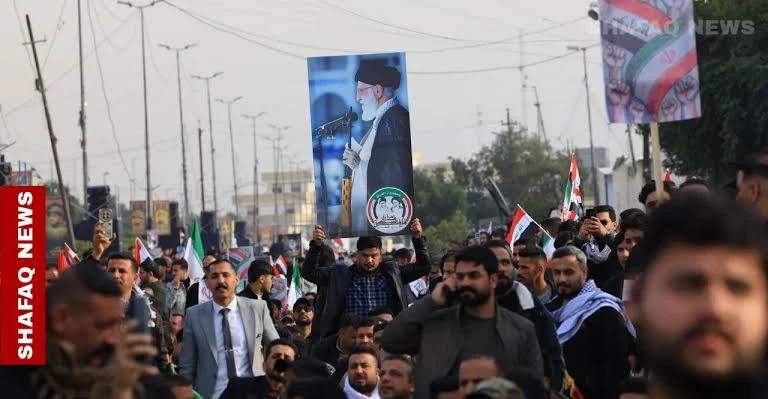
Days to disarm Iraq's factions: deadline or negotiable ceiling?
2026-08-07 12:59

Shafaq News

Fifty-four days remain before the deadline set by the Iraqi Government for advancing steps to restrict weapons to the state, with some Iran-aligned armed factions still refusing to give up their arms, maintaining that their weapons are tied to "resistance" against regional threats.

Rising domestic and regional tension frames these developments, after Iraqi security and military forces raised their readiness level and canceled leave for many commanders and officers in anticipation of any emergency. The move coincided with the expiration of a deadline armed factions had given the government to take a position on the US and Saudi strikes that hit Popular Mobilization Forces (PMF) sites on July 29.

Read more: Iraq under regional pressure as neighbors threaten to strike Iran-aligned factions

The September Deadline

Following its latest meeting, the State Administration Coalition (SAC), which brings together the country's main Shiite, Sunni and Kurdish blocs, affirmed the need to restrict weapons to official state institutions, warning that any armed activity outside the state framework after September 30, 2026 would be handled under Iraq's anti-terrorism law.

Read more: What happens to Iraq's armed factions after September 30?

PM Ali Al-Zaidi is "determined to bring the management and movement of weapons in the country under control," political analyst Ziad al-Arrar told Shafaq News, describing the SAC's meeting as fresh political backing for the government on this file. The presence of the three presidencies alongside the Kurdistan Region president, Nechirvan Barzani, al-Arrar noted, “reflects shared conviction over the danger of weapons remaining outside government control, particularly given Iraq's difficult economic conditions.”

He added that consultations with factions refusing to surrender their arms are expected to intensify in the coming period, and understandings could be reached before the deadline expires, potentially through a "transitional phase" to manage the complex file rather than direct confrontation.

Broad Political Cover Needed

Success in restricting weapons to the state depends on more than a government decision alone, according to security expert Sarmad al-Bayati, who pointed to a mix of factors.

"Domestic support, particularly from the SAC and the Supreme Judicial Council, represents the first factor," al-Bayati told Shafaq News, since the file requires broad political and legal cover. He also pointed to support from neighboring states seeking to help Iraq secure itself, arguing this support reflects regional concern over Iraqi territory being used in conflicts beyond its borders rather than interference in internal affairs.

Factions are not uniformly opposed to restricting weapons, al-Bayati explained, “some link the issue to the withdrawal of the Global Coalition.” The period following the coalition's departure, he said, will more clearly reveal which groups are prepared to fully integrate into state institutions and which will remain committed to independent military structures.

Government protection and guarantees for these factions remain necessary in return, al-Bayati stressed, noting that their members "remain Iraqis," and that handling the file "must account for both security and social dimensions."

Multiple political and government sources also disclosed to Shafaq News details of a turbulent night in Baghdad spanning Thursday into Friday dawn, which ended in an understanding between al-Zaidi and Badr Organization leader Hadi al-Amiri calling for mutual de-escalation between the government and armed factions, opening space for Iraqi diplomatic efforts to address the crisis with Saudi Arabia. 

Al-Amiri held a dawn meeting with al-Zaidi at the height of the security alert in Baghdad and other provinces, the sources told Shafaq News, during which threats by armed factions to respond against Saudi Arabia were discussed alongside measures the government had been preparing against groups accused of carrying out cross-border attacks.

Weapons and Foreign Withdrawal

Forces close to the armed factions view the issue as inseparable from the presence of foreign troops in Iraq.

Emad al-Musafer, a political analyst close to the Shiite Coordination Framework, said the factions’ weapons emerged, in their own view, from the need to confront the American occupation of Iraq, and that the agreed withdrawal of US forces by September 30 marks a turning point on this file. “Dialogue between the government and factions is likely to continue toward arrangements that preserve the Iraqi state's ability to manage its internal affairs while maintaining a role for forces that fought against ISIS,” al-Musafer said in an interview with Shafaq News.

Neither side wants confrontation, he explained: the government does not seek one with the factions, nor do the factions seek to "incapacitate" the government. He stressed that the relationship remains complicated by political and social entanglement, and that "dialogue remains the most likely path forward given the government's recognition that these factions are part of Iraq's social fabric."

Read more: Iraq's September deadline undercuts armed factions' case for weapons

Factions Reject Disarmament

Kataib Hezbollah Secretary-General Abu Hussein al-Hamidawi had earlier rejected surrendering weapons, affirming a move toward developing and expanding military capabilities, and describing recent regional developments and the US-Saudi strikes as additional grounds for retaining arms.

Other factions, including Harakat al-Nujaba and Kataib Sayyid al-Shuhada, similarly rejected relinquishing their military capabilities. They argued that any discussion of disarmament must be tied to the withdrawal of foreign forces and guarantees protecting Iraq from external attacks.

Some factions, meanwhile, have signaled willingness to reorganize their relationship with the state, as the government speaks of a gradual path built on integrating security decision-making within state institutions.

Read more: Iraq's September 30 weapons deadline leaves terms of disarmament unresolved

Despite the firm tone accompanying the SAC's decision, a Coordination Framework source suggested the September 30 date "may not necessarily be a fixed, non-negotiable point." The Framework may view the deadline as a "flexible, negotiable ceiling"; the al-Zaidi government's ability to advance the file, the source said, depends not only on military or legal tools but on its capacity to balance American pressure against factional reservations.

Washington holds significant economic and political leverage, the source added, while the factions retain security and military influence on the ground, meaning any resolution requires understandings broader than a single government decision. Success on this file ultimately requires a security and regional understanding that makes the withdrawal of US forces a tangible reality; otherwise, the September 30 deadline risks becoming a political declaration followed by an implicit extension or new arrangements.

Written and edited by Shafaq News staff.

https://www.shafaq.com/en/Report/Days-to-disarm-Iraq-s-factions-deadline-or-negotiable-ceiling

🇮🇶🛢️ IRAQ, KURDISTAN & OIL: WHAT DOES THIS MEAN FOR THE FUTURE OF THE HCL?

 CHANNEL8

Iraqi Oil Minister told Channel8 that Baghdad has offered to supply the Kurdistan Regional Government with gasoline at the same subsidized rates applied across Iraq, while the KRG has requested 50,000 barrels of crude oil to refine and supply petroleum products independently. Read more: channel8.com/english/news/6
----

🇮🇶🛢️ IRAQ, KURDISTAN & OIL: WHAT DOES THIS MEAN FOR THE FUTURE OF THE HCL?

A recent report from Channel 8 reveals an interesting detail that may have much bigger political implications than it first appears.

Iraq’s Oil Minister said that Baghdad offered to supply the Kurdistan Regional Government (KRG) with gasoline at the same subsidized rates applied across Iraq.

However, Erbil requested 50,000 barrels of crude oil instead, so that it could refine the oil and distribute the petroleum products independently.

And this is where things get interesting. 👇

🔹 Erbil appears to want to maintain as much control as possible over the oil it receives.

Accepting refined gasoline would mean relying more directly on Baghdad for fuel supplies and distribution.

Receiving crude oil, on the other hand, allows the KRG to refine it, produce gasoline and other petroleum products, and manage the distribution itself.

This can be viewed as another indication that trust between Erbil and Baghdad remains limited.

But it is also about something bigger: economic autonomy and control over resources.

⚖️ WHAT DOES THIS MEAN FOR THE HCL?

This is where the issue becomes particularly important.

The Hydrocarbon Law (HCL) is expected to establish clearer rules governing Iraq’s oil and gas sector, including the relationship between the federal government and the regions, production, marketing, management and revenue distribution.

And this episode highlights exactly why reaching a final agreement on the HCL remains so difficult.

🇮🇶 Baghdad wants stronger federal coordination and control over Iraq’s hydrocarbons.

🟡 Erbil wants guarantees that it will retain a meaningful role and sufficient autonomy in managing its resources.

Therefore, this news does not automatically mean that the HCL is closer to approval — or further away from it.

But it does highlight one of the fundamental questions that must ultimately be resolved:

👉 How much control will Baghdad have, and how much control will Erbil retain over oil and petroleum products?

Until both sides reach an acceptable compromise on that question, the HCL will remain one of the most sensitive political and economic issues in Iraq.

🛢️ Bottom line: The KRG’s request for 50,000 barrels of crude instead of subsidized gasoline is not simply a fuel issue.

It also reflects the long-running struggle between federal control and Kurdish autonomy.

And that same struggle could be one of the key factors shaping how — and when — the HCL is ultimately negotiated and approved.

🇮🇶🛢️⚖️

🔗📢 FOLLOW & JOIN OUR COMMUNITY

📌 TELEGRAM: https://t.me/DINAREVALUATION

📌 X (TWITTER): https://x.com/DinarWatchTeam

📌 BLUESKY: https://bsky.app/profile/dinaresgurus.bsky.social

📌 YOUTUBE: https://www.youtube.com/@DINARREVALUATION

#Iraq #Kurdistan #KRG #Erbil #Baghdad #Oil #IraqiOil #HCL #HydrocarbonLaw #Energy #OilAndGas #IraqPolitics #KurdistanRegion #MiddleEast #EnergyPolitics

🇮🇶✨ IRAQ MOVES FORWARD WITH MAJOR ECONOMIC REFORMS! 💰📈

 CHANNEL8  Prime Minister Ali Faleh al-Zaidi hosted the Chairman and members of the Parliamentary Finance Committee at the Prime Minister...