Sunday, July 5, 2026

🇮🇶💰 Iraq’s Oil Revenues & US Financial System Link Since 2003 🚨

🇮🇶💰 Iraq’s Oil Revenues & US Financial System Link Since 2003 🚨

The news explains how the oil revenues of Iraq remain linked to the US financial system since 2003, following the invasion.


🔎 Main idea:

  • Iraqi oil revenues are deposited into accounts linked to the Federal Reserve Bank of New York 🏦🇺🇸

  • This system was originally created to protect funds from debt, lawsuits, and risks after the Saddam Hussein era ⚖️


🇺🇸 Control or protection?

There are two interpretations:

  • The Iraqi government and some experts say the US is only a “custodian” and protector of the funds 🤝

  • Others argue this may imply a level of indirect financial control over Iraq 🧭


📉 Current situation:

  • Iraq’s reserves have declined (although still strong) 📊

  • The country is heavily dependent on oil (~90% of state revenue) 🛢️

  • The IMF warns about fiscal risks without reforms ⚠️


⚖️ Core issue:

Iraq is still operating within a financial system created after 2003, and exiting it would require building strong institutions and alternative international mechanisms 🏗️🌍


💬 Summary:

Although officially the money belongs to Iraq, much of the oil revenue system still flows through US-linked financial structures, raising debate about Iraq’s true financial sovereignty 🇮🇶💭


🇮🇶💭 Additional reflection:

From my perspective, I see that Iraq is beginning to “wake up” and implement economic reforms aimed at reducing its dependence on the financial system established in 2003. That is why I also see a growing interest in diversifying the economy and looking for income sources beyond oil 🌱📉

For me, all of this is tied to a broader goal of economic sovereignty: having greater control over its resources, strengthening its institutions, and reducing external dependency 🏛️💪

In this context, I also consider more speculative ideas about possible future monetary changes, including concepts like systems directly linked to energy resources (for example, “petro-dinar” type theories). I understand these are interpretations and scenarios discussed in certain circles, not officially confirmed plans 🔍

Still, for those of us closely following Iraq’s evolution, these developments make me feel like the country is entering a deep transformation phase 🔄🇮🇶 So I keep connecting the dots… but always trying to separate facts from speculation.

Against all of this, and considering Iraq’s desire to exit this financial system, it would not be illogical for me to think about a potential project related to the implementation of a “Petro-Dinar” in the near future… let’s keep connecting the dots Dianarians!! This is getting better than a Mexican telenovela 📺🔥🇮🇶


🔗📢 FOLLOW & JOIN OUR COMMUNITY

📌 TELEGRAM: https://t.me/DINAREVALUATION

📌 X (TWITTER): https://x.com/DinarWatchTeam

📌 BLUESKY: https://bsky.app/profile/dinaresgurus.bsky.social

📌 YOUTUBE: https://www.youtube.com/@DINARREVALUATION

🇮🇶🔥 #Iraq #OilRevenues #CBI #USFinancialSystem #EconomicReform #Sovereignty #MiddleEast #Geopolitics #Finance #IQD #Dinar #InvestmentTalk #EnergyEconomy #PetroDinar #BreakingNews

---

Iraq's oil revenues under US financial guard 23 years after invasion

President Donald Trump's renewal in May 2026 of the national emergency on Iraq passed with little fanfare in Washington, the twenty-third such extension since 2003. Inside Iraq, it reopened a recurring dispute: whether the United States holds Iraqi oil money, or merely guards it. A fresh parliamentary inquiry to the oil ministry, demanding answers on a reported export deal with Washington, has pushed that dispute back into public view and exposed how little has changed in more than two decades.


The financial arrangement dates to the weeks following the 2003 invasion. UN Security Council Resolution 1483, adopted on May 22, 2003, required Iraq's oil and gas export revenues to be deposited into the Development Fund for Iraq, with 5% set aside for reparations to Kuwait. In practice, the fund was held at the Federal Reserve Bank of New York under international oversight. The same day, President George W. Bush issued Executive Order 13303, shielding the fund and Iraqi oil revenues from legal attachment to protect reconstruction money from creditors pursuing claims dating to Saddam Hussein's era.


Read more: Iraq diversifies reserves beyond US treasuries


Mohammed Al-Hasani, a financial expert, told Shafaq News that the structure protects Iraqi money rather than appropriating it. Export revenues are deposited at the Federal Reserve under the management of the Central Bank of Iraq, he said, a setup whose purpose is “to shield the funds from lawsuits and asset-freezing abroad, not to place them at Washington's disposal.” The annual renewal, in his reading, is procedural. The money stays Iraq's and finances the state budget once the required financial steps are complete. 


He noted that all of the Central Bank's external accounts currently sit at the Federal Reserve, and that in modern history the United States has never seized central bank deposits held there.


The extraordinary legal shield created after the 2003 invasion was largely dismantled in 2014. President Barack Obama's Executive Order 13668 ended the seizure protections that had covered the Development Fund for Iraq, Iraqi oil revenues, and the Central Bank of Iraq's accounts. But the national emergency declared in 2003 survived that change and has been renewed by every US president since. What began as a temporary postwar safeguard has become a standing emergency framework that no administration has chosen to end.


Read more: 2026 budget: Iraq confronts unprecedented fiscal strain


For Nawar Al-Saadi, a professor of international economics, that persistence is the real story. The renewal imposes no new American tutelage, he told Shafaq News, but extends a legal framework rooted in 2003. Two decades on, remaining inside it sends a signal that Iraq's economy is still bound to a structure born of war. 


“The problem is not whether Washington is seizing the money but why Iraq still depends on external protection for its own assets, and what that says about the completeness of its financial sovereignty,” he said, pointing to the task ahead, which is “building legal and financial institutions strong enough to let Iraq leave the arrangement while keeping its assets shielded abroad.”


Iraq’s foreign currency reserves stood at $97.433 billion at the end of 2025, down from $100.367 billion a year earlier and $111.736 billion in 2023, according to Central Bank of Iraq figures. The reserves remain large, covering roughly a year of imports, but the buffer has narrowed as fiscal pressures grow. Much of Iraq’s oil-dollar system still runs through US-linked financial channels, giving Baghdad less room to manage its dollar liquidity freely.


The IMF warned in May 2024 that without policy adjustment, Iraq’s risk of medium-term sovereign debt stress was high. At the time, the Fund highlighted that Iraq’s fiscal breakeven oil price had climbed to around $84 a barrel in 2024 from $54 in 2020, underscoring the severe strain on a state where oil provides about 90% of government revenue.

Read more: Economic rationale for Washington’s continued retention of Iraq’s oil revenues in federal reserve accounts


Saudi Arabia shows what an exit looks like. Its central bank, SAMA, held $746 billion in reserves at a 2014 peak; by December 2023 those holdings had fallen to $434.6 billion, as Riyadh shifted assets into the Public Investment Fund and the National Development Fund, which together manage hundreds of billions in diversified global holdings. Saudi oil money increasingly moves through vehicles that answer to Riyadh, not to New York. Iraq has built no comparable channel.


Hussein Al-Askari, an Iraqi economic analyst, told Shafaq News that all proceeds from Iraqi oil sales land in the Federal Reserve account rather than in any bank inside Iraq. That account, he said, falls under US administration and Treasury oversight, and the yearly renewal of the emergency keeps Washington's hold on the framework intact. Where Al-Hasani sees custody, Al-Askari sees control, a gap that the official answer does little to close.

The renewed parliamentary inquiry reflects the same unease. The questions put to the oil ministry, pressing for detail on a reported plan to supply the US Strategic Petroleum Reserve and to create a joint energy fund, signal a governing Coordination Framework under domestic pressure to show independence from Washington.


Read more: Iraq's energy vulnerability: When apetro-state has no buffer

Exiting the Federal Reserve arrangement would require more than a political decision. Iraq cannot move its reserves to London or Tokyo without first securing the same protection from seizure that the current setup provides, which means finding other central banks or international institutions willing to guarantee it, and absorbing the costs of the switch. A government consumed by coalition management and falling oil prices has shown no appetite for that work.


Written and edited by Shafaq News staff.
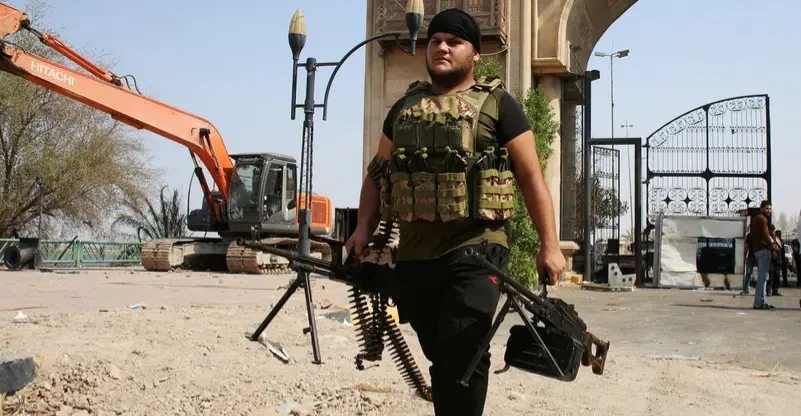
🇮🇶💥 Iraq Security Deadline, Rumors, and Rising Tensions 🚨🔥: Iraq's September 30 weapons deadline leaves terms of disarmament unresolved

🇮🇶💥 Iraq Security Deadline, Rumors, and Rising Tensions 🚨🔥

The key issue now is security 🇮🇶⚠️.

 A reported deadline to fully disarm militias and address armed factions is set for September 2026 📅, while Al-Zaidi is expected to present his plan to President Trump 🇺🇸 during his Washington visit in mid-July ✈️🏛️.

Interestingly 🤔, a Contact at the Central Bank of Iraq mentioned by MNT GOAT stated:


"The key issue now is security. A reported deadline to fully disarm militias and deal with armed factions is September 2026, while Al-Zaidi is expected to present his plan to President Trump during his Washington visit in mid-July." 📊🇮🇶 ..READ MORE:

 🚨🏦 CBI Contact: The Plan Is Still Moving Forward 🇮🇶 


This adds another layer to the ongoing discussions around Iraq’s future, where security, politics, and economic reform seem deeply connected 🔗💰.


🇮🇶💭 My perspective:

Curiously, this aligns with a pattern where security developments and reform discussions move in parallel. If this timeline is accurate, it could signal that Iraq is entering a more structured phase of state consolidation and negotiation rather than uncertainty 📈⚖️.


🔗📢 FOLLOW & JOIN OUR COMMUNITY

📌 TELEGRAM: https://t.me/DINAREVALUATION

📌 X (TWITTER): https://x.com/DinarWatchTeam

📌 BLUESKY: https://bsky.app/profile/dinaresgurus.bsky.social

📌 YOUTUBE: https://www.youtube.com/@DINARREVALUATION


🇮🇶💥 #Iraq #Baghdad #KRG #SecurityReform #Disarmament #CBI #MNTGOAT #MiddleEast #Geopolitics #EconomicReform #Sovereignty #BreakingNews #IraqNews #Stability

-----

Iraq's September 30 weapons deadline leaves terms of disarmament unresolved

Iraq's September 30 weapons deadline leaves terms of disarmament unresolved
2026-07-02 17:45

Shafaq News

Iraq has set September 30 as the final date for surrendering weapons held “outside state institutions” and a committee now exists to fold the armed factions into the security forces and move their arms to state custody. Whose weapons move, under whose command, and what becomes of those who refuse remain unsettled.

Read more: Iraq to place armed factions' weapons under state control: What we know so far

September 30 also closes the US-led coalition against ISIS, and the overlap is deliberate. Government spokesman Haider al-Aboudi has bound the two events together, warning that any weapon outside the state framework after that date “becomes unregulated” and open to legal treatment. The alignment aims at the argument that has kept some factional weapons in place for two decades: that they answer a foreign military presence on Iraqi soil. End the presence, and the rationale is supposed to end with it.

Read more: Iraq after the Global Coalition: Between sovereignty and strategic risk

Prime Minister Ali al-Zaidi has built his program around that logic. A businessman and banker from Dhi Qar with no prior senior office, he took power in May 2026 as the compromise candidate of the Coordination Framework, the Shia bloc that dominates parliament, and did so with  Washington'sopen backing. The Framework has since authorized him to pursue a state monopoly on arms and to sever the Popular Mobilization Forces from party and political attachments. That umbrella, state-funded and formally part of the security apparatus, absorbed most of the Shia armed groups after ISIS overran northern Iraq in 2014, yet its Iran-aligned components have kept operating on their own terms.

Read more: EXPLAINER: From the fight against ISIS to US withdrawal talks

Muqtada al-Sadr, the head of the Patriotic Shiite Movement, opened the current phase when he detached the Saraya al-Salam from his movement in late May and placed it under state command. Asaib Ahl al-Haq and Kataib Imam Ali followed with steps to hand parts of their PMF-registered formations to the government, and the Commander-in-Chief's spokesman, Sabah al-Numan, announced a committee ordered by al-Zaidi to build the integration mechanisms and transfer weapons, equipment, and bases to the competent authorities. Al-Zaidi has said the bulk of factional arms already sits under state custody, with a small remainder awaiting a transfer mechanism.

Read more: What does Iraq's new government promise? A guide to Ali Al-Zaidi's ministerial program

The compliance is uneven, and the resistance is concentrated among the groups closest to Tehran. Kataib Hezbollah, Harakat al-Nujaba, and Kataib Sayyid al-Shuhada have refused to enter the process, holding to what they call resistance weapons and pinning any move on external conditions, chief among them the presence of foreign forces.

Mustafa Ajeel, a security researcher, reads the September 30 date as engineered against the withdrawal schedule, “which makes the coming weeks pivotal for ending the justification for arms outside the state.” That justification does not dissolve on its own, and the factions weighing it disagree sharply on what the deadline requires of them.

Ahmed Adnan, a member of the Sadiqoon Movement, the political wing of Asaib Ahl al-Haq under Qais al-Khazali, rejects the framing of surrender outright. What is underway, he told Shafaq News, is confining the decision to use force to the state rather than stripping the factions of their weapons, which remain inside the PMF. 

He casts the effort as “a national, religious, and political undertaking that must reach every faction without exemption” and treats the coalition's departure as the opening for a broader reckoning over the future of these arms rather than its conclusion.

Adnan al-Kinani, a security and political expert, draws the opposite line. The end of “the occupation” means armed resistance has run its course, leaving factions to choose full integration into the state or a shift into politics. He also locates the fault line inside the factional camp itself, between those who accept the government's course and those who reject it, “an internal division he argues must be resolved at the root rather than managed at the surface.”

That internal split is where the deadline meets its hardest test. Moain al-Kadhimi, a leader in the Badr Organization under Hadi al-Amiri, a close ally of Iran, ties the holdouts' compliance to "a complete and actual US withdrawal, along with guarantees against any return of American military action." Groups such as Kataib Hezbollah and Kataib Sayyid al-Shuhada, he told Shafaq News, want firm assurances on that point before moving, and while the government can manage the security file, it needs a decisive political choice to carry it. 

Any final settlement, in his reading, rests on a balance of commitments between Baghdad and Washington and on full Iraqi sovereignty over its territory and airspace.

Read more: Iraq’s armed factions and the disarmament debate: Why unity masks deep divisions

The 2024 agreement between Baghdad and Washington sets that timeline. Its first phase closed in January 2026 with the end of combat missions, a partial pullback, and a shift toward bilateral security cooperation. The second phase runs to this September and ends the use of Iraqi bases to support operations in Syria, narrowing the relationship to limited advisory coordination. The framework gives the factions a fixed date to measure against, and it gives the holdouts a condition they can claim has not yet been met.

Enforcement is the gap the declared mechanism has not closed. A committee to integrate fighters and move weapons addresses the factions already inclined to cooperate. It says nothing about the ones refusing, and no announced procedure yet establishes who takes physical custody of their arms, how the PMF is restructured around “their resistance groups,” or what legal treatment means in practice for a group with parliamentary weight and armed capacity. Al-Kinani's warning about roots over surfaces lands here: “the deadline can be declared enforceable without being enforceable against the parties that matter most.”

Written and edited by Shafaq News staff.

https://shafaq.com/en/Report/Iraq-s-September-30-weapons-deadline-leaves-terms-of-disarmament-unresolved

🚨🇮🇶 Armed Factions in Focus

🔗📢 FOLLOW & JOIN OUR COMMUNITY

📌 TELEGRAM: https://t.me/DINAREVALUATION

📌 X (TWITTER): https://x.com/DinarWatchTeam

📌 BLUESKY: https://bsky.app/profile/dinaresgurus.bsky.social

📌 YOUTUBE: https://www.youtube.com/@DINARREVALUATION


Saturday, July 4, 2026

🇮🇶💼 Kurdistan Denies Salary Rumors and Calls Them a Disinformation Campaign 🚨

CHANNEL 8

The Ministry of Finance and Economy stated that rumors claiming the KRG delegation requested a withholding of Kurdistan salary payments during the Baghdad meeting are “falsehoods” and “a misleading campaign”

-----

🇮🇶💼 Kurdistan Denies Salary Rumors and Calls Them a Disinformation Campaign 🚨

The Kurdistan Regional Government's (KRG) Ministry of Finance and Economy has firmly denied rumors claiming that its delegation asked Baghdad to withhold salary payments for public employees during recent meetings.

The Ministry described those claims as "falsehoods" and part of "a misleading disinformation campaign," making it clear that they never requested salaries to be delayed or suspended.

Why do these rumors keep surfacing? The issue of Kurdistan's salaries has long been one of the most sensitive topics between Baghdad and Erbil. Whenever negotiations take place over the federal budget, oil revenues, or financial agreements, unverified stories often emerge that appear designed to influence public opinion or create political pressure.

This also brings to mind another major rumor that circulated just a few months ago—that the Central Bank of Iraq (CBI) was preparing to devalue the Iraqi dinar. In the end, both the CBI and the Iraqi government denied those claims, reaffirming that there was no intention to raise the official exchange rate of the U.S. dollar against the Iraqi dinar.

When you connect the dots, it's interesting to notice that the rumors always seem to revolve around the issues that matter most to Iraq's future: Kurdistan salary agreements, the value and stability of the Iraqi dinar, and perhaps next we'll see similar rumors surrounding the Hydrocarbon Law (HCL) agreements and Article 12.

Is that merely a coincidence? Or could certain political or economic interests benefit from creating uncertainty whenever Iraq makes progress on these critical issues? Some observers speculate that factions aligned with external interests—including groups perceived as close to Iran—may prefer to see these negotiations disrupted rather than successfully resolved. At this time, however, there is no public evidence identifying any specific group as being responsible for spreading these rumors.

🤔 One thing is clear: whenever Iraq moves forward on key reforms, misinformation seems to follow. It is certainly worth paying attention to the pattern and drawing your own conclusions.

🔗📢 FOLLOW & JOIN OUR COMMUNITY

📌 TELEGRAM: https://t.me/DINAREVALUATION

📌 X (TWITTER): https://x.com/DinarWatchTeam

📌 BLUESKY: https://bsky.app/profile/dinaresgurus.bsky.social

📌 YOUTUBE: https://www.youtube.com/@DINARREVALUATION

#Iraq #Kurdistan #KRG #Baghdad #Erbil #IraqNews #EconomicReform #MonetaryReform #CBI #IQD #HCL #FinancialReform #MiddleEast #Transparency #StayInformed

🇮🇶🔥 WOW, WOW, WOW! Iraq Keeps Going After the Corrupt! 💰💪

 The Iraqi Ministry of Justice announced on Saturday the recovery of more than $25 million in misappropriated state funds over a two-year period, alongside the launch of international legal proceedings across five nations to reclaim stolen properties and frozen bank accounts totaling more than $20 billion.

🇮🇶🔥 WOW, WOW, WOW! Iraq Keeps Going After the Corrupt! 💰💪

🇮🇶🔥 Wow, wow, wow! Iraq keeps the pressure on and refuses to let up on the corrupt. They continue tracking them down and recovering stolen funds. Keep going, Iraq—you can do it! 💪🇮🇶

Another major step forward! The Iraqi Ministry of Justice announced that, over the past two years, it has recovered more than $25 million in misappropriated public funds. Even more impressive, Iraq has launched international legal proceedings in five countries to recover stolen properties, frozen bank accounts, and other assets valued at more than $20 billion.

This is more than just a news headline—it demonstrates Iraq's continued commitment to fighting corruption, strengthening the rule of law, and bringing the nation's wealth back to where it belongs: the Iraqi people.

🌍 Why does this matter to those following the Iraqi Dinar?

For many of us who have followed Iraq's economic progress for years, this is another encouraging piece of the bigger picture.

Recovering billions in stolen assets can strengthen the country's financial position, provide additional resources for development, improve investor confidence, and reinforce the economic reforms that Iraq has been implementing. Every successful reform helps build a stronger foundation for the nation's future.

While this announcement does not, by itself, confirm a revaluation (RV) of the Iraqi dinar, many dinar observers see these developments as part of the long-term economic transformation that has been discussed for years. Stronger institutions, greater transparency, improved financial governance, and accountability are all characteristics of an economy moving toward greater stability.

🇮🇶 Every corrupt official brought to justice...
💰 Every dollar recovered...
🏛️ Every reform implemented...
📈 Every step toward a stronger economy...

...is another reminder that Iraq continues moving forward.

For those of us who believe in Iraq's long-term economic potential and the future of the Iraqi dinar, this is another reason to stay encouraged and continue watching the progress unfold.

Keep going, Iraq! The world is watching, and every positive step matters. 🇮🇶👏

🔗📢 FOLLOW & JOIN OUR COMMUNITY

📌 TELEGRAM: https://t.me/DINAREVALUATION

📌 X (TWITTER): https://x.com/DinarWatchTeam

📌 BLUESKY: https://bsky.app/profile/dinaresgurus.bsky.social

📌 YOUTUBE: https://www.youtube.com/@DINARREVALUATION

#Iraq #IQD #IraqiDinar #Dinar #RV #EconomicReform #AntiCorruption #FinancialReforms #EconomicGrowth #Investment #RuleOfLaw #Hope #Progress #MiddleEast

Nader from Mid East: 💰 Iraq Banking & Dinar News That Could Shake 2026! 🌍🔥


🔗📢 FOLLOW & JOIN OUR COMMUNITY

📌 TELEGRAM: https://t.me/DINAREVALUATION

📌 X (TWITTER): https://x.com/DinarWatchTeam

📌 BLUESKY: https://bsky.app/profile/dinaresgurus.bsky.social

📌 YOUTUBE: https://www.youtube.com/@DINARREVALUATION

🚨 Iraq, Currency Reform & The Global RESET Picture 💰🌍

 Mnt Goat 

 It is going to happen and it is in the plan for Iraq and part of the bigger RESET picture.  These larger notes we hold are going to stay legal tender and used for inter-banking transactions of large amounts, when cash is needed. The CBI told us this many times.

---

🚨 Iraq, Currency Reform & The Global RESET Picture 💰🌍

I believe what is happening in Iraq is not an isolated event, but part of a much larger global financial restructuring that many refer to as a “RESET.” 🏦🌐

From my perspective, Iraq’s monetary changes are connected to broader shifts in banking systems, international settlements, and the modernization of global finance over time.

💵 I also believe that the higher denomination Iraqi dinar notes I hold are not going to disappear, but will continue to exist as legal tender, especially for:

  • 🏦 Interbank transactions

  • 💰 Large-value transfers

  • 🔁 High-value settlements where physical cash may still be needed in specific cases

📢 Based on what has been communicated through the Central Bank of Iraq (CBI), I understand these changes as restructuring and modernization of the system, not the elimination of value or an immediate replacement of all existing currency.

📊 In my view, this transition is not expected to happen overnight, but gradually, with multiple layers of the financial system operating at the same time:

  • Digital banking systems 💳

  • Traditional banking transfers 🏦

  • Limited use of physical cash 💵

⚠️ Of course, I also recognize that interpretations vary, and ultimately only official policies and confirmed implementation will define how any currency reform unfolds.


🔗📢 FOLLOW & JOIN OUR COMMUNITY

📌 TELEGRAM: https://t.me/DINAREVALUATION

📌 X (TWITTER): https://x.com/DinarWatchTeam

📌 BLUESKY: https://bsky.app/profile/dinaresgurus.bsky.social

📌 YOUTUBE: https://www.youtube.com/@DINARREVALUATION


#Iraq #IQD #IraqiDinar #CurrencyReform #GlobalReset #Finance #Banking #Economy #MonetaryPolicy #CBI #CentralBank #FinancialSystem #MacroEconomics #Geopolitics #WorldEconomy

🇮🇶 Are Iraq’s Key Reform Topics Being Targeted by Recurring Rumors? If So, Why and Who Benefits? 🚨

  🔗📢  FOLLOW & JOIN OUR COMMUNITY 📌  TELEGRAM:   https://t.me/DINAREVALUATION 📌  X (TWITTER):   https://x.com/DinarWatchTeam 📌  BLU...