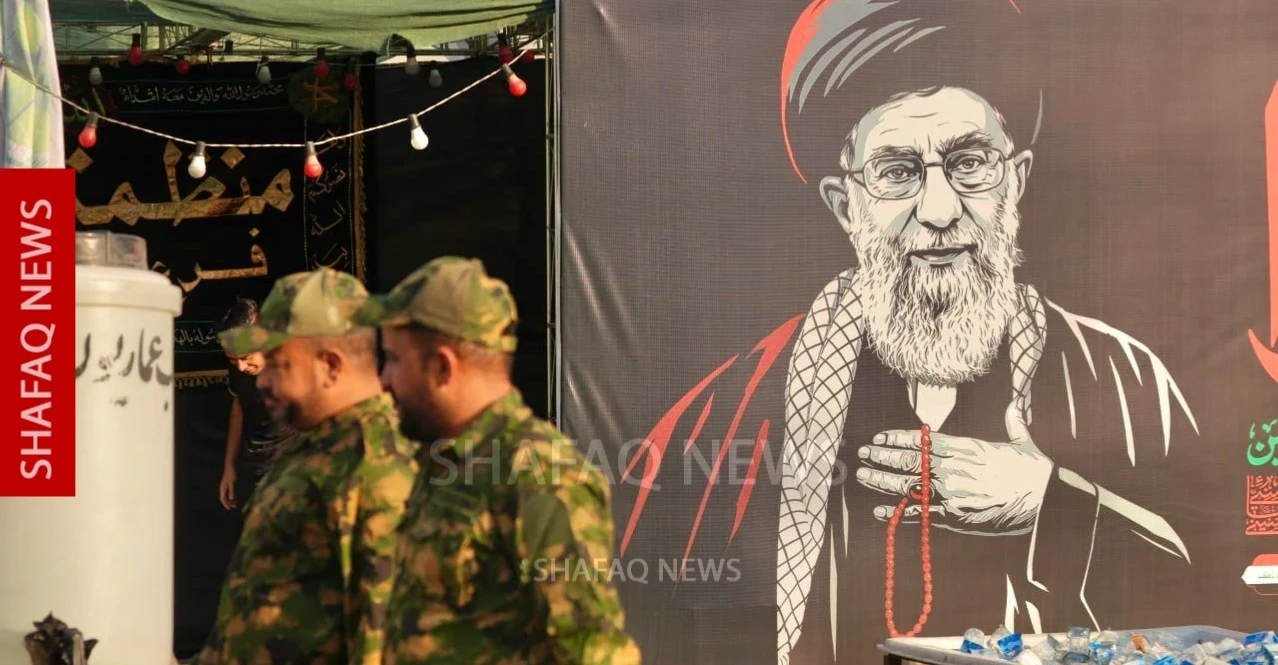
MP: AMERICANS HAVE BEGUN SCRUTINIZING THE NAMES OF AL-ZAYDI’S CABINET MINISTERS, AND TRUMP MAY CHANGE HIS STANCE
MP Zahraa Luqman, from the Badr Organization, expressed her concerns about the change in US President Donald Trump’s stance towards Prime Minister-designate Ali al-Zaidi, stressing that the US administration has already begun scrutinizing the names of candidates for the upcoming cabinet.
Luqman said during a televised interview followed by local media that Trump “could change his mind at any moment,” describing him as “a contradictory person,” and noting that her concerns relate to the way ministers were chosen after al-Zaidi was appointed.
The MP criticized the mechanism for selecting Al-Zidi’s coordinating framework, considering that he “does not have a clear electoral entitlement,” but at the same time she did not rule out his success, stressing that he is “a son of the market” and has economic experience that may help him manage some important files.
She added that there is “accurate information” indicating that the American side has actually begun reviewing the names of the proposed ministers, through a figure who presents the names to the Americans to obtain their approval, as she put it.
Luqman pointed out that Al-Zaydi might be able to bring about change in some service and economic ministries if he stays away from the policy of partisan favoritism, stressing that the Iraqi street is waiting for a government program different from previous governments.
STATUS OF THE RV: Why Iraq’s Militia Crisis Could Delay the Iraqi Dinar Reinstatement
The Iraqi Dinar RV speculation continues to dominate discussions across the global dinar community, but one critical reality remains impossible to ignore: Iraq’s militia problem is now directly tied to the future of the Iraqi economy, international investment, and any potential reinstatement of the Iraqi dinar.
Despite ongoing rumors claiming an “RV this weekend,” the bigger geopolitical picture tells a very different story.
The issue is no longer simply about banking reforms or oil revenues. The United States has made it increasingly clear that Iraq must resolve its armed faction crisis before full economic normalization can move forward.
And that changes everything.
Why The RV Is Still Delayed
For years, investors and observers have focused on Iraq’s monetary reforms, Central Bank modernization, and oil wealth. However, Washington’s current focus is centered on security, governance, and the influence of armed factions operating inside Iraq.
According to multiple recent reports, the U.S. administration has warned Iraqi leaders that militia influence inside the next government could trigger severe political and economic consequences.
This is no longer speculation.
The pressure is public.
Featured Snippet: Why Is The Iraqi Dinar RV Being Delayed?
The Iraqi Dinar RV appears delayed because the United States is demanding stronger security guarantees, reduced militia influence, and political reforms before supporting Iraq’s full economic reintegration and currency reinstatement.
Trump’s Red Line: Armed Factions In Iraq
One of the most important developments involves the ongoing U.S. position regarding Iran-backed militias and armed factions operating inside Iraq.
Recent reports indicate that American officials have demanded a “clear separation” between the Iraqi government and armed groups responsible for attacks on U.S. facilities.
This matters enormously because:
Over 600 attacks reportedly targeted American facilities during recent regional conflicts.
International companies remain hesitant to return to Iraq.
Foreign investors require security guarantees before committing billions of dollars.
The Treasury Department continues monitoring Iraq closely.
Without stability, large-scale investment becomes nearly impossible.
And without investment, Iraq’s long-term economic goals face serious delays.
The Bigger Picture Most People Are Missing
Many dinar followers focus only on exchange rates.
But the real story is geopolitical control, economic influence, and regional security.
The United States remembers:
The 1970s oil embargo
The Iranian hostage crisis
Years of instability in the Middle East
Ongoing threats against U.S. interests
Washington is not approaching Iraq passively.
Instead, the strategy appears focused on creating a stable environment where Western companies, energy firms, and global financial institutions can operate safely.
That means Iraq must demonstrate:
Political independence
Security control
Reduced militia influence
Stable governance
Reliable financial transparency
Until then, uncertainty remains.
International Companies Need Security Guarantees
One major issue receiving increased attention is the withdrawal of foreign businesses and diplomatic missions from Iraq after repeated attacks involving drones and missiles.
Experts warn that Iraq’s economy cannot fully recover without restoring international confidence.
This includes:
Energy companies
Banking institutions
Infrastructure investors
Construction firms
Diplomatic operations
The reality is simple:
No corporation wants to risk billions of dollars in unstable conditions.
U.S. Sanctions Still Matter
Another critical factor often overlooked by dinar investors is the role of OFAC sanctions and U.S. Treasury oversight.
Recent sanctions targeting Iraqi oil officials allegedly connected to Iranian proxy networks demonstrate that Washington is still actively policing financial activity linked to Iraq.
This creates major implications for:
Currency stability
International banking access
Foreign exchange activity
Dollar liquidity inside Iraq
As long as sanctions risks remain elevated, global financial confidence stays limited.
Featured Snippet: Can Iraq Revalue The Dinar Without U.S. Support?
Most analysts believe Iraq would struggle to fully reintegrate financially without U.S. support because the American financial system plays a central role in global banking, oil transactions, sanctions enforcement, and dollar access.
Is Iraq Trying To Resolve The Militia Problem?
Recent reports suggest that several armed factions may be considering handing weapons over to the Popular Mobilization Forces (PMF) structure as part of a political repositioning strategy.
At the same time:
Iraqi politicians are facing growing international pressure.
Cabinet selections are reportedly being scrutinized.
Security cooperation remains under review.
These developments suggest Iraq understands the seriousness of the situation.
But whether meaningful change happens remains uncertain.
What This Means For Iraqi Dinar Investors
For investors watching the Iraqi dinar closely, this situation highlights why short-term RV rumors continue failing repeatedly.
The path toward major monetary reform likely requires:
Greater political stability
Stronger security guarantees
Reduced militia influence
International investor confidence
U.S. financial cooperation
Without those elements, expectations for immediate reinstatement may remain unrealistic.
Q&A Section
What Is The Iraqi Dinar RV?
The Iraqi Dinar RV refers to speculation that Iraq may significantly increase the value of its national currency through monetary reform or reinstatement into global markets.
Why Does The U.S. Care About Iraqi Militias?
The U.S. considers militia influence a security threat because armed groups have been linked to attacks on American facilities and regional instability.
Could Sanctions Hurt Iraq’s Economy?
Yes. Severe sanctions could impact Iraq’s banking system, oil revenues, dollar access, and international investment climate.
Why Are Investors Waiting For Security Improvements?
Global corporations and institutional investors typically require stable political and security conditions before investing billions into a country’s economy.
Is An RV Possible Soon?
No one can predict exact timing. However, many analysts believe major political and security issues still need resolution before significant monetary changes occur.
Final Thoughts
The Iraqi Dinar story is no longer just about currency speculation.
It is now deeply connected to:
Geopolitics
Security
Energy markets
U.S. foreign policy
Regional power struggles
Until Iraq resolves the militia issue and restores full international confidence, expectations for rapid monetary transformation may continue facing delays.
For now, patience and realistic analysis remain more important than hype.
THE CENTRAL BANK GOVERNOR PARTICIPATES IN THE SIN DIALOGUE FORUM
(Mnt Goat: When the CBI talks, I listen….)
Under the slogan “Solutions are born and plans are formulated from the heart of crises,” the Sin Dialogue Forum organized a dialogue session that hosted His Excellency the Governor of the Central Bank of Iraq, Mr. Ali Mohsen Al-Alaq, with broad participation from decision-makers, experts, and specialists in various sectors. The session, titled “From Restricted Rent to Renewable Production: Iraq’s Path Towards a Sustainable and Renewable Economy,” focused on the transition towards a diversified and sustainable economy and reducing reliance on rentier resources. It also presented visions for enhancing national production and revitalizing various economic sectors.
His Excellency the Governor stated that the Central Bank is working to achieve economic and financial stability, despite the challenges facing the country, emphasizing that salaries are guaranteed and will not be interrupted, indicating the financial system’s ability to continue operating.
He explained that the Central Bank has adopted a policy of “working quietly” to preserve monetary reserves and confront crises, including the repercussions of declining oil prices. He recalled the Central Bank’s role during the 2014 crisis, adding that the current financial situation is less severe compared to that period, and that foreign transfers and cash sales to travelers are proceeding smoothly and efficiently.
His Excellency pointed out that the bank continues to support the government in addressing the accumulated financial imbalances resulting from the crises of past years, explaining that it has worked to regulate dollar sales and foreign transfers according to strict compliance standards, with the aim of enhancing transparency and financial stability in Iraq.
🇮🇶 Iraq and the Hydrocarbon Law (HCL): Oil Discovery, Financial Architecture & Global Reset Signals (2026 Update)
Published: May 7, 2026
Something significant is unfolding across Iraq’s energy, fiscal, and monetary landscape. A combination of major oil discoveries, Hydrocarbon Law (HCL) developments, and financial restructuring narratives is driving renewed global attention toward Iraq’s long-term economic positioning.
While official institutions focus on oil production and fiscal stability, analysts tracking deeper macroeconomic patterns are highlighting a broader transformation: resource expansion, sovereign balance sheet restructuring, and evolving monetary frameworks.
⛽ Major Oil Discovery in Najaf Province: What It Means
A newly reported supergiant oilfield in the Najaf province (al-Qarnain block)—estimated at 8.8+ billion barrels of light crude—has been confirmed by Iraq’s Oil Ministry.
Why this matters:
Expands Iraq’s already massive proven reserves
Strengthens long-term export capacity
Reinforces Iraq’s position within global energy markets
Adds momentum to fiscal and reconstruction planning
This discovery is being viewed as part of a larger geological pattern, where previously underdeveloped or delayed fields are now entering active development phases.
⚖️ The Hydrocarbon Law (HCL): The Missing Financial Framework
The Hydrocarbon Law (HCL) has long been considered a key legislative pillar for Iraq’s oil revenue distribution and investment clarity.
Key implications if fully implemented:
Clear revenue-sharing between federal and regional authorities
Increased foreign investment confidence
Structured oil export governance
More predictable fiscal flows for reconstruction and development
Many analysts believe that HCL progression is tightly linked to Iraq’s broader economic modernization strategy, including banking reforms and digital financial infrastructure upgrades.
💰 Iraq’s Financial System: Public vs. Structural Liquidity
The Central Bank of Iraq (CBI) publicly maintains approximately $100 billion in reserves, which supports:
Currency stability
Import financing
Domestic liquidity control
However, some macroeconomic analysts argue there are additional structural financial layers tied to:
Post-conflict reconstruction funds
Oil revenue escrow systems
International settlement mechanisms
Historical asset recovery frameworks
These interpretations remain speculative and are not officially confirmed by monetary authorities.
One frequently discussed concept in macro-financial analysis is the idea of reconstruction-linked escrow systems tied to Iraq’s post-2003 reconstruction era.
These discussions often reference:
Oil revenue reinvestment flows
International custody arrangements
Long-term sovereign development funds
While such structures exist in various forms globally, specific mechanisms, valuations, and accessibility remain highly complex and not publicly transparent in full detail.
🌍 Global Macro Context: Why Iraq Is Being Closely Watched
Beyond Iraq itself, global financial analysts are also monitoring:
1. Commodity-backed economies
Oil remains a central pillar in global inflation and currency stability.
2. Sovereign debt pressure
High global debt levels increase sensitivity to resource-backed economies.
3. Monetary system evolution
Digitization, central bank reforms, and cross-border settlement systems are reshaping financial flows.
Some macro analysts have also highlighted broader global trends:
Increased cash holdings by major institutional investors
Volatility in derivatives markets
Rising interest in precious metals like silver
Defensive positioning in uncertain macro conditions
These signals are often interpreted as risk-hedging behavior in anticipation of broader financial volatility cycles.
🔥 Key Takeaways
✔ Iraq continues expanding its oil capacity with major new discoveries ✔ The Hydrocarbon Law remains a critical legislative milestone ✔ Financial restructuring narratives continue to circulate globally ✔ Macro analysts are watching sovereign liquidity systems closely ✔ Global markets remain sensitive to energy + monetary shifts
❓ Q&A SECTION
❓ What is the significance of the Najaf oil discovery?
It potentially increases Iraq’s proven reserves and strengthens its long-term export and fiscal capacity.
❓ What is the Hydrocarbon Law (HCL)?
It is proposed legislation designed to regulate Iraq’s oil revenue distribution and investment structure.
❓ Is Iraq changing its currency system?
There are ongoing reforms in banking and monetary systems, but no official announcement of a currency revaluation has been confirmed.
❓ Why is Iraq important to global markets?
Due to its large oil reserves, strategic geography, and role in global energy supply chains.
🧠 Featured Insight
Iraq is entering a multi-layered economic transition phase where oil expansion, legislative reform, and financial modernization are converging. While official narratives focus on production and governance, macro observers are watching for broader structural shifts in global liquidity alignment.
⚠️ Important Note
This article is for informational and macroeconomic discussion purposes only. It includes analysis, commentary, and publicly available developments. It should not be interpreted as financial advice or guaranteed outcomes.
MP: THIS YEAR’S BUDGET IS A PRIORITY FOR THE NEXT GOVERNMENT
Member of Parliament, Miqdad al-Khafaji, confirmed on Thursday that the current financial and economic crises necessitate expediting the completion of the general budget, indicating that this file will be at the top of the agenda of the next government as soon as it is formed.
Al-Khafaji stated to Al-Maalomah News Agency that “the exceptional circumstances the country is experiencing and the worsening financial crisis necessitate close coordination between the Council of Ministers and the Parliament to ensure the passage of the budget law for the remainder of this year.”
He added that “the incoming government will, immediately after gaining confidence, begin preparing the budget schedules and drafting its articles to align with the scale of the economic challenges,” emphasizing the need to resolve the issue to secure salaries and the completion of stalled service projects.