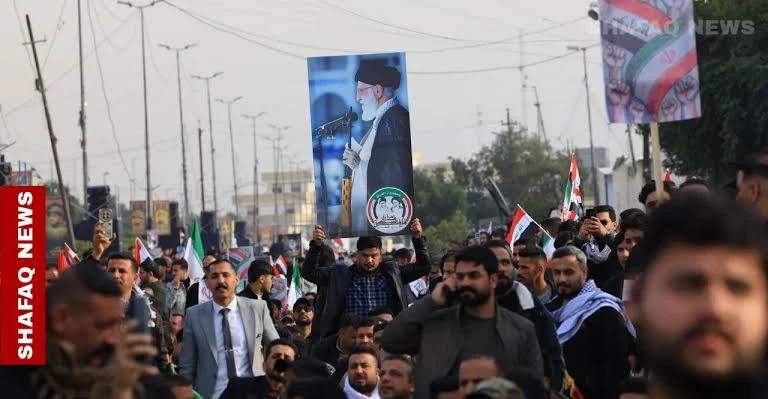
Today, The Rejection Of Al-Maliki's Nomination Will Be Announced
Bassim Alkhazraj Translated from Arabic #Iraq Today, the rejection of Al-Maliki's nomination will be announced:
Statement from the U.S. Embassy: If they think about nominating Al-Maliki, the United States will confront Iran's destabilizing activities in Iraq The U.S. Embassy: We want a completely independent Iraq not subject to Iran
With Ramadan running from February 17 to March 18, and a significant increase in travel to Saudi Arabia for Umrah, many analysts argue that this is not an ideal window for a major monetary reform involving the Iraqi dinar.
Let’s examine the logistics behind that reasoning.
🌙 Ramadan & Operational Realities in Iraq
Ramadan is a sacred month observed nationwide in Iraq. During this time:
1️⃣ Reduced banking hours 2️⃣ Slower government administrative operations 3️⃣ Increased cross-border travel 4️⃣ Higher consumer spending 5️⃣ Surge in Umrah travel to Saudi Arabia
Travel agencies across Iraq and the Kurdistan region are reporting high demand for Umrah packages in 2026.
🚩 This means millions of Iraqis may be traveling during this period.
✔ Full banking coordination ✔ Stable liquidity management ✔ Controlled cross-border movement ✔ Clear public communication ✔ Active regulatory oversight
Ramadan presents logistical challenges to executing such complex transitions smoothly.
📉 Historical Precedent: Removing Zeros Is Never Overnight
Countries that remove zeros from their currency do not surprise citizens without preparation.
Historically, monetary redenominations involve:
Public announcements months in advance
Education campaigns
Dual-circulation periods
Banking software updates
ATM recalibration
Retail pricing adjustments
Most transitions are announced mid-year (often around August) with rollout dates aligned to January 1 for fiscal clarity.
These reforms require months of preparation, not sudden activation.
🌍 Why Timing Matters in Currency Reform
Currency reforms are not just financial events — they are:
Administrative operations
Political decisions
Economic confidence signals
International coordination efforts
Attempting such a reform during:
Peak religious travel
Reduced working hours
Increased consumer cash flow
would introduce unnecessary instability.
🔥 Featured Snippet Highlights
Ramadan runs Feb 17–Mar 18
Reduced banking hours and government capacity
Surge in Umrah travel to Saudi Arabia
Currency redenomination historically announced 4+ months in advance
Major monetary reforms require full operational readiness
❓ Q&A Section
Can Iraq revalue during Ramadan?
Technically yes, but operationally it would be challenging due to reduced capacity and travel surges.
Do countries remove zeros overnight?
No. Historically, redenominations are announced months in advance with structured transition periods.
Why does travel matter?
Large population movement complicates liquidity control and public communication during reforms.
Has Iraq announced a redenomination?
No official announcement has been made regarding removing zeros or implementing a new exchange rate.
Is patience important?
Yes. Monetary reforms are planned, structured, and typically communicated well in advance.
🧠 Bottom Line
This perspective is not about belief or speculation — it’s about logistics and historical precedent.
Major currency reforms require:
Stability
Full institutional capacity
Broad public awareness
Coordinated execution
Ramadan presents conditions that make such a rollout less practical.
Patience remains essential when evaluating potential shifts in Iraq’s monetary policy.
⚠️ Disclaimer
This article provides analytical commentary based on historical monetary patterns and operational considerations. It does not constitute financial advice. Always verify developments through official government and central bank sources.
Sanctions and diplomacy are tools shaping economic and political outcomes
NATO’s advisory presence may shift, affecting security stability
Investors and regional partners will closely watch Iraq’s next steps
⚠️ Disclaimer
This article provides analysis of publicly reported political and diplomatic developments. It is not financial or investment advice. All currency and geopolitical information should be verified with official sources.
Sanctions, if imposed, would significantly impact Iraq’s financial system.
💰 How Iranian Influence Could Affect Currency Reform
Frank argues that:
Political influence within parliament
Banking sector interference
Cross-border monetary leakage
may be preventing Iraq from strengthening the Iraqi dinar.
In emerging markets, currency valuation depends heavily on:
Monetary sovereignty
Stable governance
Transparent fiscal policy
Limited external interference
If political actors are perceived as redirecting economic benefits externally, that can delay structural reforms.
🏦 Why Currency Value Is Tied to Sovereignty
The Central Bank of Iraq is responsible for monetary policy and exchange rate stability.
For a currency to strengthen or revalue, typically:
Dollar dependency must decrease
Capital controls must stabilize outflows
Political stability must be assured
International banking compliance must be achieved
Geopolitical friction complicates this process.
⚖️ Could the U.S. Act Quickly?
Frank suggests the United States has the capability to act “very quickly” if necessary.
In practical terms, U.S. leverage could include:
Dollar clearing restrictions
Banking sanctions
Diplomatic pressure
Financial oversight mechanisms
However, any “physical” action would involve complex geopolitical implications and is speculative at this time.
🌍 The Bigger Picture: Currency Reform & Global Confidence
For Iraq to raise the value of its currency sustainably, several conditions are typically required:
✔ Political stability ✔ Reduced foreign interference ✔ Strong central bank autonomy ✔ International trust ✔ Transparent fiscal governance
Without these pillars, markets hesitate.
🔥 Featured Snippet Highlights
Frank26 criticizes Maliki’s potential return as PM
Allegations of Iranian political influence in Iraq
Concern over possible severe U.S. sanctions
Currency reform tied to political sovereignty
U.S. has rapid economic leverage if necessary
❓ Q&A Section
Why is Maliki controversial?
He is viewed by critics as being closely aligned with Iran during his previous tenure as prime minister.
Would sanctions affect the Iraqi dinar?
Yes. Sanctions could restrict Iraq’s access to U.S. dollars and international banking systems.
Is a revaluation blocked by politics?
Political instability and foreign influence can delay economic reforms, including currency policy changes.
Has the U.S. announced sanctions?
No official sanctions have been announced regarding this situation at this time.
Can the U.S. act quickly?
The U.S. has strong financial tools and global banking influence, but actions would depend on policy decisions.
🧠 Strategic Outlook
Iraq’s monetary future depends on:
Internal political cohesion
International alignment
Central bank independence
Reduced geopolitical tension
Currency reform is not just economic — it is deeply political.
⚠️ Disclaimer
This article summarizes commentary and geopolitical analysis. It does not constitute financial or political advice. All currency markets carry risk, and developments should be verified through official government and financial sources.
Maliki, Mr. Delusional, he wants to be the prime minister of Iraq. Trump doesn't want him to be the prime minister of Iraq because he's brainwashed by Iran, because he's loyal to Iran, because he steals from Iraq for Iran...Oh, the sanctions that would be put on Iraq IMO are the worst I've ever seen...
I want Iraq to have an opportunity to raise the value of their currency. They're not raising it because Iran steals everything with their political influence in parliament, in the banking sectors..
.I'm concerned we may have to do something physical. But I am grateful...the United States of America has the ability to make this <snap> very quickly...
Shafaq News- Baghdad The Sovereignty Alliance, led by Khamis Al-Khanjar, on Wednesday said it expects State of Law Coalition (SLC) leader Nouri Al-Maliki to withdraw his nomination for prime minister.
Fahd Al-Rashed, a senior figure in the Sunni alliance, told Shafaq News that Al-Maliki is expected to step aside “given his long political history and his concern for the country’s interests.”
“We have no objection to Al-Maliki personally,” Al-Rashed added, “but we fear the repercussions of US reservations over the candidate, including threats of economic sanctions.”
Meanwhile, a source told Shafaq News that the Shiite Coordination Framework (CF), parliament’s largest bloc that includes the SLC, is heading toward a “decisive” meeting in the coming hours to settle its prime ministerial nominee, after a US message was delivered yesterday to one of the Framework’s leaders urged that the issue be resolved within 48 hours.
The CF later sought, through an intermediary, a five-day extension to the deadline, which now expires on Thursday.
The CF remains divided over former prime minister Al-Maliki’s candidacy, with some leaders pushing for his withdrawal to preserve unity and others backing his nomination. Earlier today, the US State Department told Shafaq News that Washington’s position remains “firm and resolute” regarding Al-Maliki’s nomination, warning that his selection would compel the United States to reassess its relationship with Iraq.
Acting US chargé d’affaires in Iraq Joshua Harris also pledged to use “all available tools” to counter Iran-linked activities threatening Iraq’s stability, while noting that Iraqi leaders are working to develop a political framework that prioritizes national interests.