Iraq is experiencing a rare “price boom” unseen in its modern economic history, driven by low inflation (under 3%), stable exchange rates, and dropping unemployment (from 17% to 14%). This success stems from strong coordination between monetary, fiscal, and trade policies, boosting agriculture, investment, and local production.
Key highlights:
Central Bank’s cautious monetary policy preserves dinar purchasing power.
Stable official exchange rate (1,320 dinars) calms markets and reduces import costs.
Fiscal policy allocates 25% of the budget to essential goods and subsidies.
New cooperative-price stores combat monopolies and stabilize prices.
Ongoing challenge: Preventing commodity leakage across borders through tighter trade controls.
Some “intel gurus” claim the U.S. will exchange “three‑zero notes” from Treasury reserves to pay for the war. That’s not credible. The amount of dinar needing exchange is too massive, and that mechanism has never been viable.
🛢️ Oil Credits = The Real Mechanism
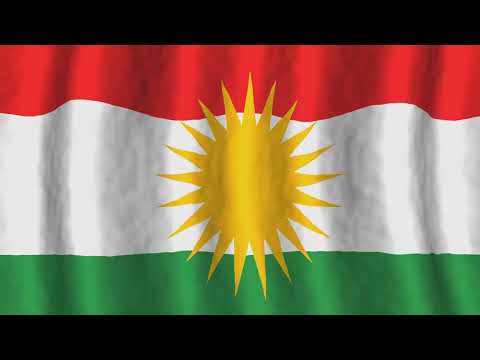
The likely method to finance exchanges and settle obligations is via oil credits. The U.S. would front the capital, and Iraq would repay via discounted oil delivered over time. ➡️ This ties the exchange mechanism to oil export capacity and agreements. ➡️ The recent tripartite agreement (Baghdad, Kurdistan, oil companies) is central to enabling these oil flows.
⏳ Long Timeline & Phased Effects
This isn’t a quick fix — the rollout must be gradual:
The full impact (like lower gas prices in the U.S.) may not be seen until mid‑2026 or later
Iraq must first absorb sufficient dinars via exchanges to maintain currency stability
The Oil & Gas Law (HCL) must be passed to legally solidify these resource flows and authority
⚖️ Politics, Agreements & Legal Constraints
Baghdad has long pushed the KRG to transfer oil outputs to the federal system.
Some contracts signed by the Kurdistan region (e.g. with U.S. firms) were declared unconstitutional
by Iraq’s central government. AGBI+1
Iraq has also taken legal action against KRG for continued oil smuggling. Reuters+1
The Oil & Gas Law has been drafted repeatedly over nearly two decades but never passed, largely due to political divisions. Channel8
🔍 Recent Confirmations from the News
The Iraq–Turkey (Ceyhan) pipeline used for Kurdistan exports has resumed operations after a 2.5‑year haltfollowing legal rulings. AP News+3Reuters+3Reuters+3
Export levels initially are projected in the range of 180,000 to 230,000 barrels per day via the tripartite deal. AP News+1
Eight international oil firms in the Kurdistan region are aligned with the new agreement. Reuters+1
💥 Key Takeaways
❌ The “U.S. swapping zero‐notes from Treasury reserves” narrative is not credible.
🛢 The real mechanism involves oil credits and sustained oil exports under new agreements.
📅 Full effects likely won’t be visible until 2026 or later.
🏛 The passage of the Oil & Gas Law is still crucial to legally enforce these arrangements.
📈 The recent pipeline restart and export agreements support the feasibility of the credit‐backed model.
🧠 U.S. Intensifies Pressure on Iraqi Banks to Cut Iran Ties 🇺🇸🏦🇮🇶
🔍 U.S. Targeting Iraqi Banking Sector
A report by bne IntelliNews (via translation) says the U.S. is leveraging tight supervision and sanctions on Iraqi financial institutions to compel Baghdad to sever political and economic ties with Iran. ➡️ Some public and private banks are under stricter oversight, with international transactions routed through intermediary banks in Jordan and the UAE. ➡️ Up to 28 Iraqi banks are reportedly flagged by the U.S. for trading with Iran.
⚖️ Sanctions, Monitoring & Control
The U.S. Treasury is scrutinizing international flows from Iraqi banks, aiming to block illicit financing channels.
Washington is also demanding political reforms: dissolution or integration of the Popular Mobilization Forcesinto the state’s security apparatus.
Pressure extends beyond banking — the energy sector is also targeted; for example, plans to import Turkish gas via Iran were blocked and an Iranian electricity waiver was revoked.
📉 Confirmed Moves in Dollar Transactions
According to Reuters, five Iraqi banks will be banned from U.S. dollar transactions in 2025 amid efforts to clamp down on laundering and smuggling. Reuters
In August 2025, reports claim
35 of 72 Iraqi banks have been subject to U.S. sanctions. banking.einnews.com
🏦 Banking Reform + U.S. Coordination
The Iraq News Agency notes coordination with the U.S. Treasury and Federal Reserve to improve banking standards and open correspondent accounts for Iraqi banks. ina.iq
Al-Alaq (CBI Governor) has said that opening accounts with internationally accredited correspondent banks will enhance Iraq’s banking system’s competitiveness. ina.iq
✅ Key Takeaways
🇺🇸 The U.S. is intensifying oversight and sanctions on Iraqi banks to push Iraq away from Iran influence.
🚫 Some banks are being cut off from dollar operations, limiting their global reach.
⚙️ The pressure is part of a wider initiative: political, energy, and military alignment.
🤝 Iraq is cooperating in upgrading banking standards and opening global correspondent relationships.
🧠 REALITY CHECK: Status of the Iraqi Dinar Revaluation (RV) 🔍
❌ No, There’s Still No RV or RI Yet
Don’t fall for hype, rumors, or “bank stories.” Despite internet noise, the Central Bank of Iraq (CBI) has officially denied any immediate change to the dinar's exchange rate. 📣 As Alaq said recently, speculation is just that — speculation. The truth will come through facts, not YouTube thumbnails or clickbait.
🛢️ The Real Breakthrough: Oil Agreement Resolved
The long-standing disputes between Baghdad, Kurdistan, SOMO, and oil companies have been resolved. A tripartite agreement is now in place, allowing oil production and export at full capacity — a key requirement behind the scenes for the RV to move forward.
➡️ Use oil credits to back dinar exchanges. ➡️ Pay investors in USD (not oil), backed by a future stream of discounted Iraqi oil. 🛢️ The U.S. then resells that oil at market price, earning significant profit — potentially billions or more over decades.
🧠 Why the RV Was Delayed: Infrastructure & Economic Readiness
Iraq must be economically strong enough to:
Sustain long-term oil exports
Diversify revenue through customs, tariffs, private sector, and mega projects like the Development Road 🌍 This broader foundation is needed to support a strong, stable dinar
, especially as oil credit agreements play out over decades — not all at once.
💰 The Bigger Picture: Strategic Global Finance
The RV isn’t just about currency — it’s a long-term international deal involving oil, economic reforms, and U.S. fiscal strategy. ✔️ The U.S. fronts the money now ✔️ Iraq delivers discounted oil later ✔️ The U.S. profits on global resale 🏦 It's a calculated investment, not a get-rich-quick scheme.
💥 Key Takeaways:
❌ No RV yet — CBI has confirmed no immediate change.
🛢️ Tripartite oil agreement is a major milestone toward economic readiness.
💵 Dinar exchanges will be backed by oil credits, not fiat games.
📈 U.S. profits long-term via discounted Iraqi oil resold globally.
🏗️ Iraq must complete its economic diversification to support the RV.
Major reconstruction in public services: roads, healthcare, housing, utilities are being upgraded.
شفق نيوز
Cities being modernized to improve living standards and make them more appealing to investors and citizens. icdstudies.com+1
🌱 Economic Diversification
Beyond oil: Iraq is pushing into renewable energy, technology, financial services, etc. شفق نيوز+1
The tourism sector is being developed (both religious tourism and cultural/historical sites) to reduce dependency on oil revenues. Travel and Tour World+2Deutsche Welle+2
🔒 Improved Security & Governance
Better security conditions have made the investment environment more stable than it has been in years. شفق نيوز+1
Efforts underway to strengthen law enforcement, community engagement, and governance. شفق نيوز
💥 Key Takeaways
Iraq is entering a new era of economic transformation: rebuilding infrastructure, reforming finance, diversifying economy.
Progress is tangible: investor interest is growing, urban renewal projects are visible, improvements in transparency and stability are helping.
This journey is not overnight — many projects and reforms are long-term, but the direction is clear: moving away from oil-only dependency.