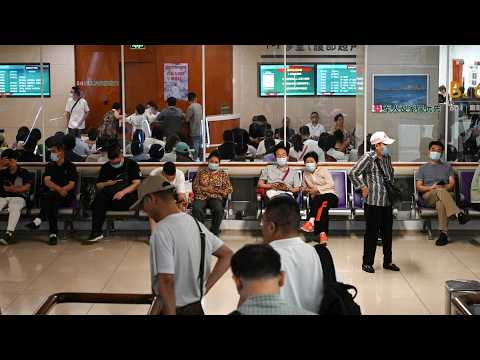
The Central Bank launches the virtual bank project.
The Central Bank of Iraq announces its adoption of a project to launch a virtual bank in Iraqi universities. This is the first virtual bank to be established in an Iraqi university. The first phase will be held at Al-Muthanna University, which hosted a comprehensive exhibition held on the sidelines of the second scientific conference "Artificial Intelligence and Labor Market Requirements."
The conference was organized by the University's College of Administration and Economics, in cooperation with Mansoura University of Egypt, the Central Bank of Iraq, the Muthanna Chamber of Commerce, and the Muthanna Chamber of Industry.
The exhibition included pavilions representing a group of banks and companies, as well as displays of fine art and heritage.
The virtual bank project aims to provide students and graduates with practical experience in banking, preparing them to develop human resources capable of meeting the needs of financial institutions. It also aims to provide students with practical experience by simulating the work of financial institutions and adopting international best practices.
It also aims to encourage financial institutions operating in Iraq to access and expand financial services to all geographical regions of Iraq, with the aim of strengthening financial inclusion plans.
Central Bank of Iraq Media Office April 20, 2025 link
#IQD
Iraq’s dinar solid: Reserves fully back currency.
Second time he said this in the last month.
----
Iraq’s dinar solid: Reserves fully back currency
------
Twice in the last month he said this.
#IQD
Baghdad May Act Unilaterally on Oil Advisor After Deadline Passes, Lawmaker Warns
Disputes Stall Kurdistan Oil Export Deal Despite Budget Law Amendments; Deadline for Cost Assessment Passes Without Consensus
A trilateral meeting was convened in Erbil on Sunday among representatives of the Iraqi Ministry of Oil, Kurdistan Regional Government (KRG), and the Association of the Petroleum Industry of Kurdistan (APIKUR) to address critical issues concerning the Kurdistan Region's oil sector, with a primary focus on resuming oil exports. Omid Sabah, Chief of Staff of the KRG Council of Ministers, stated that discussions involved the operational activities of oil companies and explored mechanisms to facilitate the restart of exports. The meeting also considered the challenges and proposals presented by these companies to create a conducive environment for resuming oil exports promptly.
Despite the Iraqi Parliament's approval of amendments to the federal budget law on February 2, 2025, particularly Article 12 concerning the resumption of Kurdistan's oil exports, disagreements between the federal government and the KRG have hindered the implementation of these provisions. The amendments stipulate that the federal Ministry of Finance will compensate the KRG for production and transportation costs of oil delivered to the State Oil Marketing Organization (SOMO). An international technical advisory body, to be appointed jointly by the federal and regional governments, was tasked with determining the fair cost of production and transportation for each oil field within 60 days of the law's enactment. However, this deadline has passed without an agreement, prompting concerns from Iraqi lawmakers.
Adnan al-Jaberi, Deputy Chairman of the Iraqi Parliament's Oil and Gas Committee, emphasized that the 60-day period to select a consulting firm has expired without consensus. He noted that, in the absence of agreement, the federal government reserves the right to unilaterally appoint the advisory body.
Meanwhile, oil production companies operating in the Kurdistan Region have expressed skepticism toward the Iraqi Ministry of Oil. These companies demand the settlement of outstanding payments for past production, advance payments, and future guarantees as prerequisites for resuming export operations.
The halt in oil exports since March 2023, following a ruling by the International Chamber of Commerce in Paris, has significantly impacted the Kurdistan Region's economy, leading to delays in public sector salaries and reductions in essential services. Baghdad is under increasing pressure to resolve these disputes to restore financial stability and economic growth across Iraq.
As negotiations continue, the resumption of oil exports remains contingent upon resolving contractual disagreements, ensuring fair compensation for production and transportation costs, and rebuilding trust between the federal government and oil companies operating in the region.
Kurdistan24
Representatives of the Iraqi oil ministry, KRG, and APIKUR meet in Erbil, April 20, 2025.
A trilateral meeting was convened in Erbil on Sunday among representatives of the Iraqi Ministry of Oil, Kurdistan Regional Government (KRG), and the Association of the Petroleum Industry of Kurdistan (APIKUR) to address critical issues concerning the Kurdistan Region's oil sector, with a primary focus on resuming oil exports. Omid Sabah, Chief of Staff of the KRG Council of Ministers, stated that discussions involved the operational activities of oil companies and explored mechanisms to facilitate the restart of exports.
The meeting also considered the challenges and proposals presented by these companies to create a conducive environment for resuming oil exports promptly.
Despite the Iraqi Parliament's approval of amendments to the federal budget law on February 2, 2025, particularly Article 12 concerning the resumption of Kurdistan's oil exports, disagreements between the federal government and the KRG have hindered the implementation of these provisions. The amendments stipulate that the federal Ministry of Finance will compensate the KRG for production and transportation costs of oil delivered to the State Oil Marketing Organization (SOMO). An international technical advisory body, to be appointed jointly by the federal and regional governments, was tasked with determining the fair cost of production and transportation for each oil field within 60 days of the law's enactment. However, this deadline has passed without an agreement, prompting concerns from Iraqi lawmakers.
Adnan al-Jaberi, Deputy Chairman of the Iraqi Parliament's Oil and Gas Committee, emphasized that the 60-day period to select a consulting firm has expired without consensus. He noted that, in the absence of agreement, the federal government reserves the right to unilaterally appoint the advisory body.
Meanwhile, oil production companies operating in the Kurdistan Region have expressed skepticism toward the Iraqi Ministry of Oil. These companies demand the settlement of outstanding payments for past production, advance payments, and future guarantees as prerequisites for resuming export operations.
The halt in oil exports since March 2023, following a ruling by the International Chamber of Commerce in Paris, has significantly impacted the Kurdistan Region's economy, leading to delays in public sector salaries and reductions in essential services. Baghdad is under increasing pressure to resolve these disputes to restore financial stability and economic growth across Iraq.
As negotiations continue, the resumption of oil exports remains contingent upon resolving contractual disagreements, ensuring fair compensation for production and transportation costs, and rebuilding trust between the federal government and oil companies operating in the region.
😊The very recent article I am referring to is titled “FROM ARMS TO PROSPERITY: A EUROPEAN REPORT INDICATES THAT IRAQ IS BECOMING A TOURIST DESTINATION.”
The Swiss newspaper “Neue Zürcher Zeitung” (NZZ) published a report on Wednesday on the improvement of tourism in Iraq, confirming that the country has regained its health and transformed into a center of prosperity after being rife with chaos and scenes of violence and weapons.
I quote from a piece from the article – “Iraq has put its modern history behind it and is beginning to welcome tourists after it was once seen as hell on earth,”
the newspaper reported, translated by Shafaq News Agency. “But the country has regained stability, and the government is working hard to attract visitors,” it said. “Cities like Baghdad and Basra are witnessing remarkable changes, including the renovation of streets and historical sites.
Religious sites, especially the shrines in Karbala, attract millions of pilgrims, and the government is seeking to capitalize on their economic and tourism value .” You can read the full article in the Articles Section. I wish you would.
Many of us need to get a different perspective of Iraq and what is really going on today. Many of us still have this stench of war on our minds of burnt-out caravans of cars and trucks on the roads. Although Iraq has not yet gone fully global, they are a far cray from the 2003 war situation.
Folks, it has been 20 years already and they have come a long way. This is why I emphasis what they have accomplished in the just the last 2 years is a topper to it all and the final phase now that they are out of Chapter VII sanctions.
Remember that you don’t come out of sanctions that lasted for over 30 years (1991-2022), then just pop right back, it takes time. And worst yet to “pop back” there were strict guidelines given to them to accomplish. This also hindered their growth rate.
We know that these are they structured a plan using the Pillars of Financial Reform. The world changed so much in 30 years. The world of banking is now modernized, and Iraq had to make these changes to compete globally going forward.
So, I really hate when someone asks me what the hold is for the RV. This tells me their ignorance and lack of understanding of the Iraq situation.
This boggles my mind to ask such a question with all the information I am providing. Could they have progressed much faster? Sure, they could have, and could have. We were told way back in 2014 that trillions of dollars (not billions) had been stolen that could have rebuilt the entire country a couple times over.
They also have had a couple bad prime ministers and they certainly did not help to move the progress along either. I hate to use the term “shit happens” but it does. It’s unfortunate that we as investors feel we have been “shitted” upon since we know all the wasted money funneled to Iran and how it all could have been stopped decades ago, if only the U.S. back then put their foot down and stopped it.
So today is Holy Thursday. Why not take this holy season to pray and move forward on our thoughts about this coming gift from God.
What is the importance of American companies visiting Iraq?
The Federation of Iraqi Chambers of Commerce affirmed on Monday that the visit of American companies is a message to the world that Iraq is a safe environment. It also explained that the visit resulted in an agreement on a regulatory framework for the private sector.
Abdul Razzaq Al-Zuhairi, head of the Federation of Iraqi Chambers of Commerce, said, "The visit of American companies to Iraq to invest and work with Iraqi businessmen is a positive and important step for Iraq."
He explained that
"Iraq is a fertile environment, and the visit of American companies to Iraq is a positive message to all countries of the world that Iraq is a safe environment."
He added, "American companies have signed numerous agreements with the Iraqi private sector in the fields of electric power and renewable energy. The most important memorandum is the signing of a regulatory framework between the Iraqi and American private sectors by the American Chamber of Commerce and the Iraqi Chamber of Commerce."
He pointed out that "a number of American companies have signed agreements with the private sector, most notably the global company Google, which is seeking to enter Iraq. Its representative came and wrote a positive message about Iraq, stating that Iraq is safe, which is an important message to the world." link