Tuesday, April 1, 2025

Why Iraq is rising as a Key Connectivity Hub, 1 APRIL

Why Iraq is rising as a Key Connectivity Hub,

The geography advantage

“Iraq offers a lot of advantages,” Moore begins. “It sits between Syria and Iran with direct terrestrial routes between the GCC and Turkey. That makes it a natural bridge between the Middle East and Europe.”

While most global networks rely heavily on congested subsea cables—particularly those funnelling through the Suez Canal—Iraq offers something different: land-based diversity.

According to Moore: “Today, you can land in Oman from Asia Pacific then connect via Iraq to Frankfurt or London without using any subsea cable infrastructure. There aren’t other routes like that.”

With geopolitical instability in parts of the Red Sea and growing scrutiny of chokepoints like the Suez Canal, organisations are actively seeking alternative paths. “Iraq helps organisations access low latency routes that avoid the Suez Canal,” he explains. “In times like these, it’s all about adding layers of resiliency.”

A strategic fit for hyperscalers

Beyond geography, Moore believes the country is well-positioned to support the evolving needs of hyperscalers and carriers.

“Everyone needs to manage risk. They need to be able to reroute around issues and optimise connectivity to deliver low-latency options. This is where Iraq fits in,” he says.

“Iraq’s digital corridor reduces the dependency on congested subsea cable pathways and improves performance for latency-sensitive workloads,” he adds. “This is particularly important for AI, cloud computing, and real-time applications.”

And for those managing vast distributed data networks, Moore says the benefits are immediate: “If your objective is to maximise uptime and reduce latency, then Iraq is a logical component of your networking strategy and will only grow in importance as AI goes global.”

Powering the AI era

As AI reshapes industries, its networking needs are defining the next generation of infrastructure. According to Moore, Iraq is uniquely placed to support this.

“AI applications, specifically those involving real-time data processing, machine learning and cloud-based services, rely on ultra-low latency connections to perform,” he explains.

He continues: “Iraq’s geographical location between Europe and the Middle East allows data to move seamlessly between key regions.”

The country’s terrestrial networks ensure that AI-powered applications avoid delays associated with congested subsea routes, giving enterprises and hyperscalers the performance edge they need.

FastIraq also sees growth in edge computing, as latency-sensitive AI services shift processing closer to end users.

“With infrastructure investments increasing, Iraq is well-positioned to support this,” Moore says. “AI-powered applications in finance, healthcare and autonomous systems will benefit from new levels of connectivity.”

When asked what sets FastIraq apart, Moore is quick to highlight the team’s depth of local expertise. “We’re not just another connectivity provider trying to land and expand in Iraq.

We have decades of on-the-ground experience in both network infrastructure and the complex regulatory environment.”

This, he says, is what gives FastIraq the edge. “We provide entirely terrestrial routes that connect the Middle East’s digital hubs directly to Europe’s economic centres. This means lower latency, greater resiliency and reduced reliance on congested subsea cables. It’s a game-changer.”

The company also prides itself on working closely with customers to build tailored solutions. “We listen, understand their long-term networking strategies and help them scale.

Whether it’s providing diverse routing options or ensuring compliance with local regulations, we make it simple for companies to leverage Iraq’s growing digital ecosystem.”

Advice to new entrants

For those looking to establish a presence in Iraq, Moore has one key piece of advice: partner locally. “Iraq has a complex regulatory environment and without on-the-ground experience, it can be challenging to navigate,” he warns.

“A trusted partner with established infrastructure and strong government relationships will make entering the region much more seamless.”

He believes the demand for low-latency connectivity is only going to grow. “The players that recognise this early will have a huge advantage,” he says.

A decade of digital growth

Looking ahead, Moore sees Iraq’s position only strengthening. “Over the next decade, we’ll see Iraq become a global transit hub for connectivity,” he predicts. “The rise of AI will continue, and so will the demand for diverse, low-latency routes.”

With further investment expected in data centres, fibre networks, and cross-border infrastructure, Moore believes Iraq’s role in global networking strategies will be undeniable.

“Iraq will no longer be seen as just an alternative,” he says. “It will be the preferred and viable route for many global networks. The organisations that move early will be best positioned to monetise this shift and gain rapid access to Iraq’s digital future.”

TIDBIT FROM FRANK26, 1 APRIL

 Frank26  

The monetary reform education to the Iraqi citizens, that's what's going on right now...They are about to show you [Iraqi citizens] your lower notes IMO.  They are about to explain the new exchange rate. 

 They are to define the ATMs. 

 I believe this monetary reform education will bring forth the literacy of your new exchange rate and purchasing power...These are the final moment of a long period of time for you Iraq and me.

MR POOL: Mass notifications inbound!! @DINARREVALUATION #iraqidinarinvestor #iraqidinar


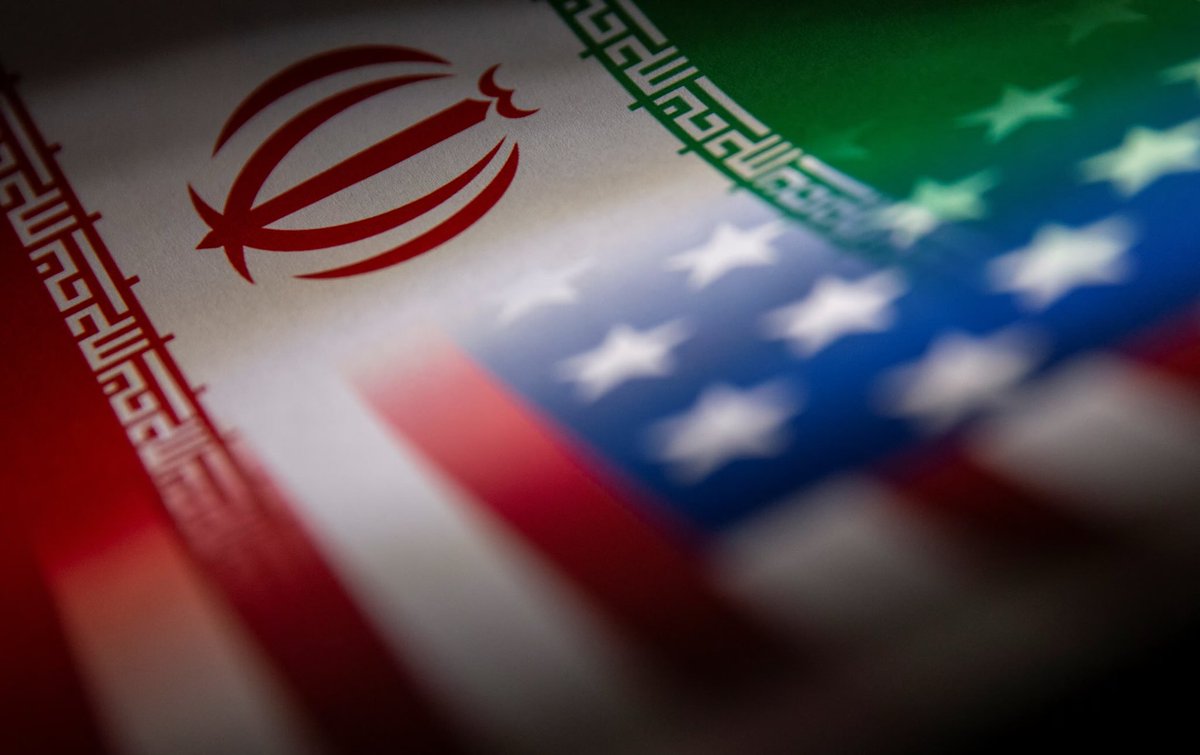
IRAQ NEWS: The Trump administration escalated its pressure campaign on Iran Tuesday, 1 APRIL

 IRAQ NEWS

The Trump administration escalated its pressure campaign on Iran Tuesday, imposing new sanctions on an alleged weapons procurement network and unveiling criminal charges against two Iranian nationals accused of aiding Tehran’s drone program. 📸: Reuters
Image


APRIL 1: Iraq’s Global Trade Switch Goes Live, 2 APRIL

APRIL 1: Iraq’s Global Trade Switch Goes Live


Starting April 1st, Iraq officially activates the TIR system (Transports Internationaux Routiers), a UN-backed global customs framework that links the country to international trade and transport routes.


What it means:

— Iraq joins the world’s largest transit system

— Streamlined border crossings & customs clearance

— Massive boost to exports, imports, and foreign trade flows

— Another domino in Iraq’s economic reintegration


This isn’t just logistics. This is Iraq re-entering the global marketplace with modernized infrastructure and digital compliance.


TIR = global access, real-time clearance, and economic sovereignty.

Iraq just leveled up.

GOLD WILL BACK THE DINAR !!! @DINARREVALUATION #iraqidinar #iraqidinarinvestor #iqd


Status of US Dollar as Global Reserve Currency: Central Banks Diversify into Other Currencies and Gold, 1 APRIL

  Status of US Dollar as Global Reserve Currency: Central Banks Diversify into Other Currencies and Gold

The surge of the “nontraditional reserve currencies.”

The status of the US dollar as the dominant global reserve currency has helped the US fund its twin deficits, and thereby has enabled them: the huge fiscal deficit every year and the massive trade deficit every year. The reserve currency status comes from other central banks (not the Fed) having purchased trillions of USD-denominated assets such as Treasury securities, other government securities, corporate bonds, and even stocks. 

The dollar status as the dominant reserve currency has been crucial for the US, and as that dominance declines ever so slowly, risks pile up ever so slowly.

The US dollar lost further ground as top global reserve currency in 2024, according to the IMF’s COFER data released today. Total holdings of USD-denominated securities by other central banks (not the Fed) fell by $59 billion to $6.63 trillion at the end of 2024, from $6.69 trillion at the end of 2023.

And the dollar’s share declined to 57.8% of total allocated exchange reserves at the end of 2024, the lowest since 1994, down by 7.3 percentage points in 10 years, as central banks have been diversifying their holdings for years to assets denominated in currencies other than the dollar, and into gold.

The dollar had already experienced a huge loss of global confidence before: Its share plunged from 85% in 1977 to a share of 46% in 1991, after inflation had exploded in the US in the 1970s and early 1980s. But by the 1990s, as inflation had been brought down and mostly stayed down, central banks loaded up on USD-assets again, and the dollar regained share as a reserve currency until the euro became a full-fledged currency.

USD-denominated foreign exchange reserves include US Treasury securities, US agency securities, US MBS, US corporate bonds, US stocks, and other USD-denominated assets held by central banks other than the Fed.

The major reserve currencies.

Central banks holdings of foreign exchange reserves denominated in all currencies, including in USD, edged up in 2024 to $12.36 trillion (from $12.35 trillion at the end of 2023).

Excluded from the total are any central bank’s assets denominated in its own currency, such as the Fed’s holdings of Treasury securities and MBS, the ECB’s holdings of euro-denominated bonds, and the Bank of Japan’s holdings of yen-denominated assets.

The USD is not losing share to the euro. The euro has been the #2 global reserve currency, with holdings at $2.27 trillion at the end of 2024. Its share has been around 20% for years, with a low of 19.1% in 2016 and a high of 21.3% in 2020. In Q4, the euro’s share was 19.8% (blue in the chart below).

So over the years, the USD has not lost share to the euro; it lost share to other reserve currencies, including “nontraditional reserve currencies,” as the IMF calls them. The colorful tangle at the bottom of the chart represents the largest of these other reserve currencies. More on those in a moment.

The surge of the “nontraditional reserve currencies.”

Some of these other reserve currencies have been gaining share at the expense of the dollar, especially the currencies in the basket of the “nontraditional reserve currencies,” that the IMF combines into “All others,” whose combined share has been surging since 2020 (red in the chart below).

But the Chinese renminbi has lost share. China is the second largest economy in the world, but its currency, the renminbi, plays only a small role as a reserve currency. And it has lost ground against the USD and other currencies since 2022. Central banks have not been enamored with RMB-denominated assets due to China’s capital controls, the RMB’s convertibility issues, and other complexities (yellow line).

Note the surge of the nontraditional reserve currencies combined in the “all other currencies” group (red).

Japanese yen, 5.8% (YEN, purple).

British pound, 4.7% (GBP, light blue).

“All other currencies,” 4.6% (red).

Canadian dollar, 2.8% (dotted green).

Chinese renminbi, 2.2% (yellow).

Australian dollar, 2.1% (black dotted).

Swiss franc, 0.2% (black).

The other diversification: gold.

Gold bullion is not a “foreign exchange reserve” asset of central banks and  is not included in the data above. Gold is a “reserve asset” not involving  foreign exchange

 After four decades of unloading their gold holdings, central banks started re-adding gold about 20 years ago.

The top four holders have not changed their gold holdings in at least 20 years (based on IMF data released by the World Gold Council):

LINK to rest of story and charts

FRANK26…5-28-26….THINKING

Follow & Join Our Community 📌 BLOG:  https://dinarevaluation.blogspot.com/ 📌 TELEGRAM:  https://t.me/DINAREVALUATION 📌 X (TWITTER):  ...