Friday, March 28, 2025

ARIEL: Huge News for America and the World, 28 MARCH

 ARIEL: Huge News for America and the World

Huge News For America And The World

Let’s go through some quick bullet points as to why. Shall we?

1. Shatters the Globalist Leash: Cutting WTO funds snaps a chain that’s tethered U.S. sovereignty to a faceless bureaucracy, freeing America to forge trade deals that don’t kneel to 164 nations’ consensus deals that prioritize its own steel, farms, and factories.

2. Starves the Paper Tiger: The WTO’s $232 million budget (2024) is a bloated hog—m 11% from U.S. pockets feeding endless debates while China skirts rules. Starving it forces a leaner, meaner system or its collapse, either way ending the charade of “fair trade” theater.

3. Unmasks Hidden Players: With the U.S. out, shadow influencers—m think corporate lobbyists and state-owned enterprises lose their Geneva puppet strings, exposing who’s really been rigging the game behind WTO’s marble facade.

4. Ignites Regional Power Blocs: No WTO cash flow sparks a scramble NAFTA 2.0, EU trade forts, Asian pacts reshuffling global alliances into tighter, more accountable units, not some utopian one-world mess that never worked.

5. Kills the Arbitration Farce: The WTO’s dispute system, crippled since 2019 by U.S. judge blocks, gets a mercy k**l. Nations now settle trade scores bilaterally, mano-a-mano, cutting the middleman who couldn’t enforce jack anyway.

6. Boosts the Underdog Hustle: Smaller nations, freed from WTO’s rigid script, can barter directly with the U.S., leveraging raw deals think rare earths from Africa or lithium from South America over China’s chokehold, shaking up global supply chains.

7. Defangs China’s Dodge: Beijing’s “developing nation” status at WTO long a loophole for subsidies and dumping crumbles without U.S. dollars propping the system. America can now hit back with tariffs that bite, not beg for Geneva’s nod.

8. Reclaims Tech Edge: The WTO’s stalled digital trade rules (U.S. dropped demands in 2023) kept tech giants caged. Suspension lets America unilaterally lock down data flows and IP, shielding its silicon crown from foreign poachers.

9. Lights a Fire Under Congress: No WTO safety net forces D.C. to get off its a*s craft trade laws with teeth, not just react to global edicts. It’s a wake-up call for a legislature that’s sleepwalked through decades of outsourcing.

10. Unleashes Economic Darwinism: Without WTO’s nanny-state rules, markets turn b****l l survival of the fittest. U.S. industries either adapt fast innovate, retool or die, purging the weak and forging a harder economic spine.

This isn’t about cheerleading it’s about seeing the dominoes fall, the masks drop, and the game reset. For Americans, it’s a s**t at clawing back what’s theirs; for the world, it’s a mirror to its own grit or lack thereof.

11. Cracks the Green Agenda : WTO’s limp climate trade talks (stalled since 1995) lose steam without U.S. funds. America can now push bilateral green tech deals think solar with India, wind with Brazil skipping the eco-preaching gridlock.

12. Frees the Dollar’s Muscle: Less tied to WTO’s trade web, the U.S. can wield its currency like a sledgehammer sanctions, incentives, whatever works without Geneva’s red tape slowing the swing.


13. Sparks a Trade Renegade Wave: Other big players EU, Japan might follow, ditching WTO’s sinking ship. A fractured system births a new order, one where power, not bureaucracy, dictates terms, shaking the world out of its trade coma.

14. Ends the Fentanyl Excuse Game: WTO’s paralysis on d**g precursors (China’s exports untouched) gets no more U.S. cover. Suspension lets America hammer direct trade bans, targeting the flow that’s k*****g its streets, no diplomatic dance required.

15. Reveals the Void’s Hunger: If the WTO folds, the gap it leaves unregulated trade chaos shows the world what the Ark felt like: a force unbound, eating control. Nations either step up or get devoured, proving order’s price in real time.



MNT GOAT: THE DINAR will “gradually” go up in rate!! @DINARREVALUATION #iraqidinarinvestor


CBL introduces the new LD 5 banknote, 28 MARCH

  CBL introduces the new LD 5 banknote

The CBL has introduced the new LD5 denomination into circulation (Photo: CBL).

The Central Bank of Libya (CBL) announced yesterday the issuance of a new 5 dinar banknote bearing the signature of the new Governor Naji Issa.

The CBL said the new denomination will go into circulation along with the currently circulating issuances, starting today, Thursday, 27 March.‎

The LD note introduced on 20 March
It will be recalled that the CBL had announced on 20 March the issuance of a new 20-dinar polymer banknote (second issue) into circulation alongside the currently circulating issue.‎

On 20 January, the CBL had announced the issuance of new banknotes in the 5-, 10- and 20-dinars denominations in the coming weeks and months.

The LD 10 denomination was issued on 26 January. All the new denominations bear the signature of the new CBL Governor, Naji Issa. link


BRUCE UPDATE, 28 MARCH

 Thurs. 27 March 2025 Bruce

  • Bond Holder Paymasters were saying Bond Holders would have access to their accounts over the weekend.
  • As of ten this morning 12% of Bond Holders had gone through.
  • The full revaluation will happen after the first of April.
  • The Iraqi Dinar, Dong and Zim dollar were the keys to the gateway for Tier4b (us, the Internet Group) exchanges and that gate has been opened.
  • Multiple sources say Tier4b could get appointments tomorrow, but more likely Sat. or Sun.
  • Today the 800 number was being loaded in the various systems.
  • Emails would be sent out from Wells Fargo that will tell you how to set your exchange appointment.
  • Tues. 2 April 2025 is Liberation Day and the day the DOGE checks and deposits are supposed to start.
  • The month of April will see an increase in Social Security payments.
  • R&R payments will be in our accounts at the Redemption Center.
  • You can have up to three bank accounts associated with your Quantum Account.

MNT GOAT: THE OIL & GAS LAW NEEDS A STABLE ECONOMY AND IRAQI DINAR @DINARREVALUATION #iraqidinar


IRAQ NEWS HEADLINES, 28 MARCH

 IRAQ NEWS HEADLINES

-PM Sudani highlighted the government’s success in controlling the dollar sale and ensuring financial transfers follow global procedures. He also noted partnerships with global companies to reform the private banking sector, stressing that banking system development will drive economic growth.

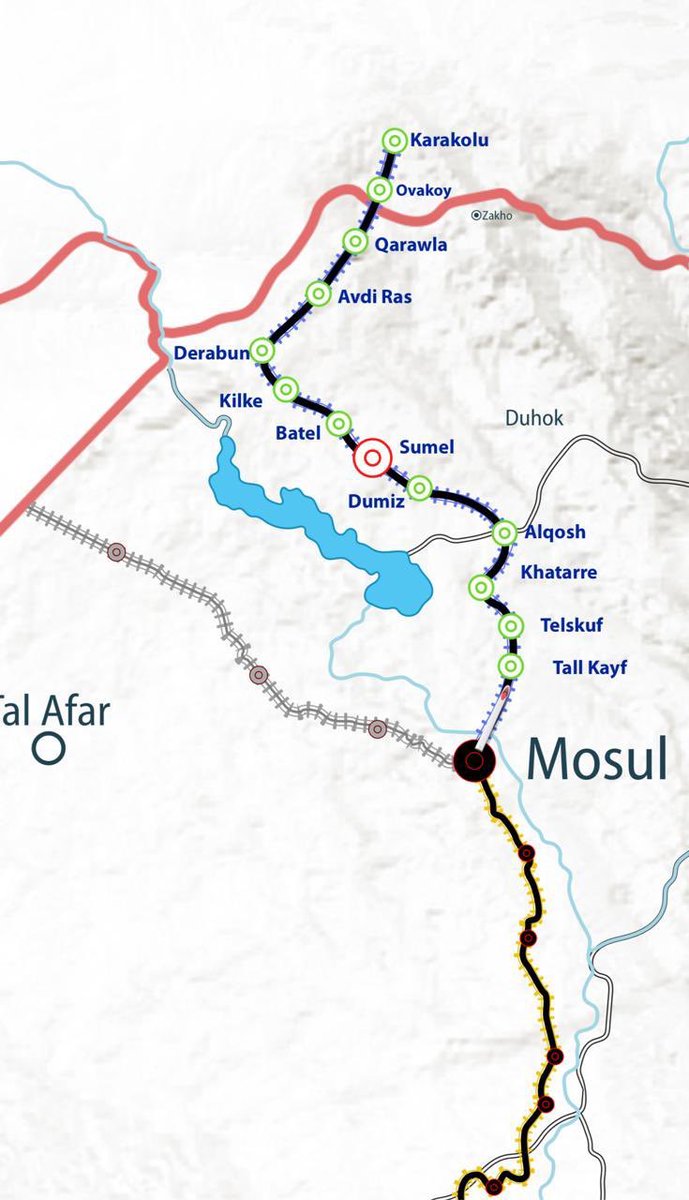
-No agreement has been reached between the Kurdistan Regional Government (KRG) and the Iraqi Federal Government on the Development Road Project, KRG’s Minister of Transport and Communications, Ano Jawhar, announced in a post on X. He called recent claims of a finalized agreement “entirely false”, noting that the last official meeting was on May 23, 2024, in Erbil, where a joint protocol was signed outlining the next steps. 📸: Ministry of Transport and Communications
Image
Image

NADER FROM MID EAST: Digital trade Iqd, 28 MARCH

 NADER FROM MID EAST: Digital trade Iqd

Highlights

Summary

In a recent announcement, Central Bank Governor Ali Al-Alak emphasized the significant role that digital currency will play in enhancing transparency and reducing the cash flow outside banks.

 He identified the rapid evolution of financial technologies as a crucial factor that aligns with the banking sector’s need for speed, accuracy, economic efficiency, transparency, and oversight. Al-Alak underscored the broad implications of the digital revolution across various sectors, notably in finance, where digital currency can play multiple roles. 

It is anticipated that digital currency will vastly improve transparency in transactions, whether for consumption, investment, savings, or even tracking illicit financial flows. The Central Bank is currently active in coordinating with international organizations to review initial experiments in digital currency, indicating a proactive approach to this technological shift. 

Another key point made was the need for robust infrastructure to support these changes, with the Central Bank working effectively to establish a data center that will facilitate a successful digital transformation.

  • 🌐 Digital currency integration: The introduction of digital currency is aimed at improving transparency and diminishing cash flow outside banks.
  • ⚙️ Technological advancements: Financial technologies are evolving rapidly, prompting necessary adaptations within the banking industry.
  • 📊 Analytical benefits: Digital currency will provide essential databases for analysis, supporting various financial activities.
  • 📉 Limited cash flow: Implementation of digital currency will help limit the cash flow outside of formal banking systems, yielding greater control.
  • 🏢 Infrastructure development: The Central Bank is developing advanced infrastructures, including a sophisticated data center to facilitate digital initiatives.
  • 🌍 Regional coordination: The bank is collaborating with international and regional organizations, such as the Arab Monetary Fund, to explore and implement digital currency experiments.
  • ⏳ Proactive measures: The Central Bank is already engaging with ongoing experiments in various countries, emphasizing their commitment to not delaying progress.

Key Insights

  • 💡 Emphasizing transparency: Digital currencies inherently foster an environment of transparency within the financial sector. This can significantly cut down on money laundering and other financial crimes as all transactions can be traced accurately. By maintaining a transparent digital ledger, banks can better monitor the flow of money, ensuring compliance with regulations and reducing the potential for illegitimate businesses to operate unnoticed.

  • 🏦 Banking sector transformation: The rapid pace of digital transformation across sectors underscores the banking sector’s necessity to adopt these technologies. Digital currency is not merely an innovation but a vital update to existing banking frameworks that can enhance operations significantly. As financial technologies develop, banks must evolve to include real-time processing capabilities, data analytics, and enhanced customer experiences.

  • 📈 Economic efficiency: The implementation of digital currency promises increased economic efficiency by minimizing costs associated with printing and distributing physical cash. It can streamline transaction processes, reduce fraud, and enhance the overall operational efficiency of banks. The digital currency’s capacity for faster transactions aligns with consumer demands for immediacy in financial dealings.

  • 🗄️ Data utility for analytics: The establishment of comprehensive databases through digital currency transactions allows for advanced analytics that could strengthen financial analytics capabilities. Organizations could harness this data for various purposes, including economic forecasting, risk assessments, and demand analysis. The shift from managing paper currency to digital transactions potentially transforms how banks strategize and operate.

  • 🌐 Need for robust infrastructure: To support the digital currency initiative, a strong and resilient digital infrastructure is paramount. The Central Bank’s ongoing efforts to build a state-of-the-art data center illustrate their commitment to ensuring that these technological advancements have a solid foundation. Such infrastructure will facilitate future innovations, support a stable banking environment, and enhance service delivery to customers.

  • 🤝 International collaboration: The proactive communication and collaboration with international bodies show the Central Bank’s recognition of the global nature of finance. By observing and learning from experiments in other countries, they can adopt best practices and tailor solutions to fit local needs. This collaborative approach positions them to develop a competitive and responsive digital currency framework.

  • ⚖️ Balancing innovation with regulation: As digital currencies forge ahead, it becomes essential to strike a balance between fostering innovation and maintaining appropriate regulations. By implementing a controlled environment for digital currency trials, the Central Bank can better manage potential risks related to cyber threats and regulatory compliance, ensuring a secure banking system while capitalizing on the benefits of technological advances.

In summary, the transition to digital currency, led by the Central Bank, presents exciting opportunities for transparency, efficiency, and innovation within the banking sector. By emphasizing the importance of strong infrastructure and international cooperation, the Central Bank not only positions itself at the forefront of financial technology but also lays the groundwork for a more accountable and streamlined financial system.

🔥 Global Currency Revaluation (GCR) Update: April 2026 Timeline, Iraq Outlook & What’s REALLY Happening

  🌍 GCR Update: Hype vs Reality in April 2026 A new wave of updates from  MarkZ  is circulating across the dinar and GCR community, point...