BROTHERS TECHNOLOGY
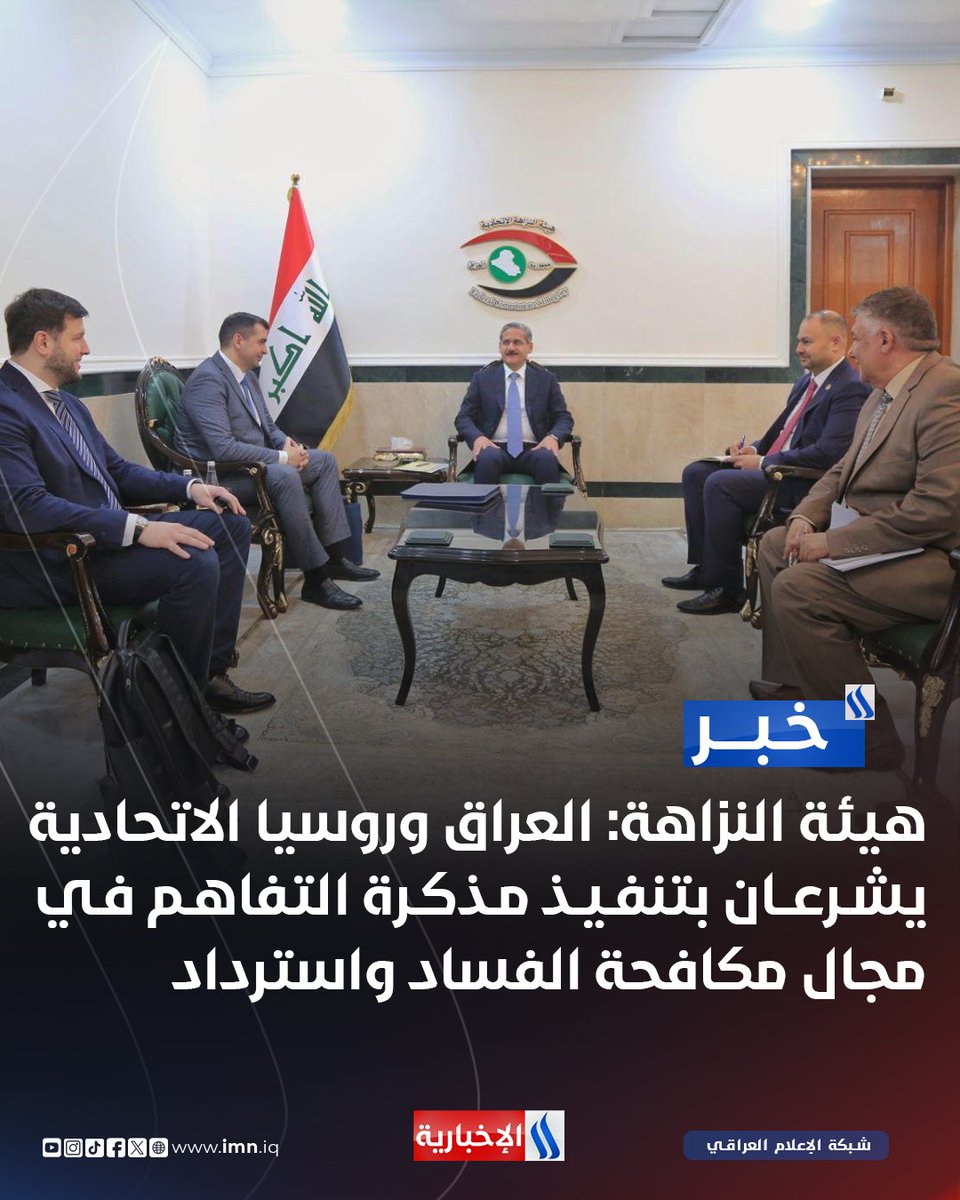
Integrity Commission: Iraq and the Russian Federation begin implementing a memorandum of understanding on combating corruption and recovering smuggled assets.
BROTHERS TECHNOLOGY
The Minister Of Finance Affirms The Government's Commitment To Adopting International Best Practices In Public Debt Management.
Monday, March 17, 2025 | Economic Number of reads: 213 Baghdad / NINA / Minister of Finance Taif Sami affirmed, on Monday, the government's keenness to adopt international best practices in public debt management, noting Iraq's aspiration to benefit from international expertise in this field.
The Ministry of Finance said in a statement that "Minister of Finance Taif Sami participated in the fourteenth session of the International Debt Management Conference, organized by the United Nations Conference on Trade and Development (UNCTAD), and held in Geneva during the period from March 17 to 19, 2025."
During the conference, Sami affirmed the Ministry of Finance's commitment to implementing the recommendations issued by the conference within the framework of enhancing the financial and economic performance of the Republic of Iraq, in pursuit of sustainable development and economic well-being for citizens," noting that the conference represents a strategic platform for discussing ways to improve debt management and implement sound financial policies,
which contributes to supporting the financial and economic stability of the country.
She expressed her appreciation for "the efforts made by UNCTAD in organizing this important event, which is an opportunity to exchange experiences and review the latest developments in the field of debt management."
On the sidelines of the conference, the Minister of Finance met with Rebecca Krinspan, Secretary-General of the United Nations Conference on Trade and Development, and discussed prospects for cooperation between Iraq and the organization in the areas of debt management and promoting sustainable financial policies.
Sami stressed the importance of the technical support provided by the organization to developing countries, noting that Iraq aspires to benefit from international expertise in this field.
The Minister also met with Paolo Gentiloni, the former Managing Director of Economic Affairs at the organization, and discussed with him the current economic challenges and the importance of developing flexible financial policies that contribute to achieving economic stability.
Sami stressed the Iraqi government's keenness to adopt international best practices in public debt management, praising the benefits of European experiences in this field.
The statement explained that the Minister of Finance's participation comes within the framework of the Iraqi government's efforts to strengthen public debt management mechanisms and develop financial strategies in line with international best practices, in addition to exchanging experiences and opinions with participants from various countries to enhance international economic and financial cooperation. /End https://ninanews.com/Website/News/Details?key=1192408
MILITIAMAN: MM&C-Iraq Dinar News-Reassurances Oil flow-Salaries to be Paid-Digital Currency-IMF-AMF-Cash Liquid
In this video, the host, affiliated with the Militia Man and Crew, discusses recent developments regarding monetary policy in Iraq and the ongoing transition towards a cashless economy. The Central Bank of Iraq is making strides to eliminate paper transactions, emphasizing the adoption of a digital currency.
The bank reassures citizens about its cash liquidity, essential for local transactions, predominantly backed by oil revenue. There are substantial discussions around the resumption of oil exports, particularly through the Turkish Port of Ceyhan, which have faced delays due to regional financial disputes.
The video also touches on the Iraqi government’s approach to stabilizing its economy through enhanced foreign exchange processes and banking transparency while targeting larger financial transactions. The host reflects on the interconnectedness of these developments and the potential implications for the Iraqi dinar, hinting at an impending currency reassessment.
📉 Digitalization of the Economy: The Central Bank’s roadmap towards eliminating paper transactions is indicative of a broader trend towards digital economies worldwide. This transition could present opportunities for increased efficiency in transactions and financial management while also aligning Iraq with international standards in monetary governance.
💼 Importance of Cash Liquidity: The Central Bank’s reassurances about cash liquidity highlight the bank’s commitment to stabilizing the currency and supporting economic activities. Given that the Iraqi economy relies heavily on oil revenues, this liquidity is essential in maintaining trust in the dinar, especially during periods of transition to a new financial framework.
🤝 Crucial Oil Export Negotiations: Discussions regarding oil exports through Turkey are pivotal for Iraq’s financial recovery. The negotiations reflect the intricate relationship between regional governance and central authority, which must be resolved to bolster the country’s oil-dependent economy. Oil exports are a significant revenue source, and their resumption could enhance budgetary stability.
📈 Shift in Banking Strategies: The implementation of a new monetary strategy focusing on attracting foreign exchange into regulated banking systems indicates a maturation of Iraq’s financial landscape. This could reduce speculative transactions and foster a more stable economic environment, thus reinforcing the dinar’s strength.
👥 Challenges with Regional Governance: The financial disputes between the Kurdistan Regional Government and the federal authorities underline the complexity of Iraq’s internal governance. As salaries hinge on these negotiations, resolving the tension is of utmost importance for financial stability and social order—demonstrating the necessity for cohesive governance in resource-rich regions.
⏰ Anticipation of Exchange Rate Reevaluation: The potential for a new exchange rate, discussed in relation to the digital transformation and oil valuation, suggests that significant adjustments in Iraq’s financial policy may be imminent. This reevaluation appears necessary to align with international economic practices while enhancing national liquidity.
💵 Impact on the Parallel Market: The Iraqi government’s strategic emphasis on enhancing banking transparency and reducing the dependency on cash transactions indicates a potential crackdown on the parallel market. This shift could diminish the influence of unregulated practices on the national economy, thus strengthening legal financial transactions.
The video encapsulates essential aspects of Iraq’s evolving financial environment, characterized by a transition towards digital currency, enhanced foreign exchange capabilities, and ongoing negotiations aimed at stabilizing oil exports. With inherent challenges stemming from regional governance disputes, the Central Bank and the Iraqi government must navigate these complexities to foster a sustainable economic future.
The host’s insights reflect a cautious optimism regarding the potential for stability and growth within Iraq’s unique financial landscape, underscoring the importance of collaboration among stakeholders moving forward. The developments discussed may set the stage for a significant transformation in how the Iraqi economy operates, emphasizing the need for flexibility and adaptation in face of changing monetary policies.
To The Ministerial Council For The Economy
Samir Al-Nusairi Finally, forecasts indicate that the Russian-Ukrainian war is nearing a halt with US intervention. We recall that when the war broke out three years ago, oil prices soared to over $110 a barrel, resulting in a surge in oil revenues for both rentier and oil-producing countries. This included Iraq, given its rentier economy.
Unfortunately, the achieved abundance was not utilized to activate the real economy.
Rather, operational allocations in the general budgets increased, and the deficit exceeded 60 trillion dinars. Now, with the inevitable expectation that the war will soon end, oil prices will fall, and it is expected that its average price will reach less than 60 dollars per barrel.
And we are still without other significant sources of national income. The Iraqi economy, God forbid,
will enter a new economic and financial crisis. We expect the deficit to rise, the inflation rate to rise, and the government will be forced to borrow domestically and abroad.
Borrowing from the central bank will be required, foreign exchange reserves will decline, and external and domestic debts will rise. Since these expectations could soon be realized, they require swift action.
Here, we propose that the Ministerial Council for the Economy hold extraordinary sessions to discuss the expected new crisis and prepare for confrontation in a manner that preserves the path of economic, financial and banking reform and finds solutions and remedies to protect our national economy. https://economy-news.net/content.php?id=53476
CRYPTO TRADER
#IQD Got some messages asking about the digital dinar and it's effect on RV.
Just know that the UST is in charge and has the final say Though CBI is the one that will announce it.
Any RV has to be supported by CBI for which they need access to their Dollars which are in NY FeD.
You think US will not safeguard it's financial interests by letting CBI dictate terms.
There is a reason CBI keeps meeting US treasury and gives updates to them.
If CBI was fully incharge why would they ban certain banks on the request of US treasury.They would have continued the embezzlement. it's a complex game and we are nearing the end.
Just hold the line. It's darkest before dawn.
🔗📢 FOLLOW & JOIN OUR COMMUNITY 📌 TELEGRAM: https://t.me/DINAREVALUATION 📌 X (TWITTER): https://x.com/DinarWatchTeam 📌 BLU...