Monday, March 10, 2025

Lack of management: expert slams Iraq's "runaway" spending, 10 MARCH

 Lack of management: expert slams Iraq's "runaway" spending


Shafaq News/ Iraq’s annual government spending has outpaced several stronger economies despite its continued reliance on oil and ongoing economic stagnation, according to Manar Al-Obaidi, head of the Iraq Future Foundation.


Over the past decade, Iraq’s total revenues reached 1,028 trillion Iraqi dinars ($784.4 million), with 92% derived from oil and only 8% from taxes, customs, and other sources. 

Meanwhile, government spending during the same period amounted to 1,007 trillion dinars ($768.4 million), along with unsettled advances ranging between 100-150 trillion dinars ($114.5 billion), pushing total expenditures beyond 1,100 trillion dinars (approximately $1 trillion).


Despite its immense wealth, Iraq's $100 billion annual budget surpasses the expenditures of several diversified economies. The UAE spends $65 billion annually, Malaysia $82 billion, and Singapore $77 billion, yet all three nations have expanded their economies to achieve a GDP of $500 billion per year.

Al-Obaidi noted that unlike Iraq, these countries lack vast natural resources and a large population, yet they have built thriving economies with significantly lower budgets. Iraq, by contrast, remains trapped in an oil-dependent economy, chronic financial mismanagement, and worsening unemployment.

“The problem has never been a lack of resources but rather how they are managed,” Al-Obaidi stressed, warning that Iraq’s reliance on a rentier economy will continue to deepen its financial challenges unless urgent reforms are implemented. He called for diversification, efficient spending, and an end to financial waste to ensure long-term stability.

He concluded that Iraq’s success hinges on “a stable government to improve development management.” Removing any element of that balancing act, he warned, would lead to systemic failure.
TIDBIT FROM MNT GOAT, 10 MARCH

 Mnt Goat 

Article:  "INFLATION’S FREEFALL: IRAQ HITS 2.8%, ECONOMIC HOPES SOAR”.  

Yes, only 2.8% and this is fantastic and amazing news since this is way in line with acceptable inflation rates for country, according to the IMF...


Article:   “GOVERNMENT ADVISOR: ELECTRONIC PAYMENT ENHANCES DINAR STABILITY, SHRINKS PARALLEL MARKET
 ...just this week...fantastic news is telling us they are winning the battle finally with breaking the parallel market...they are telling us they nearly broke the parallel market and...

my contact told us [this] had to happen and if they could get the rate of the dollar of this parallel market down or very close to the “official” CBI rate, we would see the triggering of the “official” rate going even lower and for us this means more value to the Iraqi dinar. 

Yes, the in-country revaluation close to a buck we have been waiting for. This then would allow the kickoff to the Project to Delete the Zeros...my CBI contact...has told me all is going as planned and finally “real” success can be seen.

🔥 REINALDO JC🔥🔥March F*cking Madness 🔥🔥 @DINARREVALUATION #iraqidinarinvestor #iraqidinar


Iraq accelerates Gulf gas imports as US ends Iran energy waivers, 10 MARCH

 Iraq accelerates Gulf gas imports as US ends Iran energy waivers


Shafaq News/ Iraq is shifting to Gulf gas imports to replace Iranian supplies after the expiration of US sanctions waivers, while also fast-tracking a major gas pipeline project in Basra, Parliament's Oil ane Gas Committee said Sunday.


On March 8, 2025, the US waiver allowing Iraq to buy Iranian gas expired, blocking Baghdad from continuing its reliance on Tehran for power generation.


Commitee spokesperson Ali Shaddad told Shafaq News that Iraq’s electricity sector faces challenges because many power plants depend solely on gas. However, Basra’s plants operate on gas, crude oil, and heavy fuel, ensuring greater grid stability.

Shaddad revealed that Prime Minister Mohammed Shia Al-Sudani is personally overseeing the rapid completion of a gas pipeline from Basra’s floating platform, a project launched 30 days ago by the Oil Ministry.


"The pipeline is progressing at an accelerated pace and is expected to be completed within 120 days," he said, noting that 30% of the work is already done.

Once operational, the pipeline will transport up to 200 million standard cubic feet per day (mmscf/d) of Gulf gas to Iraq’s power grid.


On Sunday, the US State Department formally ended Iraq’s special exemptions that had allowed Baghdad to purchase Iranian electricity.

For years, Iraq has relied on Iranian gas and electricity imports, especially during peak summer demand, benefiting from periodic US waivers issued multiple times a year.

In October 2024, Iraq signed a deal with Turkmenistan to import 20 million cubic meters of gas per day via Iranian pipelines using a swap mechanism. However, implementation has stalled due to technical issues, according to Iraq’s Ministry of Electricity.

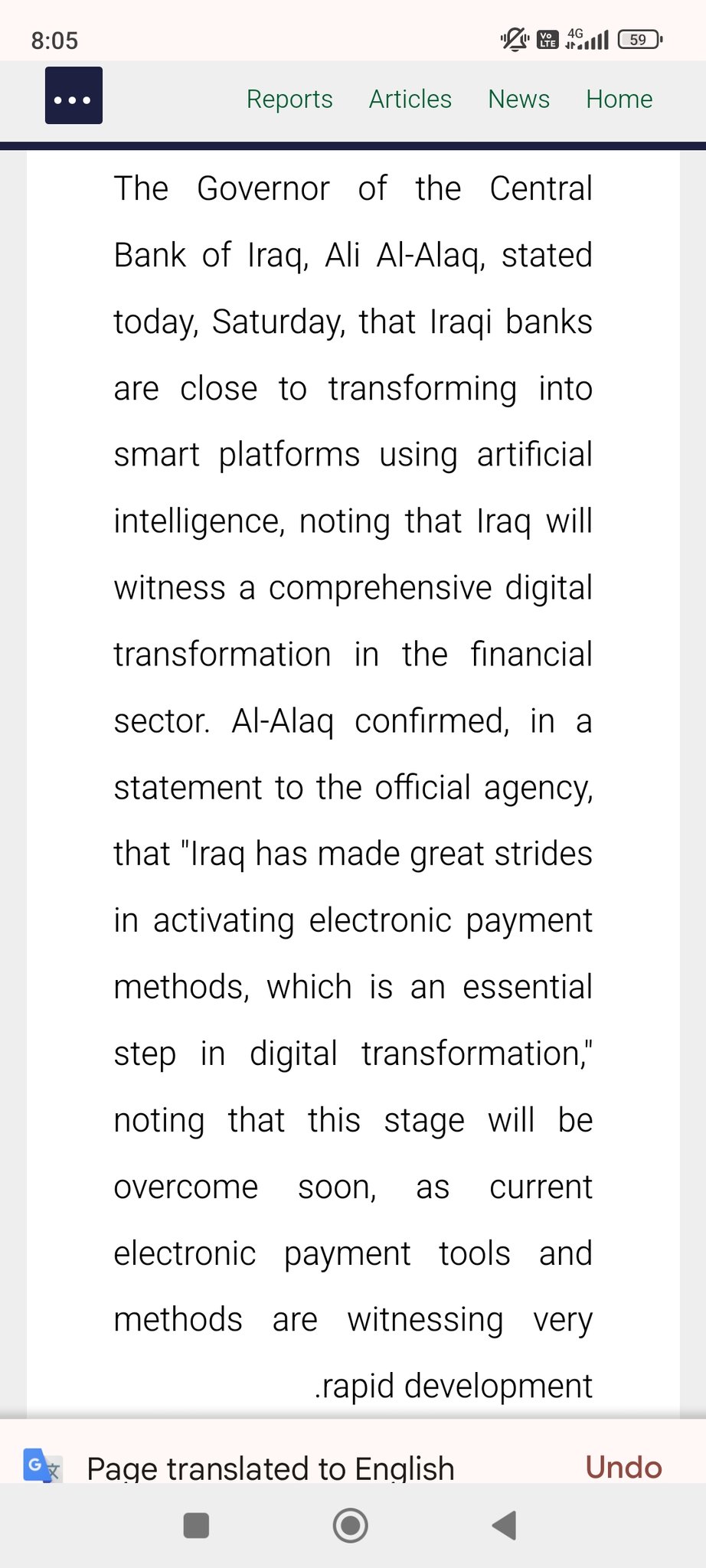
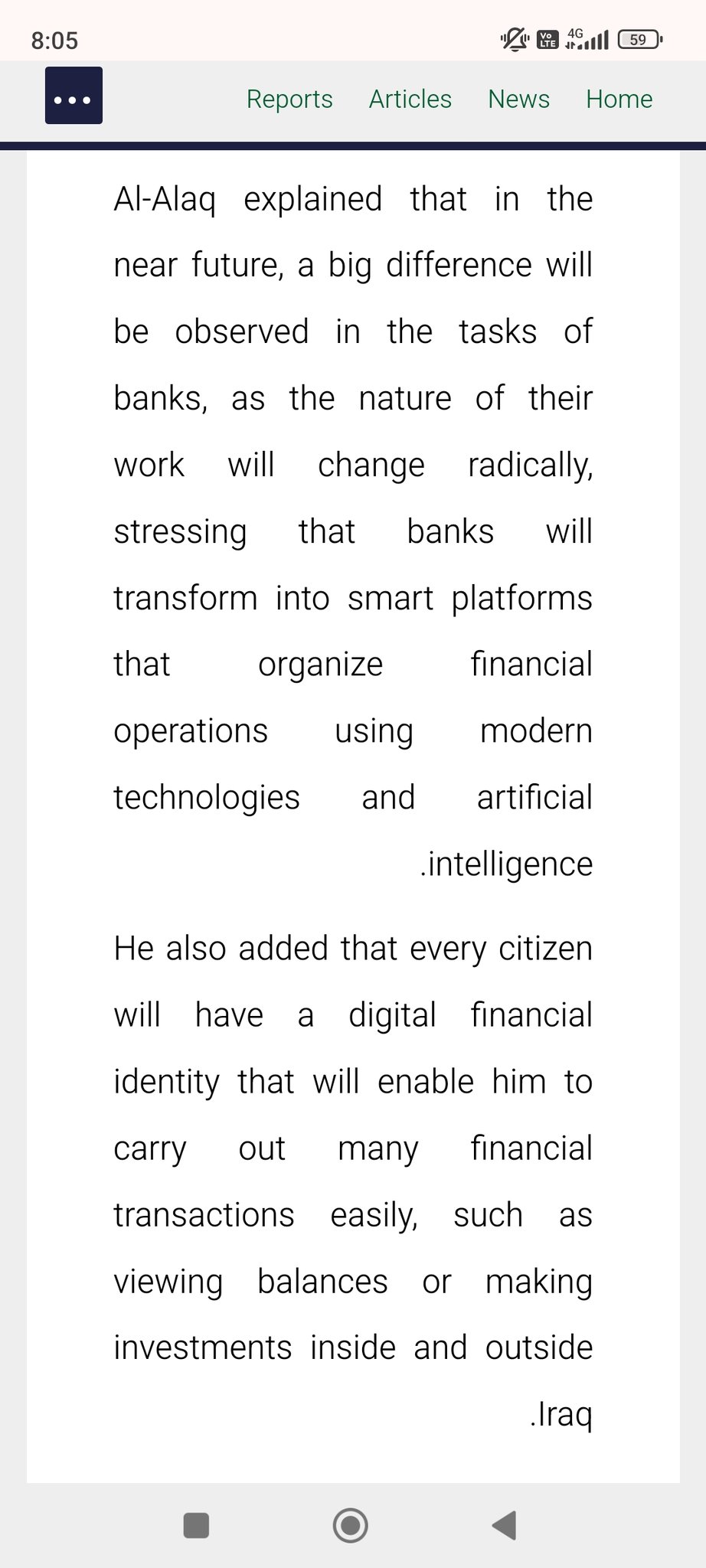
CRYPTO TRADER : Central Bank: Comprehensive digital transformation in the financial sector is coming soon, 10 MARCH

 CRYPTO TRADER

#IQDCentral Bank: Comprehensive digital transformation in the financial sector is coming soon.

The timing of the announcement is interesting.
Image
Image
Image
Image


MNT GOAT: .we are not likely to see any reinstatement of the dinar until Iran is broken #iqd


US calls on Iraq to stop relying on Iranian energy supplies, 10 MARCH

 US calls on Iraq to stop relying on Iranian energy supplies

Baghdad (IraqiNews.com) – The spokesperson of the US Department of State, Tammy Bruce, said on Thursday that the US administration is urging the Iraqi government to eliminate its dependence on Iranian sources of energy as soon as possible.

During a press briefing, Bruce added that the US administration welcomes the Iraqi prime minister’s commitment to achieve energy independence.

In terms of the Iraq sanctions waiver for Iran gas imports that expired on March 8, Bruce explained that the US administration is reviewing all existing sanctions waivers that provide Iran any degree of economic or financial relief.

In December, the United States extended a 120-day waiver that permits Iraq to pay Iran for energy imports.

The United States is trying to lessen Iran’s influence in the region, believing that a safe, sovereign, and stable Iraq is essential to these endeavors, according to the principal deputy spokesperson of the US State Department, Vedant Patel.

Since 2018, the US State Department has allowed Iraq to buy power from Iran while it continues to build up its own domestic generation capacity.

Tehran can only use the funds for non-sanctionable transactions, such as purchasing food and agricultural items for humanitarian purposes.

The United States has consistently granted exemptions to Iraq to enable it to fulfill its immediate energy requirements without violating US sanctions.

Baghdad has been urged by Washington to lessen its reliance on Iranian energy and natural gas while stiff sanctions are still in place against Tehran.

The United States has placed sanctions on Iran due to Tehran’s nuclear program and backing for extremist groups.

Iraq is the first destination for Iranian exports, as the value of Iranian exports to Iraq between March 2022 and March 2023 reached $10.23 billion.

Gas imports from Iran are important for Iraq to generate electricity. However, US sanctions imposed on Iran make it difficult for Baghdad to pay for the Iranian gas.

The US sanctions imposed on Iran force Iraq to pay for Iranian electricity only through restricted bank accounts in Iraq, which Iran can use to purchase its humanitarian needs after obtaining permission from the United States.

Iraq heavily relies on gas imports from Iran but has recently invested in many projects to start taking advantage of flared gas and using renewable energy to generate electricity.

https://www.iraqinews.com/iraq/us-calls-on-iraq-to-stop-relying-on-iranian-energy-supplies/

RESET INTELLIGENCE: PMF Militia Leaves Iraq & CBI Prepares Infrastructure – Signals for Iraqi Dinar Holders

PMF Militia Leaves Iraq & CBI Prepares Infrastructure – Signals for Iraqi Dinar Holders Introduction Recent developments in Iraq show a ...