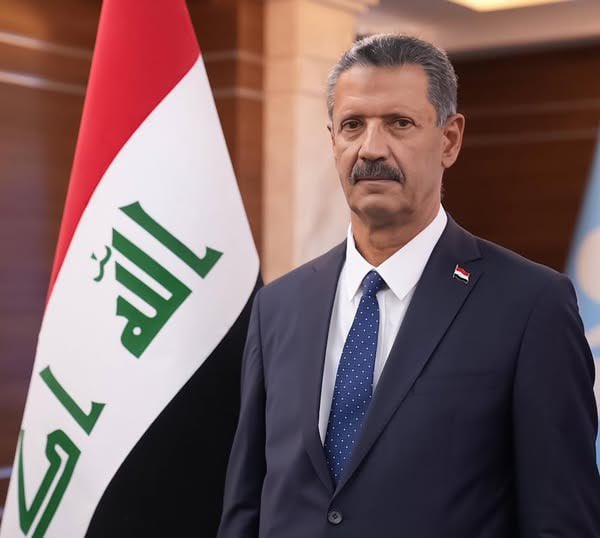
Shafaq News/ On Monday, Iraq announced the launching of a plan to establish steam power plants with a capacity of 15 megawatts.
During the Iraq Energy Conference and Exhibition, Minister of Electricity, Ziad Ali Fadhil, revealed that the new plants will rely on local fuel, stating, “We will no longer depend on foreign fuel,” according to a statement from the Ministry of Energy.
He also highlighted the country’s combined cycle projects, which do not require fuel, and the plan to generate 3,000 megawatts from renewable energy sources.
“We have high coordination with the Oil Authority to secure the necessary fuel to operate the electricity generation units,” said the Minister.
Earlier this month, the Ministry disclosed the locations for the construction of the steam plants and noted that 100 local and international companies had expressed interest in the project. The plants will be spread across central, southern, middle Euphrates, and northern regions, with three investment models set to be presented to the interested companies.
In this engaging video summary by Melanie Hines, the speaker discusses the latest developments concerning the Iraqi dinar, emphasizing Iraq’s ongoing efforts to combat corruption and improve its economic stability.
Hines highlights a recent UN report that commends the Iraqi government for its anti-corruption initiatives, as well as the growing collaboration between the Kurdistan region and Baghdad. She alludes to the possibility of oil exports resuming between Kurdistan and Turkey, signaling a potential economic boost.
Additionally, Hines touches on the pressures faced by the Iraqi government from the Trump administration, urging it to dismantle armed factions and restart Kurdish oil exports to avoid sanctions.
The video also explores the growing interest in national bonds among citizens, as well as the fluctuating exchange rates of the dinar. Throughout her presentation, Hines encourages viewers to remain optimistic about the future of the Iraqi economy and to engage with banks wisely when the time comes for currency exchange.
🌍 UN Praise: The UN has commended Iraq for its anti-corruption efforts, indicating significant progress in governance.
🤝 Unified Front: Iraqi leaders, Barzani and Al Sudani, are fostering collaboration between the Kurdistan region and the central government in Baghdad.
🛢️
Oil Flow Resumption: Rumors suggest that oil exports are beginning to resume between Kurdistan and Turkey, which could benefit the economy.
💼 Pressure from the US: The Trump administration is applying pressure on Iraq to restart oil exports from Kurdistan and dismantle armed factions.
📈 Tax Revenue Growth: Recent reports indicate a 22% increase in tax revenues, highlighting economic growth amid ongoing reforms.
📊 Bonds and Currency: There’s a push for citizens to invest in national bonds, which may signal a transition to a more stable currency environment.
⏰ Calls for Action: Hines emphasizes the importance of being prepared to engage with banks when opportunities arise, urging viewers to adopt proactive strategies.
Key Insights
🌐 Government Commitment to Reform: The UN’s positive report on Iraq’s efforts in combating corruption highlights the government’s commitment to reform and stability. This recognition is essential in attracting foreign investments and improving international relationships, which are vital for Iraq’s economic recovery. The united front between Kurdish and central government leaders could lead to more cohesive policies that benefit the entire nation.
🛢️ Economic Implications of Oil Resumption: The potential resumption of oil exports between Kurdistan and Turkey could significantly impact Iraq’s economy. Oil is a crucial revenue source for Iraq, and any increase in exports could enhance the government’s ability to fund public services and infrastructure projects. The successful negotiation of these exports would demonstrate Iraq’s capacity to manage its resources effectively.
⚖️ US Sanctions as a Tool for Reform: The pressure from the Trump administration serves as a double-edged sword for Iraq. While it could motivate the government to take necessary actions against militia groups and enhance governance, it also places Iraq in a precarious position where it must balance relationships with both the US and Iran. This geopolitical dynamic will be key in shaping Iraq’s future policies and international relations.
📈 Tax Revenue Growth Signals Positive Trends: The reported 22% growth in tax revenues suggests that Iraq’s economy is gradually recovering from previous downturns. Increased tax revenues can indicate improved economic activity and a broader tax base, which is essential for sustainable growth. This trend can also enhance government credibility and public trust.
💰 Citizens’ Trust in Banking System: The mention of national bonds and efforts to encourage citizens to deposit their dinar notes points to a shift in public sentiment. Many citizens have historically been skeptical of the banking system, leading to hoarding of currency. However, with improved governance and trust in leadership, there appears to be a growing willingness to engage with financial institutions, which could stabilize the dinar.
📊 Currency Fluctuations and Future Strategies: Hines’ observations about fluctuating exchange rates highlight the volatility of the Iraqi dinar. As Iraq navigates its economic reforms, currency stability will be critical. Citizens must be equipped with knowledge and strategies to manage their currency exchanges effectively, particularly when significant changes occur in the market.
⏳ The Importance of Timing in Currency Exchange: Hines emphasizes the need for viewers to be proactive about their currency exchanges. Her advice to engage with banks at the right moment reflects an understanding of market timing and personal finance strategy. This call to action encourages viewers to stay informed and prepared for any potential opportunities that may arise as Iraq’s economy develops.
These insights collectively underscore the complex and evolving landscape of Iraq’s economy, as the nation grapples with internal and external challenges while striving for stability and growth. Hines delivers a blend of analysis and personal anecdotes, making the information accessible and relevant to her audience.
Stock Exchange Economy News – Baghdad The US dollar exchange rate fell slightly, Sunday morning, in Baghdad markets.
The dollar prices witnessed a decrease in the Al-Kifah and Al-Harithiya stock exchanges, recording 149,900 Iraqi dinars for every 100 dollars, while it recorded 149,950 Iraqi dinars for every 100 dollars yesterday morning, Saturday.
The selling prices in the exchange shops in the local markets in Baghdad recorded stability, as the selling price reached 151,000 Iraqi dinars for 100 dollars, while the purchase price reached 149,000 dinars for 100 dollars.
Iraq’s Oil Minister Hayyan Abdul Ghani announces the readiness of the pipeline to Turkey's Ceyhan port for the resumption of Kurdistan oil exports.
In an interview with state-owned Iraqi News Agency, he revealed ongoing discussions with Turkey, aiming to resume exports within the next two days.
He also highlighted that exports from the Kurdistan Region are set at 300,000–325,000 bpd as per the budget law, with a portion allocated for local consumption.
: Ministry of Oil/ file
Al-Yasiri: The Prime Minister Formed Specialized Teams To Evaluate The Performance Of Ministries In The Digital Transformation Process
Minister of Communications Hiyam Al-Yasiri Money and business Economy News - Baghdad Minister of Communications Hiyam Al-Yasiri confirmed, on Sunday, that Iraqi ministries are racing against time to complete digital transformation operations and keep pace with developments in this field, noting that Prime Minister Mohammed Shia Al-Sudani has formed specialized teams to evaluate the performance of ministries in achieving this transformation.
Al-Yasiri said, in a statement reported by the official news agency, and reviewed by "Al-Eqtisad News", during her participation in the Digital Cooperation and Development Forum in the Jordanian capital, Amman:
"Prime Minister Mohammed Shia Al-Sudani led the Supreme Committee for Digital Transformation, developed important strategies, and established the National Center for Digital Transformation, and all ministries in Iraq are competing today to complete digital transformation operations."
She pointed out that "the Prime Minister directed the formation of specialized teams to evaluate the performance of ministries and the level they have reached in digital transformation operations.
"
She explained that "the Ministry of Communications, as a specialized ministry, aspires to be a model for the rest of the ministries, and has made great strides in this field, and possesses many digital applications and systems that were created by Iraqi hands and minds."
She stated that "the aim of holding the Digital Cooperation Forum is to approve the Arab Digital Agenda that was discussed last year with the participation of a number of international organizations, such as the International Federation and the United Nations, in addition to the Arab League, and today the ministerial declaration on the Arab Digital Agenda was approved."
Al-Yasiri added, "The meeting also aims to review the prospects of rapid digital development and keep pace with it, as it has become a necessity for Arab countries in order to keep up with global development in this field."
She stated that "keeping pace with development requires establishing a digital infrastructure to develop cybersecurity, eradicate digital illiteracy, and benefit from the talents and capabilities of the Arab people in general and the Iraqi people in particular."
She also indicated that "digital transformation has become an important goal in order to enhance the digital economy, considering that the digital economy today is one of the most important economies that the world is looking at, especially in oil countries that must adopt a digital economy that is an alternative to the oil rentier economy and is a real guarantee for them."
Al-Yasiri also pointed out that “artificial intelligence is still a challenge facing all countries of the world, in order to preserve the ethics of artificial intelligence on the one hand, and benefit from innovation and great scientific progress in this field.” https://economy-news.net/content.php?id=52945