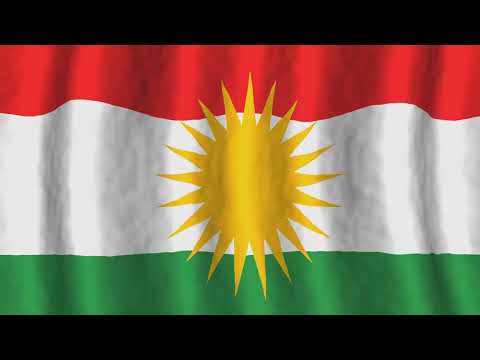
Nechirvan Barzani talks about a historic step: Iraq will be more prosperous
Kurdistan Region President Nechirvan Barzani stressed today, Saturday, that the path of development is a historic step towards building a more prosperous Iraq.
Barzani said in his speech during the Baghdad Dialogue Conference, “We support the development path project to strengthen Iraq as an effective state in the Middle East. We in the Kurdistan Region always believe that political and economic stability for all of Iraq is a national interest, and that true development cannot be achieved without integration between Baghdad and Erbil, as well as between Iraq and its surrounding countries in the region and the world.”
He added, "This conference emulates Iraq's vision for regional opening and integration, and the sustainability of Iraq requires cooperation and partnership, not conflict and restriction.
From this standpoint, the Development Road Project comes as an initiative and a historic step to build a more stable and prosperous Iraq on diverse economic foundations, regional openness, and integration with neighboring countries. link
In this week’s video, the hosts discuss a range of positive developments in Iraq’s economy, inspired by Chella Smith’s weekly news roundup.
Despite the common perception of Iraq as a conflict-ridden nation, the report highlights the country’s ambitious efforts towards economic reform and global integration.
Key topics include the modernization of Iraq’s banking system, the potential resumption of oil exports from the Kurdistan region, strengthening U.S.-Iraq relations, and the launch of national bonds aimed at funding development projects.
Additionally, Iraq’s commitment to energy independence and food security through participation in global events are discussed. The video emphasizes the importance of addressing internal challenges, such as security issues and political instability, while also recognizing the country’s strengths, such as its young population and natural resources.
🌍 Modern Banking Initiatives: Iraq is working to modernize its banking system to attract foreign investment and build a stable financial environment.
🛢️ Oil Export Resumption: The U.S. encourages Iraq to resume oil exports from the Kurdistan region, which could stabilize global oil prices amid Iranian sanctions.
🤝 Strengthening U.S.-Iraq Cooperation: High-level discussions aim to enhance long-term cooperation in security and economic development.
💰 Launch of National Bonds: Iraq has issued $1.5 billion in national bonds to fund development projects, reducing reliance on foreign aid.
⚡ Energy Independence Efforts: Iraq is investing in refining capacity and gas exploration to become less dependent on energy imports.
🌾 Food Security Initiatives: Iraq’s participation in the Gold Food 2025 event highlights its agricultural potential and efforts to diversify its economy.
🔍 Addressing Internal Challenges: The video underscores the need for political stability and anti-corruption measures to support economic growth.
Key Insights
📈 Modernizing the Banking System: The push for a stronger banking system led by Prime Minister Sudani’s financial adviser reflects Iraq’s commitment to creating a transparent financial environment. This modernization is crucial for attracting foreign investments and establishing a robust economic foundation. The Central Bank of Iraq is collaborating with international institutions to improve financial infrastructure, which enhances trust and confidence in the system.
🌐 Geopolitical Implications of Oil Exports: The potential resumption of oil exports from the Kurdistan region carries significant geopolitical ramifications. It could alleviate the impact of U.S. sanctions on Iranian oil and stabilize global prices. However, technical challenges and OPEC compliance must be navigated carefully to avoid disrupting the balance in global oil markets.
🤝 Long-Term Cooperation with the U.S.: The dialogue between Iraqi Prime Minister Sudani and U.S. Senator Elissa Slotkin highlights the importance of U.S.-Iraq relations in fostering economic development and security. This partnership not only provides Iraq with support from a major global power but also emphasizes the shared responsibility in achieving sustainable growth.
💡 Funding National Development through Bonds: The issuance of national bonds worth $1.5 billion signifies a strategic approach to funding development projects without over-relying on foreign loans. This initiative empowers Iraq to take charge of its financial future, allowing both domestic
and international investors to participate in the country’s growth.
🌱 Pursuing Energy Independence: Iraq’s investment in refining capacity and gas exploration aims to bolster energy independence and reduce reliance on imports. This strategic move positions Iraq to meet the growing global demand for natural gas while also enhancing its economic resilience.
🌾 Leveraging Agricultural Potential: Iraq’s participation in global food business events illustrates its efforts to diversify the economy and capitalize on its agricultural strengths. By showcasing its products and seeking investment opportunities, Iraq aims to become a significant player in the global food market, further enhancing economic stability.
⚠️ Navigating Internal and External Challenges: While the prospects for Iraq’s economy are promising, challenges such as security threats, political instability, and corruption remain significant hurdles. Addressing these issues is vital for attracting foreign investment and ensuring that economic growth benefits all Iraqis, not just a select few.
In conclusion, the video presents an optimistic view of Iraq’s economic landscape, emphasizing ongoing reforms and strategic initiatives aimed at fostering growth and stability. While challenges persist, the potential for Iraq to emerge as a regional economic power is evident, provided it can navigate its internal complexities and leverage its abundant resources effectively.
Iraq invites Japanese companies to invest, confirms readiness for new economic phase
The Senior Undersecretary of the Ministry of Foreign Affairs, Ambassador Mohammed Bahr Al-Uloom, confirmed today, Friday, that Japan has contributed to the reconstruction of Iraq with 34 vital projects, while calling on Japanese companies to invest in Iraq.
Bahr Al-Uloom said, during the celebration of the Japanese Emperor's birthday and the National Day: "The relations between Japan and Iraq are historical and date back to 1939," praising "the development witnessed by these relations to reach the level of fruitful diplomatic partnership."
He added that "the name of Japan is associated in the Iraqi memory with the meanings of loyalty, honesty and efficient performance, in addition to the lofty human values that are consistent with our Arab and Islamic values and our ancient civilization in Mesopotamia, especially in the Sumerian and Babylonian civilizations."
He added that "the high level of civilization that Japan has achieved in the fields of economy, construction, industry and technology was not a coincidence, but rather the result of strenuous efforts made by successive generations of the Japanese people, deriving determination and strength from Japan's ancient civilization," explaining that "Japan contributed to supporting the march of freedom and democracy in Iraq after 2003, and participated with its forces in maintaining security and stability in Muthanna Governorate, an unprecedented step that left a unique humanitarian impact on the residents of the governorate."
He stated that "the two countries share in supporting each other diplomatically in international forums and UN institutions," noting that "Japan provided grants and development loans to Iraq, which contributed to the construction and rehabilitation of 34 vital projects in various Iraqi cities and regions.
The most prominent of these projects is the establishment project, which is the most recent in the Middle East and the first in Iraq to convert oil waste into high-quality derivatives, which is being implemented by the Southern Refineries Company in cooperation with the leading Japanese company "JGC", and will provide thousands of job opportunities in Basra Governorate."
He stressed that "Iraq today faces new horizons of cooperation that carry promising opportunities thanks to its stability and development in the security and economic fields, which makes it a fertile and attractive environment for investment," calling on "leading Japanese companies to be a strategic partner in this new phase of Iraq's economic renaissance, inspired by the successful Japanese experience in development and progress."
Bahr al-Uloom expressed his "admiration for the Japanese development experience," pointing to "the similarities between the two countries in geopolitical challenges."
He explained that "Iraq seeks to benefit from the distinguished Japanese model by expanding areas of cooperation and exchange of expertise," explaining that "the investments of Japanese companies in Iraq are not just a strategic choice, but rather part of the modern economic vision adopted by Iraq under the leadership of Prime Minister Mohammed Shia al-Sudani."
Bahr al-Uloom pointed to "the remarkable growth in trade cooperation between the two countries in recent years," stressing that "Iraq seeks to enhance this cooperation to include larger projects that have a greater impact on the welfare of the two peoples and the stability of the region."
He announced "Iraq's desire to expand areas of partnership," calling on "Japanese companies and institutions to intensify their presence in Iraq." link
The $16 per barrel, outlined in Iraq’s 2025 budget amendment (approved February 2, 2025), is designated specifically for the international oil companies (IOCs) producing crude oil in the Kurdistan Region—like Hunt Oil (U.S.), HKN Energy (U.S.), Rosneft (Russia), DNO (Norway), Genel Energy (UK/Turkey), and Gulf
Keystone (UK).
It’s not a payment to the Kurdistan Regional Government (KRG) itself but rather covers the production and transportation costs of these international oil companies IOCs operating under KRG licenses.
How It Works
Purpose: The $16/barrel compensates IOCs for their operational expenses (drilling, extraction, transport), replacing the KRG’s previous direct payments, which have been in arrears since the Iraq-Turkey pipeline shut down in March 2023. This was a sticking point—IOCs like DNO and Genel had pushed for $21/barrel, while Baghdad initially offered $8, settling at $16 after negotiations.
Federal Oversight: Baghdad’s plan, via the Oil Ministry and SOMO (state oil marketer), is to pay these costs directly to the IOCs once exports resume through SOMO.
Revenues go into a federal treasury account (monitored by the Central Bank of Iraq), with the KRG getting its budget share afterward—not the $16 itself.
Contract Shift: This ties into Baghdad’s push to shift KRG’s production-sharing contracts (PSCs) to federal terms. The $16 ensures IOCs keep producing while aligning payments with SOMO’s export system, sidelining the KRG’s direct financial role.
Who Gets What
IOCs: Hunt, HKN, Rosneft, DNO, etc., get the $16/barrel for their costs, incentivizing them to agree to SOMO’s control. For example, DNO’s Tawke field or Gulf Keystone’s Shaikan output would see this as cost recovery.
KRG: Doesn’t pocket the $16—its cut comes from the federal budget (e.g., 12-13% of Iraq’s total revenue), based on exported oil volumes, not a direct slice of the $16.
Baghdad: Keeps the lion’s share of export profits after costs, reinforcing federal authority.
Implications
This setup means Baghdad deals with IOCs like Rosneft or Hunt Oil directly, using the $16 as a lever to enforce SOMO integration. The KRG’s role shrinks to a minority stakeholder (20-25% in most fields), with no control over the $16 payments. If the pipeline restarts, say next week, IOCs get paid Tuesday-ish from federal funds, not KRG coffers, under the current system for exports in Federal Iraq.
The United Nations announces its support for Iraq in recovering its smuggled funds and combating cross-border corruption
The Deputy Representative of the Secretary-General of the United Nations, Ghulam Mohammad Ishaqzai, expressed his readiness today, Friday, to remove the obstacles that prevent Iraq from recovering its smuggled funds.
The head of the Federal Integrity Commission (Mohammed Ali Al-Lami), according to a statement by the Integrity Commission received by (Al-Mada), stressed "the importance of cooperation with international organizations to recover Iraq's smuggled funds, indicating that corruption and the smuggling of its proceeds have become problems that cross borders and continents and require international cooperation to limit them.
During his meeting with (Ghulam Mohammad Ishaqzai), Deputy Special Representative of the Secretary-General of the United Nations for Iraq, Al-Lami praised the programs launched by the organizations affiliated with the United Nations and their assistance to Iraq in various fields after 2003; to overcome the problems and dilemmas left by the dictatorial regime and to support state institutions to advance them after the damage they suffered after the change, noting that Iraq is one of the first countries to join the United Nations and the treaties and agreements emanating from it, including the United Nations Convention against Corruption.
Al-Lami expressed his "hope that international organizations would help Iraq recover its funds that were looted before 2003, and for which binding resolutions were issued by the UN Security Council, pointing to the establishment of the Iraq Fund Recovery Fund to recover all financial rights of the Republic of Iraq that were obtained by others through illegal means; as a result of the misuse of the Oil for Food Program, the blockade, smuggling, economic sabotage,
or exploitation of the sanctions imposed on Iraq; to achieve financial gains at the expense of the Iraqi people."
He stressed the need to implement international resolutions and restore Iraq's money, in order to invest it in the reconstruction process, build infrastructure and achieve development.
For his part, Ghulam Mohammad Ishaqzai, Deputy Special Representative of the Secretary-General of the United Nations, expressed his "readiness to overcome the obstacles that prevent Iraq from recovering its smuggled funds, and to continue cooperating with the Iraqi oversight agencies to hold workshops and seminars to develop their staff and increase their expertise in the field of preventing, combating, and prosecuting corruption perpetrators."
He praised "the pioneering experiences of the Iraqi Integrity Commission, stressing the importance of establishing strategic partnerships with the Commission based on the experiences gained by the organizations affiliated with the United Nations in dealing with international files in various parts of the world. link