FRANK26:"SOME HABITS ARE HARD TO BREAK FOR THE CITIZENS... BUT NECESSARY FOR THE MONETARY REFORM SUCCESS!!!.......F26
Central Bank: Iraqi society prefers to use cash in daily transactions
3/4/2024 - Baghdad
The Central Bank of Iraq announced today, Monday, the use of the best internationally approved systems and standards in the field of electronic payment, while indicating that it spends hundreds of millions of dollars annually to develop infrastructure systems to build an important base for the development of electronic payment in Iraq.
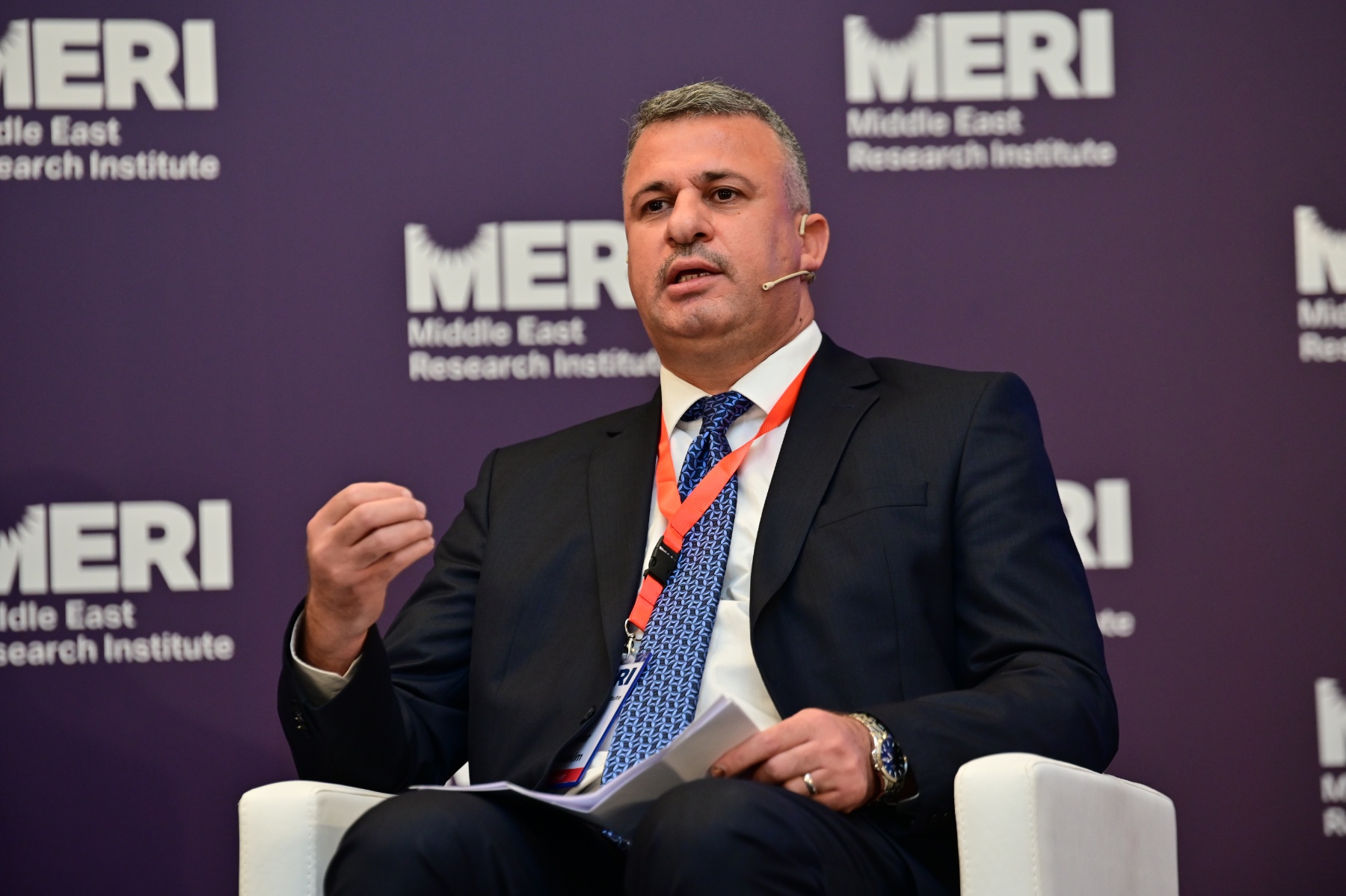
Deputy Governor of the Central Bank, Ammar Khalaf, said in a speech at the first Iraqi Digital Economy Forum, “The digital financial transformation in Iraq began with the localization of state employee salaries and the opening of bank accounts, the primary purpose of which is to use electronic payment in daily transactions, whether inside Iraq.” Or outside it.”
Khalaf added, “Iraqi society prefers to rely on cash in daily transactions, but the government’s efforts to support digital transformation, especially in the financial sector and other sectors, gave a strong impetus to the Central Bank over the past year and it continues to encourage and activate electronic payment in Iraq by issuing many Among the laws, controls and instructions that encourage the use of electronic payment in Iraq.
He pointed out that "some ministries responded quickly to the directives of the Central Bank and the Iraqi government, especially the Ministry of Oil by making collections at gas stations and others via electronic payment, as well as the Passports Directorate, which obligated payment to be electronic, in addition to the General Traffic Directorate and other ministries." Stressing that "all this support gives a very strong and significant impetus to electronic payment."
He pointed out that "the Central Bank has been the only influential player for many years, as it has embraced the importance of digital transformation in most of its transactions, and spends hundreds of millions of dollars annually to develop infrastructure systems to build an important base for developing electronic payment in Iraq through the use of the best internationally approved systems and standards in this field." ".
When we're talking about the deletion of the zeros, it comes off the bank note only. It isn't going to change the exchange rate. The exchange rate is going to be equal in value...
You got people out there saying that deleting the zeros does not mean the currency, it only means the exchange rate. That's not accurate... The 25,000 dinar has the same value as a 25 dinar...25,000 dinar times .00076 gives you $19. So when we delete the zeros...25 x .76 is the same exchange rate [$19]...Delete the zeros...is not increasing the exchange rate against other currencies.
Article: "Central Bank announces the increase in the volume of foreign reserves from 140 to 148 trillion dinars" That's perfect because...the more reserves you have the easier it is to protect your exchange rate.
How BRICS Will Launch their New GOLD-BACKED Currency System
The BRICS Alliance is spearheading a transformative agenda aimed at recalibrating the world’s financial system.
This movement seeks to shift away from the prevailing dominance of Western fiat currencies, notably the US dollar, towards a more equitable system underpinned by tangible assets such as gold and commodities.
The reasons driving this shift are many, encompassing a desire for financial stability, equitable global development, and resilience against unilateral sanctions and economic policies perceived as unsustainable.
Foundation of the BRICS Asset-Backed Financial Vision
At the heart of the BRICS strategy is the development of a new financial and currency system that diverges from the fiat currency model, which is primarily based on government credit and often subject to inflationary pressures.
Instead, BRICS proposes a system grounded in tangible assets.
This initiative is not merely a response to the economic imbalances and vulnerabilities inherent in the fiat system but also a strategic move to reassert sovereignty over national financial affairs and reduce dependency on Western financial institutions.
The proposed BRICS currency would be dual-backed: by the national currencies of the member states and by a basket of commodities, including gold.
This approach aims to provide a stable and reliable means of exchange that reflects the real economic output and reserves of the participating nations.
The introduction of such a currency is predicated on international law and mutual agreements among the interested countries, ensuring a foundation of legitimacy and mutual benefit.
How Would this New Financial and Currency System Roll Out?
The implementation of this new financial system involves several key steps. Initially, the system will focus on the BRICS nations and potentially include members of the Shanghai Cooperation Organization (SCO).
The infrastructure is already partially in place, with mechanisms such as Russia’s SPFS (System for Transfer of Financial Messages) serving as alternatives to Western systems like SWIFT.
The digital form of the new currency is crucial for reducing transaction costs and enhancing accessibility outside the conventional banking system.
Central to the system’s success will be the establishment of a stable exchange mechanism, supported by a mathematical model to ensure its sustainability.
This requires the collaboration of central banks within the BRICS nations to approve and adopt the currency for international trade, along with the creation of digital national currencies that can be used seamlessly in cross-border transactions.
What are the Challenges in Launching the New Currency System?
However, the realization of this ambitious plan faces several challenges. First and foremost is the need for a political consensus within and between the BRICS countries and their partners.
The reluctance of some central banks and government officials, still aligned with the traditional IMF paradigm, poses a significant hurdle.
Furthermore, the task of establishing a new pricing mechanism for commodities, free from Western speculation, requires extensive coordination and the creation of new international legal frameworks.
Another critical challenge is the reformation of existing financial institutions like the New Development Bank (NDB) to support the new currency system.
This involves a shift in operational structures away from dollar-centric fiat models towards those that can accommodate and foster the growth of the new BRICS currency.
Will this New BRICS Financial System Trigger a GCR?
Should the BRICS nations overcome these obstacles and successfully implement their plan, the impact on the global financial system could be profound.
A stable, asset-backed currency system would provide a viable alternative to the fiat currency model, potentially leading to a “Global Currency Reset.”
This reset would challenge the current dominance of Western currencies and financial institutions, offering countries around the world a more stable and equitable means of conducting international trade and finance.
Such a shift could herald the return of a sound global financial system, less susceptible to manipulation by central bank policies and more reflective of the actual economic values of nations.
It would also establish a level playing field for global purchasing power, fostering a more balanced and fair international economic order.
In conclusion, the BRICS initiative to develop a new financial and currency system represents a bold step towards reshaping the global economic landscape.
The System Rollout Plan: Step-by-Step
Step 1: Agreement and Legal Framework
The process begins with an agreement among interested countries, underpinned by international law, to create a new currency. This foundational step ensures the legitimacy of the currency from the outset.
Initially, not all countries would be included. A focus on BRICS nations, possibly expanded to include members of the Shanghai Cooperation Organization (SCO), would suffice.
Step 2: Infrastructure Development
The development of necessary financial infrastructure is crucial. For Russia, for instance, this includes their own SWIFT-like payment system (SPFS), currency exchange mechanisms, and established correspondent relations between banks.
Step 3: Currency Composition
The new currency would be based on a dual-basket system. One basket would contain the national currencies of all participating countries, similar to the IMF’s Special Drawing Rights (SDR) but with more transparent criteria. The second basket would comprise commodities.
The new currency would function as an index of commodities and national currencies, backed by a mechanism for reserves to ensure stability and convenience.
Step 4: Digital Currency Implementation
The currency should be introduced in digital form to facilitate transactions outside the traditional banking system, significantly reducing transaction costs.
Approval from all Central Banks involved is necessary for the currency to be used as a transaction instrument.
Step 5: Price Mechanism and Stability
A new mechanism for price formation that eschews Western commodity exchanges is essential. This would involve a return to a system of long-term agreements and stable price formulas based on supply and demand, similar to practices during the Soviet Union era.
Legislation to make commodity trading through exchanges mandatory for transparency and to counter speculative price manipulation.
Step 6: Political and Financial Institution Support
The proposal for the new currency and financial system needs to be formally included in the agenda of BRICS summits, requiring political will and support.
The New Development Bank (NDB) could play a pivotal role in organizing international conferences and drafting international treaties to support the currency’s introduction, pending an internal reorganization to align with this new mandate.
FRANK26: "THIS IS THE MATURING OF THE MONETARY REFORM... BUT IT'S COMPLICATED."..........F26
What is the relationship between the Central Bank’s actions? The dollar will soon stabilize at 145 thousand dinars
3/4/2024
- Baghdad
An expert in economic and academic affairs at Cihan University, Nawar Al-Saadi, confirmed today, Monday (March 4, 2024), that the decline in the dollar exchange rate is due to demand and supply on the market.
Al-Saadi said in an interview with "Baghdad Today", "The decrease has nothing to do with the procedures of the Central Bank, but the positive thing in the matter is that there has become strong compliance on the platform and many traders have begun to comply with it."
Al-Saadi added, "The current decline is due to the lack of demand for the cash dollar, and the pressure on the parallel market is due to trade with Iran and Syria."
He pointed out, "It is expected that the dollar will stabilize in the coming period at 1445, and a thousand dinars will rise or fall, and it will witness a long period of stability, if there are no sanctions on banks and banks."
Al-Saadi stated, “The US Federal Reserve has indicated the presence of sanctions, but they may affect people and not banks. Therefore, the stability level of the dollar will be between the forties, and this is the real demand for the dollar, because in the last period there were fears that led to an increase in demand.”
Today, Monday, the exchange rates of the dollar against the dinar recorded a noticeable decline in the main stock exchanges in the capital, Baghdad, and the provinces.
The "Baghdad Today" correspondent said, "The price of the dollar on the main stock exchange in the capital, Baghdad, reached 149,500 dinars today, after it recorded 151,100 dinars per 100 dollars yesterday."
Prime Minister Muhammad Shiaa Al-Sudani confirmed on Sunday evening (March 3, 2024) that lowering the exchange rate means giving the dollar to “illegitimate” trade.
Al-Sudani stated during his participation in the opening of the activities of the Al-Rafidain Dialogue Forum in Baghdad, that "the financial situation in Iraq is at its best and that commercial transactions are collected through commercial institutions."
He added, "We give the student, the patient, the merchant, the contractor, and the investor the dollar at the official rate."
Al-Sudani pointed out that "the notes recorded on Iraqi banks from the US Treasury are from the time of previous governments."
He pointed out that "economic reform was one of the most important priorities of the government program."
Al-Sudani noted that "the salaries of employees and retirees constitute the largest cash block in the financial budget."
It is noteworthy that Iraq relies on the platform for selling currency directly to local banks and companies, which was previously known as the daily dollar auction, as one of the mechanisms for preserving the value of the Iraqi dinar and combating speculative operations in the parallel market.
The Governor of the Central Bank of Iraq, Ali Al-Alaq, confirmed on February 6 that “some groups are trying to stay away from the platform for selling foreign currency in order to evade taxes or customs or the presence of illegal trade,” indicating “the possibility of meeting all requests for the dollar,” adding that “the bank has no problem.” In offering or selling the dollar.
He pointed out that "the bank is in a comfortable position to respond to requests to buy dollars. We have sufficient reserves, and soon we will launch a mechanism to ensure that only real travelers get the dollar."