THE IRAQI ECONOMY IN 2025: PIVOTAL TRANSFORMATIONS BETWEEN AMBITION AND CHALLENGES
In 2025, Iraq witnessed a crucial turning point in its economic trajectory, as growth factors and challenges intertwined in a complex equation that defined the features of the near future. While the country achieved tangible accomplishments in vital sectors such as oil, electricity, and infrastructure, it continued to face deep structural challenges related to near-total dependence on oil, exchange market fluctuations, and a growing financial deficit.
While the International Monetary Fund predicted economic growth of 5.3%, the highest rate in years, this growth was mainly driven by the oil sector, while the non-oil sector continued to suffer from weak growth and development.
The year also witnessed widespread controversy surrounding the 2025 budget, whose schedules were delayed, and the financial deficit expanded to alarming levels, raising questions about the state’s financial sustainability.
OFFICIAL PRICE AND PARALLEL MARKET
The Central Bank of Iraq maintained a fixed official exchange rate of 1,305 dinars per dollar for most of 2025, in a strategic move aimed at controlling the market and preventing the unpredictable fluctuations witnessed in previous years. However, the parallel market witnessed significant fluctuations, with the dollar price ranging between 1,397 and 1,424 dinars at different times of the year, reflecting a continuous gap between the official and parallel rates ranging between 7% and 9%.
(Remember that the IMF wants 2% or less difference)
Despite these challenges, the Central Bank recorded important positive indicators in 2025, as the cash reserve rose to $108 billion, a record level that provides a safety cushion for the economy, and the gold reserve rose from 130 to 172 tons, indicating the diversification of reserves and strengthening confidence in the national currency.
Regarding inflation, the inflation rate fell to 2.2% in the first quarter of 2025, a relatively low rate reflecting the success of monetary policy in controlling prices. Private sector credit also grew by 1.1%, indicating an improved financial environment and increased confidence in the banking system.
GROWTH FORECASTS ARE OPTIMISTI C
The International Monetary Fund (IMF) projects that the Iraqi economy will grow by 5.3% in 2025, compared to 1.4% in 2024, indicating a significant acceleration in economic activity. This growth is primarily driven by the recovery of the oil sector and increased government investment in infrastructure and services.
In a more optimistic forecast, the World Bank indicated that Iraq could achieve the highest growth rate among Arab economies, at around 6.7%, if oil prices rise to approximately $80 per barrel. However, economic experts cautioned that this scenario remains contingent on external factors beyond Iraq’s control.
NON-OIL SECTOR: SLOW GROWTH
Despite optimism about overall growth, the non-oil sector recorded modest growth of 5% in 2024, with expectations of continued growth of 4% in 2025.
This growth, while positive, still falls short of expectations and reflects the structural challenges facing productive sectors such as agriculture, industry and tourism. The IMF report indicated that non-oil growth may not exceed 1% in some estimates, reflecting the large structural dependence on oil and the urgent need to diversify sources of economic growth.
THE 2025 BUDGET: CONTROVERSY AND COMPLICATIONS
The 2025 budget witnessed widespread controversy and significant delays in approving its schedules, even though it falls within the three-year budget for the years 2023-2025, which was approved in June 2023. The Prime Minister’s advisor, Mazhar Muhammad Salih, estimated that the size of the 2025 budget is about 200 trillion dinars (about 150 billion dollars), with a projected deficit of about 64 trillion dinars.
According to estimates, operating expenses constitute approximately 67% to 70% of total public expenditures, comprising salaries, allowances, pensions, and social welfare. This budget structure reflects the rentier nature of the Iraqi economy, where the majority of spending goes toward salaries and current services, while investments in infrastructure and development projects remain limited.
APPROVAL DELAY CRISIS
2025 witnessed a major crisis due to the failure to approve the budget schedules, which affected provincial allocations, investment projects, and the salaries of some groups. Parliamentarians accused the government of stalling, while observers indicated that the delay stemmed from disagreements over revenue distribution between Baghdad and the Kurdistan Region, as well as issues related to the costs of producing and transporting the region’s oil.
Experts warned that delaying the approval of the 2025 budget would have a direct impact on the Iraqi market, investment activity and public spending, and would increase uncertainty that harms the business environment and economic confidence.
THE GROWING DEFICIT AND DEBT
The International Monetary Fund (IMF) projects that Iraq’s budget deficit will widen to 7.6% of GDP in 2024, compared to 1.3% in 2023, raising concerns about fiscal sustainability.
The Prime Minister revealed that Iraq’s total external debt exceeds $10 billion, while its domestic debt amounts to approximately 34 trillion dinars.
Al-Sudani confirmed that the new government will have to borrow due to the deficit, but stressed that the financial situation is stable thanks to large reserves.
He also announced that the number of employees in Iraq during 2025 was 4.5 million, and the number of retirees was 2.9 million, while social protection allocations amounted to 6 trillion dinars annually.
OIL PRODUCTION: COMMITMENTS AND AMBITIONS
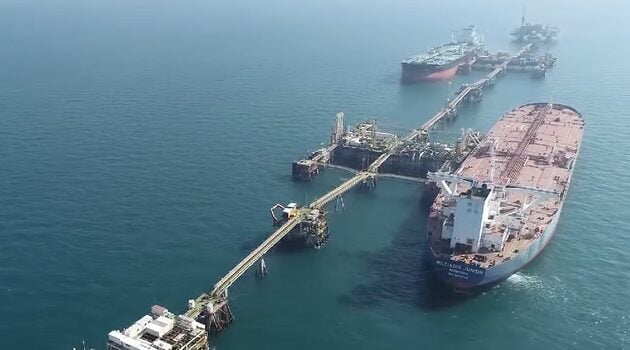
Iraq’s crude oil production remained stable at around 4 million barrels per day for most of 2025, as Baghdad adhered to the OPEC+ voluntary production cuts. Iraq produced approximately 965 million barrels during the first eight months of 2025, generating revenues of around 73 trillion dinars, representing 90% of the country’s total revenue and underscoring its near-total dependence on oil.
Iraq pledged to compensate for its overproduction of 1.44 million barrels per day in 2024, exceeding its quota, with full compensation to be completed by September 2025. This commitment aligns with the OPEC+ production cuts and aims to maintain global price stability.
AMBITIOUS FUTURE PLANS ARE IN PLACE
In the longer term, the Ministry of Petroleum announced ambitious plans to increase production to more than 6 million barrels per day by 2029, as part of a strategy to maximize revenues and boost production capacity. This ambition requires massive investments in infrastructure, addressing associated gas issues, developing existing fields, and exploring new ones.
PRICING AND REVENUE CHALLENGES
The IMF estimates that oil revenues are set to decline from $99.2 billion in 2024 to $84.2 billion in 2025, affected by lower prices that have fallen from an average of $80.6 per barrel to $65.9.
INVESTMENTS: HUGE FIGURES AND PERSISTENT OBSTACLES
Arab and foreign investments in Iraq have exceeded $100 billion over the past two years, distributed among the housing, industry, energy, agriculture and infrastructure sectors.
These large figures reflect the government’s efforts to improve the investment environment and attract capital, and also reflect growing confidence in the country’s stability and economic opportunities.
The National Investment Commission indicated that Iraq ranked fourth among the best emerging markets in 2024, a positive indicator of the improved business climate and attractiveness of the investment environment.
INVESTMENT AND OPPORTUNITY FORUMS
The government, through the Prime Minister, announced a huge package of investment opportunities worth $450 billion, coinciding with the Iraq Investment Forum.
The Prime Minister’s advisor stressed that these steps are not just an announcement, but a roadmap for comprehensive transformation within “Iraq Vision 2050”.
This vision aims to double the gross domestic product, reduce unemployment to less than 10%, achieve 60% economic independence, and take advantage of the demographic dividend, as the population is expected to be under 30 years of age by about 60% by 2050.
FITCH RATING: CAUTIOUS INTERNATIONAL CONFIDENCE
At the international level, Iraq maintained its credit rating from Fitch Ratings at (B) with a stable outlook throughout 2025, indicating the country’s ability to meet its short- and medium-term financial obligations, despite ongoing challenges related to the structure of its economy and its dependence on oil.
According to experts, maintaining this rating is a factor that supports investor confidence and reflects an improvement in debt management and liquidity compared to previous years.
REAL CHALLENGES
Despite the large numbers, economic experts pointed out that real foreign investment is still absent from non-oil sectors, stressing that many investments classified as foreign are in fact Iraqi through companies registered abroad.
Bureaucratic, legal, and security challenges remain major obstacles to the flow of real capital. Furthermore, weak infrastructure, complex government procedures, and a lack of transparency in some areas all limit the attractiveness of the investment environment and delay the transformation of opportunities into productive projects on the ground.
Achievements of the Sudanese government: a record of service and an electoral victory
Prime Minister Mohammed Shia Al-Sudani revealed the completion of 511 service projects, including infrastructure, roads, bridges, schools and health centers.
He also announced the resolution of the one million job gap problem and a reduction in unemployment to 2.1% during his government term, which began in October 2022.
The government implemented 43 development projects and 97 new school buildings, and provided services to areas inhabited by more than 3 million citizens. This large service record boosted the government’s popularity and paved the way for subsequent electoral victory.
BANKING SECTOR AND FINANCIAL REFORMS
The Iraqi banking sector witnessed significant reform steps in 2025, as the Central Bank worked to enhance compliance with international standards and improve financial transparency.
The government launched initiatives to develop digital banking infrastructure, encourage electronic payments, and reduce reliance on cash.
Credit to the private sector also grew by 1.1%, a positive indicator of increased confidence in the banking system.
The central bank continued its efforts to reduce the number of banks that violate international standards, and merged some small banks to enhance financial stability.
BANKING CHALLENGES
Despite the improvements, significant challenges remain, including US restrictions on some Iraqi banks, weak public confidence in the banking sector, and continued heavy reliance on cash transactions. The spread of banking culture among citizens remains limited, which limits the sector’s ability to contribute to economic development.
Environmental challenges: The water crisis and drought… the most serious crisis
The decline in water levels of the Tigris and Euphrates rivers has led to a reduction in cultivated areas and a decrease in grain production in many governorates, especially in the central and southern regions.
International reports have warned that water shortages could lead to a deficit in staple crops and a higher food import bill, putting additional pressure on foreign exchange reserves and the budget. The drought also led to the displacement of some residents from rural areas to cities, increasing the pressure on urban services.
IMPORTS AND THE TRADE BALANCE
Iraq remains heavily reliant on imports to meet its needs for consumer goods and basic commodities, with its import bill reaching high levels. Reports indicate a significant non-oil trade deficit, reflecting the weakness and uncompetitiveness of domestic production sectors.
REGIONAL AND INTERNATIONAL CHALLENGES
The Iraqi economy has been affected by regional developments, particularly tensions in the region and the situations in Syria, Lebanon, and Yemen. Complex relations with Iran and US pressure have also impacted Iraq’s economic freedom of movement.
US sanctions
The impact of US sanctions on some Iraqi banks continued, complicating financial transfers and foreign trade, and the cancellation of the exemption to purchase energy from Iran posed a major challenge to the electricity sector.
Regional comparison: Iraq’s position among Arab economies
According to the World Bank’s projections, Iraq leads the Arab region in expected growth rates for 2025 at 6.7% in the positive scenario. This puts Iraq in an advanced position among regional economies, surpassing countries such as Egypt (3%), Djibouti (5.2%), and Lebanon (4.7%).
COMMON CHALLENGES
Despite the superiority in expected growth rates, Iraq shares common challenges with the countries of the region, including dependence on a single source of income (oil or remittances), weak productive sectors, the need for structural reforms, and climate challenges.
The Iraqi economy faces three main scenarios for the near future:
1.Positive scenario: If oil prices remain at high levels (above $75), the government succeeds in implementing the planned reforms, and foreign investment flows in heavily, the economy could achieve sustainable growth exceeding 6% annually, with a tangible improvement in services and a decrease in unemployment.
2.Medium scenario: Continuation of the current situation with modest growth (4-5%), continued dependence on oil, slow progress in reforms, and ongoing challenges in attracting real investment.
3.The negative scenario: A sharp drop in oil prices (below $60), or worsening climate and water crises, or escalating regional tensions, could push the economy into recession and worsen the fiscal deficit.
Comprehensive summary: A pivotal year between ambition and reality
The year 2025 represents a turning point in the modern economic history of Iraq. On the one hand, the country achieved tangible accomplishments, including higher growth rates, increased foreign currency reserves, improved infrastructure, and the implementation of hundreds of service projects. On the other hand, the Sudanese government succeeded in achieving an electoral victory that reflects relative public satisfaction with government performance.
On the other hand, the structural challenges remained deep and serious. The near-total dependence on oil (90% of revenues) makes the economy vulnerable to global price fluctuations. The growing fiscal deficit (7.6% of GDP) raises concerns about fiscal sustainability, the water crisis and drought threaten food security and social stability, and the gap between the official and parallel exchange rates for the dollar reflects imbalances in the currency market.
The year 2025 proved that Iraq has the potential and resources to become a regional economic power, but achieving this ambition requires genuine political will, radical reforms, good governance, and a long-term strategic vision that goes beyond immediate gains and places the interests of future generations at the heart of national priorities.