Friday, August 7, 2026

🚨 POSITIVE SIGNAL FOR IRAQ'S MONETARY REFORM? 🇮🇶💵

CHANNEL8

Iraqi PM advisor Mudhar Muhammad Saleh told state media that the CBI supports financial stability by managing banking liquidity and legally funding government needs without compromising its independence or monetary policy goals.

Saleh stressed that while short-term tools can manage liquidity crises from oil export disruptions, true security requires diversifying export routes and adopting long-term reforms to eliminate domestic debt.
He further said the government prioritizes sovereign spending like salaries and social welfare, rearranging disbursements and delaying non-essential expenses to guarantee uninterrupted payments despite temporary financial pressures.
-----

🚨 POSITIVE SIGNAL FOR IRAQ'S MONETARY REFORM! 🇮🇶💵

Iraqi PM advisor Mudhar Muhammad Saleh confirmed that the Central Bank of Iraq (CBI) remains committed to financial stability and refused to use an exchange rate change as a short-term solution to financial pressures.

✅ Why is this important? A premature change in the exchange rate could fuel inflation at a time when Iraq is still strengthening the economic foundations needed for long-term monetary reform.

The CBI has consistently emphasized the importance of maintaining single-digit inflation before any major currency reform and continuing to keep inflation under control afterward. By choosing stability over a quick fix, the CBI is reinforcing the economic discipline many believe is necessary before any significant monetary policy changes.

⚠️ This is not confirmation of an RV. However, it is another indication that the CBI remains focused on preserving the stable economic environment required to support Iraq's long-term monetary reform.


🔗📢 FOLLOW & JOIN OUR COMMUNITY

📌 TELEGRAM: https://t.me/DINAREVALUATION

📌 X (TWITTER): https://x.com/DinarWatchTeam

📌 BLUESKY: https://bsky.app/profile/dinaresgurus.bsky.social

📌 YOUTUBE: https://www.youtube.com/@DINARREVALUATION

#Iraq #IQD #IraqiDinar #Dinar #CBI #MonetaryReform #EconomicReform #FinancialStability #IraqNews #RV

🇮🇶 IRAQ STATUS | The Article 140 Challenge & Kirkuk’s Future 🛢️⚖️

 CHANNEL8

Fahmi Burhan, Chairman of the General Board of Kurdish Areas Outside the Kurdistan Region Administration, forcefully condemned recent statements by the Governor of Kirkuk regarding Article 140, describing them as unconstitutional and detrimental to regional stability and ethnic coexistence.

----

🇮🇶 IRAQ STATUS | The Article 140 Challenge & Kirkuk’s Future 🛢️⚖️

📌 News Summary:


Fahmi Burhan criticized recent statements by Kirkuk’s governor regarding Article 140, calling them unconstitutional and harmful to regional stability and ethnic coexistence.

🔎 Analysis:


Article 140 remains one of Iraq’s biggest unresolved political issues. The process was designed to address disputed territories like Kirkuk through normalization, census, and a possible referendum.

Kirkuk’s importance goes beyond politics — it is one of Iraq’s most strategic oil-rich areas. Many believe Baghdad has little incentive to fully implement Article 140 because a possible shift of Kirkuk toward the Kurdistan Region could increase Kurdish political and economic influence.

By keeping the issue unresolved, Baghdad maintains its current authority over Kirkuk while avoiding a decision that could significantly change Iraq’s balance of power.

🌍 A long-term solution between Baghdad and Erbil could become a major step toward greater political stability, stronger investment confidence, and broader economic reform.

❓Will Iraq finally resolve Article 140 and achieve the stability needed for its next phase of development?

🔗📢 FOLLOW & JOIN OUR COMMUNITY

📌 TELEGRAM: https://t.me/DINAREVALUATION

🔎 Analysis:


Article 140 remains one of Iraq’s biggest unresolved political issues. The process was designed to address disputed territories like Kirkuk through normalization, census, and a possible referendum.

Kirkuk’s importance goes beyond politics — it is one of Iraq’s most strategic oil-rich areas. Many believe Baghdad has little incentive to fully implement Article 140 because a possible shift of Kirkuk toward the Kurdistan Region could increase Kurdish political and economic influence.

By keeping the issue unresolved, Baghdad maintains its current authority over Kirkuk while avoiding a decision that could significantly change Iraq’s balance of power.

🌍 A long-term solution between Baghdad and Erbil could become a major step toward greater political stability, stronger investment confidence, and broader economic reform.

❓Will Iraq finally resolve Article 140 and achieve the stability needed for its next phase of development?

🔗📢 FOLLOW & JOIN OUR COMMUNITY

📌 TELEGRAM: https://t.me/DINAREVALUATION

📌 X (TWITTER): https://x.com/DinarWatchTeam

📌 BLUESKY: https://bsky.app/profile/dinaresgurus.bsky.social

📌 YOUTUBE: https://www.youtube.com/@DINARREVALUATION

#Iraq #Kirkuk #Article140 #Kurdistan #Baghdad #IQD #Dinar #IraqEconomy #PoliticalStability #MiddleEast

🌍 IRAQ UPDATE: Political, Security & Economic Snapshot (May–August 2026) 🇮🇶


'

🔗📢 FOLLOW & JOIN OUR COMMUNITY

📌 TELEGRAM: https://t.me/DINAREVALUATION

📌 X (TWITTER): https://x.com/DinarWatchTeam

📌 BLUESKY: https://bsky.app/profile/dinaresgurus.bsky.social

📌 YOUTUBE: https://www.youtube.com/@DINARREVALUATION

🇮🇶 IRAQ DINAR UPDATE | Path Toward a Stronger Currency? 💵📈

 CHANNEL8

Slemani Market Spokesperson Jabar Goran Predicts Dinar Strengthening
Speaking to Channel8, Jabar Goran, spokesperson for the Slemani currency market, stated that the Iraqi dinar could strengthen against the US dollar if political conditions in Iraq stabilize and tension surrounding vital trade routes, such as the Strait of Hormuz, eases.
Key Highlights:
Economic Impact: Political stability in Iraq and uninterrupted maritime trade are crucial drivers for strengthening the local currency.
Exchange Rate Outlook: Goran anticipates that the US dollar exchange rate could decline to between 142,000 and 147,000 IQD per $100, reflecting a stronger position for the dinar.
-------

🇮🇶 IRAQ DINAR UPDATE | Path Toward a Stronger Currency? 💵📈

A recent statement from Slemani currency market spokesperson Jabar Goran highlights a key point: Iraq’s dinar could strengthen if political conditions improve and regional risks decrease.

📌 News Summary:
Goran stated that stability inside Iraq and uninterrupted trade through vital routes like the Strait of Hormuz are important factors for a stronger IQD. He expects the USD exchange rate could move toward 142,000–147,000 IQD per $100, reflecting a stronger dinar position.

🌍 My Analysis:
This message reinforces that Iraq’s goal is a more valuable and stronger currency. However, achieving that requires progress in critical areas: political stability, security, economic reforms, and investor confidence.

Iraq appears to be in an important transition phase. The question now is:

❓Will Iraq achieve the stability needed for the dinar to continue strengthening over time and enter the next phase of monetary reform?

The coming months may be critical as Iraq works to reduce external risks, strengthen institutions, and build a more resilient economy. 🇮🇶

🔗📢 FOLLOW & JOIN OUR COMMUNITY

📌 TELEGRAM: https://t.me/DINAREVALUATION

📌 X (TWITTER): https://x.com/DinarWatchTeam

📌 BLUESKY: https://bsky.app/profile/dinaresgurus.bsky.social

📌 YOUTUBE: https://www.youtube.com/@DINARREVALUATION

#Iraq #IQD #Dinar #IraqEconomy #CurrencyReform #EconomicStability #MiddleEast #OilMarkets #Investment #Forex

🌍 IRAQ UPDATE: Political, Security & Economic Snapshot (May–August 2026) 🇮🇶

🌍 IRAQ UPDATE: Political, Security & Economic Snapshot (May–August 2026) 🇮🇶

Over the past four months, Iraq has continued navigating a complex regional environment while working to strengthen its internal stability. Here's a quick overview:

📅 MAY


🏛️ A new government continued consolidating its leadership and institutions.


🛡️ Iraqi Security Forces intensified operations against remaining ISIS sleeper cells.


🛢️ Oil markets faced pressure as tensions around the Strait of Hormuz disrupted regional trade, prompting Iraq to explore alternative export routes.

📅 JUNE


🤝 Baghdad maintained a careful balancing act between the United States and Iran, emphasizing neutrality amid regional conflict.


⚔️ Security operations expanded across Nineveh, Anbar, Kirkuk, and Diyala to suppress ISIS activity.


💰 Officials increased efforts to reopen and expand energy export infrastructure, including discussions regarding the Kirkuk–Ceyhan pipeline.

📅 JULY


🌐 Diplomacy became the government's top priority as Iraq sought stronger ties with the U.S., Turkey, and neighboring Gulf states while avoiding direct involvement in regional hostilities.


🔒 Security remained focused on protecting critical infrastructure and monitoring Iran-backed armed groups.

📈 Economic planners continued promoting energy investment and diversification beyond oil dependence.

📅 AUGUST (Current)


🏛️ Political leaders remain focused on preserving internal stability while managing pressure from competing regional powers.


🚨 Security concerns continue to center on:

• Iran-backed militias
• Residual ISIS cells
• Protection of infrastructure
• Security for millions of Arbaeen pilgrims


🛢️ Iraq is also advancing efforts to expand oil exports through Turkey, reducing dependence on the Strait of Hormuz and strengthening long-term energy resilience.

📊 Overall Assessment


✅ Politically: Stable, but under regional pressure.
⚠️ Security: Improved compared to previous years, though risks remain.


💵 Economy: Oil revenues remain the backbone of the economy, while diversification and infrastructure projects continue moving forward.


🌍 Foreign Policy: Iraq continues positioning itself as a regional bridge rather than choosing sides.

🔍 What Could This Mean for the Iraqi Dinar?

Many investors who follow the Iraqi dinar continue to monitor Iraq's progress in several key areas. While the country has made meaningful advances, Iraq has not yet reached the level of stability across the political, security, and economic sectors that many market observers believe would support the conditions for a significant change in the value of its currency.

Continued progress in these areas remains important, including:

🏛️ Long-term political stability and effective governance
• 🛡️ Improved national security and reduced influence of armed groups outside state control
• 💵 Sustainable economic reforms and diversification beyond oil
• 📈 Strong fiscal management, healthy foreign reserves, and controlled inflation
• 🌍 Stable regional relations and increased foreign investment

If Iraq continues strengthening these fundamentals over time, it could improve confidence in the country's economy and financial system.

 However, any future change in the Iraqi dinar's exchange rate would ultimately depend on decisions by the Central Bank of Iraq and broader economic conditions. The recent developments are encouraging, but they should be viewed as part of Iraq's long-term path toward greater stability rather than as confirmation of any specific currency event.

🔗📢 FOLLOW & JOIN OUR COMMUNITY

📌 TELEGRAM: https://t.me/DINAREVALUATION

📌 X (TWITTER): https://x.com/DinarWatchTeam

📌 BLUESKY: https://bsky.app/profile/dinaresgurus.bsky.social

📌 YOUTUBE: https://www.youtube.com/@DINARREVALUATION

#Iraq #MiddleEast #Geopolitics #Economy #OilMarkets #EnergySecurity #Baghdad #Investment #Dinar #IQD #CentralBank #GlobalMarkets #EconomicDevelopment #RegionalSecurity


Iraq’s Article 140: Kirkuk’s Future Remains in Limbo — But Who Benefits From Keeping It That Way?


''

🔗📢 FOLLOW & JOIN OUR COMMUNITY

📌 TELEGRAM: https://t.me/DINAREVALUATION

📌 X (TWITTER): https://x.com/DinarWatchTeam

📌 BLUESKY: https://bsky.app/profile/dinaresgurus.bsky.social

📌 YOUTUBE: https://www.youtube.com/@DINARREVALUATION


Thursday, August 6, 2026

🚨 IRAQ UNDER GROWING REGIONAL PRESSURE! 🇮🇶⚠️

🚨 IRAQ UNDER GROWING REGIONAL PRESSURE! 🇮🇶⚠️

📌 Highlights:


🇺🇸🇸🇦 The U.S. and Saudi Arabia struck PMF positions inside Iraq after alleged attacks on regional targets.
⚠️ Kuwait, Jordan, Syria, and Saudi Arabia warned Baghdad that any future attacks launched from Iraqi territory could trigger direct military retaliation.
🛡️ Prime Minister Ali al-Zaidi responded by ordering tighter security measures and reaffirming that Iraq will not allow its territory to be used to threaten neighboring countries.
🤝 The Iraqi government also stressed that protecting Iraq's sovereignty and decisions on war and peace must remain exclusively in the hands of the state.

💭 This report clearly highlights the challenge Iraq has been facing.

On one side, the Iraqi government is working to build peace, strengthen regional relations, and preserve stability.

On the other, Iran-aligned armed factions operating inside Iraq continue to create the risk of pulling the country into a much broader regional conflict. If these groups act independently of the Iraqi government's decisions, they can complicate Baghdad's efforts to pursue its own national interests.

💰 Why is this encouraging for those waiting for an IQD RV?

The fact that Iraq's leadership is publicly reaffirming that only the state should control security and decisions of war and peace reinforces the importance of strengthening state institutions and national sovereignty. Greater political stability and stronger government authority are widely viewed as supportive conditions for advancing long-term economic and monetary reforms.

🇮🇶 A stronger, more sovereign Iraq is better positioned to continue building the stability needed for its economic future.


🔗📢 FOLLOW & JOIN OUR COMMUNITY

📌 TELEGRAM: https://t.me/DINAREVALUATION

📌 X (TWITTER): https://x.com/DinarWatchTeam

📌 BLUESKY: https://bsky.app/profile/dinaresgurus.bsky.social

📌 YOUTUBE: https://www.youtube.com/@DINARREVALUATION

#Iraq #IQD #CBI #MonetaryReform #EconomicReform #StateSovereignty #Peace #RVWatch

-----

Iraq under regional pressure as neighbors threaten to strike Iran-aligned factions

Iraq under regional pressure as neighbors threaten to strike Iran-aligned factions
2026-08-03 06:15

Shafaq News

Iraq is facing a fresh wave of regional pressure after Saudi Arabia struck sites inside the country and several neighboring states, including Kuwait, Jordan and Syria, warned Baghdad that any attack launched from Iraqi soil against their territory would be met with direct military retaliation against armed factions inside the country.

The warnings, conveyed through diplomatic channels in recent days, reflect growing alarm that Iraq is being pulled more into confrontation between the United States and Iran and its regional allies.

This pressure follows a string of drone and rocket attacks attributed to Iran-aligned Iraqi armed factions, targeting interests and installations in neighboring states, chiefly Saudi Arabia. It has prompted regional calls on Baghdad to prevent Iraqi territory from being used to threaten the wider region's security.

In response, the Iraqi government has insisted it will not allow its territory to be used to attack neighboring states. Prime Minister and Commander-in-Chief of the Armed Forces Ali al-Zaidi, chairing an emergency security meeting on Saturday evening, stressed the need to prevent any breach or threat originating from Iraq, and ordered the formation of a joint security committee along with deterrent mechanisms to prevent further violations.

Al-Zaidi also directed security and military agencies to raise their level of readiness and strengthen intelligence and defensive measures, affirming that protecting Iraqi sovereignty and preventing the country from becoming an arena for settling regional scores is the exclusive responsibility of official state institutions.

Read more: Wednesday's US-Saudi attack on Iraq: What Is Known

Regional Pressure Mounts

Saudi Arabia announced in recent days that it had intercepted drones it said were launched from Iraqi airspace toward vital installations inside the kingdom, and responded, in coordination with US Central Command (CENTCOM), by striking sites and depots affiliated with the Popular Mobilization Forces (PMF) —the state-affiliated umbrella of largely Iran-aligned armed groups— resulting, according to the PMF, in 20 deaths and 32 injuries.

Media reports also indicated that Saudi Arabia, Jordan, Syria and Kuwait sent messages to Baghdad warning that any new attack originating from Iraqi territory would be met with direct strikes on armed-faction positions inside the country. Several Gulf states have voiced concern over the continued activity of armed groups operating outside the government's decision-making authority, urging Baghdad to take concrete steps to prevent Iraqi territory from being used in operations that threaten regional security.

The Islamic Resistance in Iraq, an umbrella label used by the country's Iran-aligned armed factions, denied responsibility for the strikes on Saudi Arabia, stating that Riyadh was "casting accusations toward Iraq" and that claims linking the group to the bombing of Saudi oil facilities in the Eastern Province and Riyadh had no basis in fact.

A lawmaker from the Sadiqoon bloc, the parliamentary wing of the Iran-aligned Asaib Ahl al-Haq, and a member of the parliamentary Security and Defense Committee, Sakr al-Mohammedawi, described the protection of Iraqi sovereignty as a national priority that admits no compromise, affirming that any targeting of Iraqi territory by any party constitutes a violation of sovereignty and a breach of international law.

He told Shafaq News that security files must be handled through diplomatic channels and dialogue rather than the language of threats and force, warning that any military escalation inside Iraq would carry serious consequences for the security of both the country and the region. He also called on the government to take the necessary measures to protect national sovereignty, strengthen the capabilities of the security forces, and intensify diplomatic engagement with neighboring states and international partners to prevent violations of Iraqi airspace or territory. "We need a unified national position that keeps Iraq out of regional conflicts."

Read more: Iraq's mediation bid between Washington and Tehran hinges on al-Zaidi'spolitical weight

Drivers of the Escalation

The Iran-aligned factions describe their actions as part of a "resistance" framework against the United States and its regional allies. This posture has intensified since the outbreak of the war in Gaza on October 7, 2023, and the rise in tension between Washington and Tehran.

These developments unfold as the region edges closer to a wider confrontation between Washington and Tehran. Media reports have indicated that Iran's Islamic Revolutionary Guard Corps (IRGC) held contacts with leaders of Iraqi factions, Lebanon's Hezbollah, and Yemen's Houthis to discuss expanding operations in the event of a full-scale confrontation with the United States, with Tehran reportedly weighing activation of its regional network to target American bases and interests in Iraq and Syria to raise the cost of any confrontation for Washington. Iraqi factions have since raised their readiness levels, while the government has taken security precautions in anticipation of possible developments in the field.

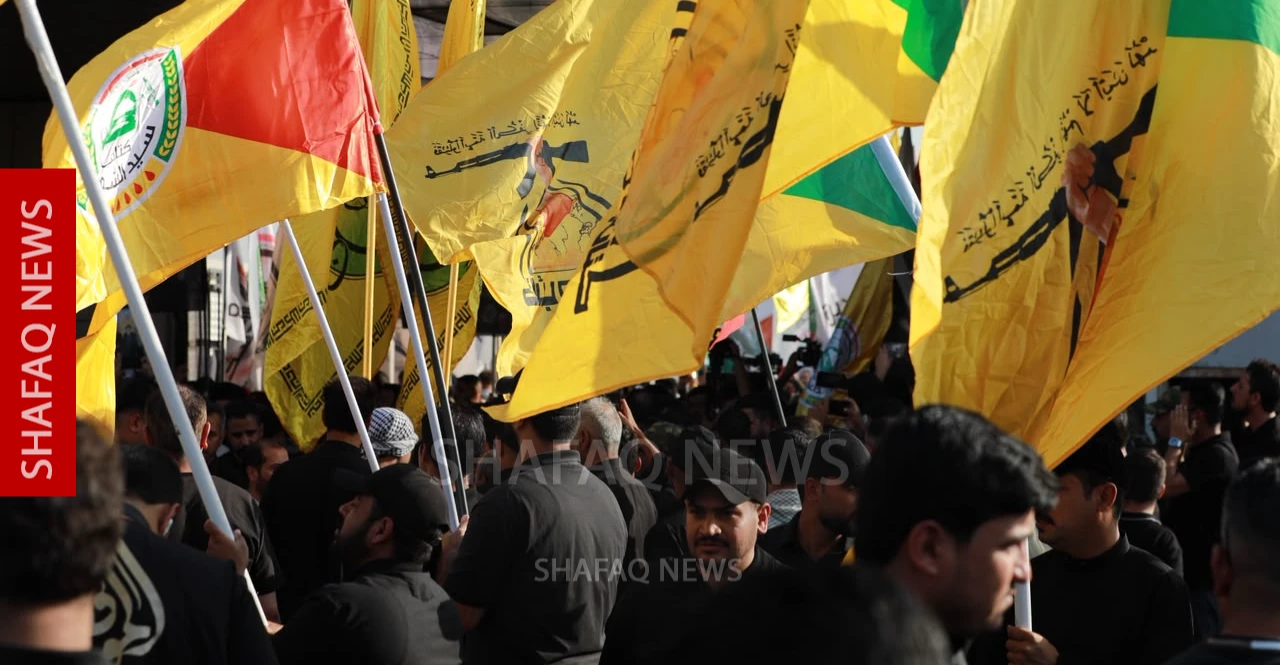
Since February 28, 2026, when the United States and Israel launched their war on Iran, Iraqi groups have claimed responsibility for hundreds of attacks on US bases and interests in Iraq and the region before their threats expanded to include Gulf states. Among the most prominent groups in this context are Kataib Hezbollah, which has repeatedly declared its affiliation with the Axis Of Resistance —the Iran-led regional alliance of allied states and armed groups— and adopted rhetoric hostile to the US presence; Harakat al-Nujaba, which maintains an armed wing and is considered one of the factions closest to Iran; and Kataib Sayyid al-Shuhada, which rejects relinquishing its military capabilities outside full state control.

Positions diverge, however, on the issue of restricting weapons to the state: some factions have shown willingness to engage politically or reorganize their relationship with the state, while others refuse to give up their arsenals, viewing them as part of their ideological and regional role. Asaib Ahl al-Haq, by contrast, has moved further into formal political life, placing it in a more delicate position between political engagement and retaining military influence.

Read more: Iraq's September deadline undercuts armed factions' case for weapons

Iran's Network of Influence

Observers interviewed by Shafaq News view these factions as part of a broader regional network backed by Iran, which uses them as leverage against the United States and its allies. Security expert and strategic analyst Alaa al-Nashou expressed that Iraq has become a "battlefield" because of the direct war between the United States and Iran that erupted on February 28, 2026, "with Tehran viewing the Iraqi arena as an influential card in any confrontation with Washington."

He noted that the presence of an "Iran-linked military arsenal inside Iraq," and its ability to strike targets Tehran considers relevant to the conflict, has made the country part of the wider regional confrontation equation. "The problem lies in the fact that some of the targets these factions strike are located inside neighboring Arab states bound to Iraq by ties, borders and agreements," he said, adding that this factor places Baghdad before legal and political responsibilities toward those states.

Iranian influence within parts of Iraq's security and military apparatus, he argued, has placed the government in a difficult position and given neighboring states, particularly Arab ones, justification to act against threats emanating from Iraqi territory. Al-Nashou noted that these factions "fall under the authority of the commander-in-chief of the armed forces" according to law and the constitution, placing the Iraqi government under a legal responsibility to prevent any military activity outside the state's decision.

"Any military action by neighboring states inside Iraqi territory represents a violation of Iraqi sovereignty, but respect for Iraq's sovereignty must be matched by Iraq's respect for the sovereignty of other states and by preventing its territory from being used to launch attacks against them."

Al-Nashou warned that continuation along this path risks dragging Iraq and its people into a conflict that serves no national interest, emphasizing that the country's distance from regional and international wars is "the pinnacle of patriotism."

The Language of Sovereignty

For their part, Iran-aligned armed factions reject characterizations of Iraq as an open arena for foreign interference.

Hussein al-Shihani, a member of the political bureau of the Sadiqoon Movement, led by Qais al-Khazali, refused, in an interview with Shafaq News, that Iraq is "a violable arena, nor a state without a decision," affirming that any assault on Iraqi territory constitutes an assault on its sovereignty.

"Iraq possesses institutions and armed forces capable of defending it," he said, stressing support for building a strong state and keeping the decision of war and peace exclusively in the government's hands. At the same time, al-Shihani insisted that calls for state-building should not be understood as weakness or retreat in the face of external threats. The factions, he said, "do not want escalation, but they do not fear it either," warning any party considering aggression against Iraq that it would bear the consequences, while calling for a more effective and prominent Iraqi diplomatic role commensurate with the scale of regional and international developments.

That confidence sits uneasily against the facts on the ground. Baghdad bears constitutional responsibility for forces it does not fully command, while its neighbors have shown they will strike inside Iraq without waiting for it to act, and the war between Iran and a US-Israeli coalition has narrowed the diplomatic space every party still invokes. Al-Zaidi's government has ordered committees and raised readiness, but whether it can close the gap between the state's formal authority and the factions' operational autonomy is the question the next attack, from whichever direction, will answer.

https://shafaq.com/en/Report/Iraq-under-regional-pressure-as-neighbors-threaten-to-strike-Iran-aligned-factions
🇮🇶🛡️ IRAQ IS STRENGTHENING ITS AIR DEFENSE!

 CHANNEL8 The Iraqi Prime Minister chaired a high-level military meeting to review air defense building and development plans and discuss pr...