Under a bilateral agreement between the KRG and Federal Ministries of Finance, permanent cash salary disbursements will completely cease after the final August 31 deadline, meaning salaried employees must complete their MyAccount registration and receive their bank cards to restore and receive monthly wages.
Starting August 31, the KRG is ending permanent cash salary payments. Employees must register with MyAccount, have a bank account, and receive their salaries through bank cards. 🏦💳
The goal is to move toward a more digital, transparent, and fully banked financial system, reducing dependence on physical cash and strengthening Iraq’s banking infrastructure.
🔥 ANALYSIS — WHY COULD THIS MATTER FOR THE DINAR RV?
This announcement does NOT confirm an RV, the removal of zeros, or a new exchange rate.
However, it represents another important step in the modernization of Iraq’s financial system. 🇮
🇶
💻 More salaries are moving into the banking system. 🏦 More money is flowing through financial institutions. 📊 Transactions become more traceable and transparent. 💰 Dependence on physical cash is reduced. 🔄 The financial system becomes better prepared for future monetary reforms.
If Iraq continues moving salaries, payments, and transactions into a digital banking system, it creates infrastructure that could make a future monetary or currency transition easier to implement
.
👀 The big question:
Could this banking digitization be part of the preparation for larger monetary changes in Iraq?
⚠️ IMPORTANT: This news does NOT confirm an RV. It is another piece of Iraq’s ongoing banking and financial reform process that deserves close attention.
🇮🇶💵 The financial infrastructure is changing. Now we watch for the monetary steps that may come next.
MarkZ says there has been sudden activity among currency and bond group leaders, particularly around the Reno area, with leaders contacting their teams and organizations over the past 24 hours.
📞 WHY THE URGENCY?
According to MarkZ, several group leaders believe they need to prepare now because developments appear imminent.
💰 Bond groups are reportedly very optimistic and believe something could release over the weekend, although MarkZ cautions that they may be premature.
🇮🇶 IRAQ CONNECTION
MarkZ also points to activity in Iraq, saying reports indicate the government is working to complete 9 remaining positions.
🏛️ Many believe completing the government formation is necessary before a new exchange rate can be implemented.
🔥 BOTTOM LINE
According to MarkZ, activity among currency groups, developments in Iraq, and expectations surrounding government formation are creating a heightened sense of anticipation.
⚠️ IMPORTANT: These are MarkZ’s opinions and reports from his sources—not official confirmation of a dinar revaluation or imminent release.
💵🇮🇶 THE QUESTION NOW: ARE THESE DEVELOPMENTS REALLY LEADING TO THE NEXT STAGE OF IRAQ’S MONETARY REFORM?
🇮🇶💵 IRAQI DINAR MONETARY REFORM: NEW DEVELOPMENTS, BANKING SIGNALS & WHAT COMES NEXT 🔥🏦
📰 LATEST UPDATE
Iraq’s monetary reform remains a major focus as the Central Bank of Iraq (CBI) continues financial and banking reforms.
🔒 The CBI has reportedly issued directives to freeze assets linked to senior officials accused of corruption, reinforcing efforts to strengthen financial controls.
💰 Iraq’s international reserves remain a key factor supporting exchange-rate stability.
🏦 The CBI has reportedly rejected claims that the “Delete the Zeros” project has been canceled, while discussions continue around the broader monetary reform process.
📅 SEPTEMBER 30, 2026 is being highlighted as an important political and reform milestone, involving government formation, militia disarmament, and broader economic reforms.
🔥 MONETARY REFORM: WHAT ARE WE WATCHING?
The discussion centers on:
💵 Removing three zeros 💴 Introducing lower-denomination banknotes 🏦 Modernizing Iraq’s banking system 🔎 Strengthening AML/CFT controls 💻 Expanding digital banking 🌍 Increasing international banking cooperation
⚠️ IMPORTANT: Claims about a specific new exchange rate, a 1:1 rate, or an imminent revaluation remain unconfirmed. The CBI remains the most important source for official monetary decisions.
🌎 INTERNATIONAL BANKING CONNECTION
The video also discusses cooperation involving major international banks and Iraqi financial institutions, as well as the expansion of banking services inside Iraq.
💡 THE BIGGER PICTURE
For Iraq to successfully modernize its currency, it needs more than new banknotes. It needs:
🧹 Cleaner banking systems 🔎 Greater financial transparency 💰 Strong reserves 🏦 Stronger banks 🌍 International compliance 💻 Modern payment infrastructure
🔥🇮🇶 BOTTOM LINE
The reform story is bigger than an exchange-rate change. Iraq is working toward a broader financial and economic transformation, and the coming months could be important for determining how quickly that process advances.
👀 Watch the CBI. Watch the reforms. Watch September 30.
🇮🇶🔥 IRAQ’S 2026–2029 GOVERNMENT PROGRAM: BANKING REFORM & MONETARY STABILITY TAKE CENTER STAGE! 💵🏦
📰 NEWS SUMMARY
Iraq’s Council of Ministers has approved the 2026–2029 Government Programme, covering 139 priorities across 14 key sectors, and has referred it to Parliament.
Among the major commitments are:
🏦 Reform of the state banking sector 💰 Establish a Supreme Council for Financial & Monetary Stability 💻 Launch a national digital transformation strategy 🧹 Strengthen institutional reform & anti-corruption 🚧 Unify and regulate border crossings
💼 Establish a Supreme Investment Council ⛏️ Expand non-oil investment and natural resources
🔥 WHY IS THIS IMPORTANT?
This is more than a general government plan. Several priorities directly involve the infrastructure needed for a modern financial and monetary system.
could create a stronger institutional foundation for future monetary reforms.
💵 WHAT ABOUT “DELETE THE ZEROS”?
⚠️ The article does NOT specifically announce the activation of “Delete the Zeros,” a new exchange rate, or a dinar revaluation.
However, the creation of a Supreme Council for Financial and Monetary Stability, together with state banking reform, is particularly noteworthy.
A major monetary transition would logically require:
🔎 Greater financial transparency 🏦 Stronger banks 💻 Modern payment systems 💰 Monetary stability 🧹 Better control of illicit funds 🏛️ A clear legal framework
🔥 THE BIGGER PICTURE
Iraq is now putting economic, banking, institutional and monetary modernization into a formal 2026–2029 government framework.
And with 13 pieces of legislation identified as priorities, the legislative component deserves close attention.
👀 The big question now is whether any of those priority laws will directly address monetary reform or the “Delete the Zeros” project.
🇮🇶💵 No RV has been announced—but Iraq is clearly building and restructuring important pieces of its financial system.
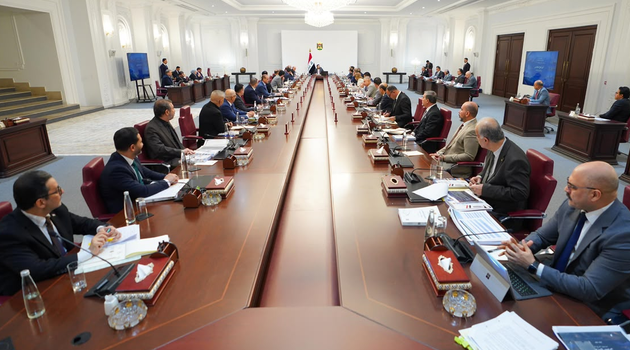
Iraq's Council of Ministers has approved the government programme for 2026-2029, covering 139 priorities across 14 key sectors, and referred it to the Council of Representatives in accordance with Article 38/First of the amended Council of Ministers Internal Regulations (No. 2 of 2019). The session was chaired by Prime Minister Ali al-Zaidi.
The 14 sectors covered by the programme are:
State sovereignty and national security
Economic and financial reform
Industry
Governance, institutional reform and anti-corruption
Health and medical services
Communications and information technology
Youth and sport
Foreign policy
Energy
Agriculture, water and the environment
Education
Social protection networks and poverty reduction
Human rights, women and children
Culture, tourism and antiquities
The programme also identifies 13 pieces of legislation as priorities. Key policy commitments include a comprehensive national institutional reform and anti-corruption programme, reform of the state banking sector, unification and regulation of border crossings, a national digital transformation strategy, and the establishment of a Supreme Investment Council and a Supreme Council for Financial and Monetary Stability.
Additional measures include consolidating security decision-making, expanding investment in non-oil minerals and natural resources, strengthening human rights frameworks, and developing leadership training programmes for women in government and political roles.
Peshmerga Secretary General told Channel8 while the current Coalition mission ends on September 30, the 2027 U.S. budget allocation for Peshmerga and federal forces remains under active debate, urging Erbil and Baghdad to create a unified system of drones and advanced radars to protect airspace.
🇮🇶🛡️ IRAQ’S SEPTEMBER 30 TRANSITION: SECURITY, SOVEREIGNTY & THE BIGGER REFORM PICTURE 🔥
📰 NEWS SUMMARY
The Peshmerga Secretary General told Channel 8 that the current U.S.-led Coalition mission ends on September 30, while the 2027 U.S. budget allocation for Iraq’s Peshmerga and federal forces remains under discussion.
He also called for Baghdad and Erbil to establish a unified drone and advanced radar system to better protect Iraq’s airspace. 🇮🇶🛡️
💡
OUR ANALYSIS
This development is primarily about security—not monetary reform.
However, it is significant because it points toward a broader transition in Iraq:
🇮🇶 Greater national sovereignty 🤝 Closer Baghdad–Erbil coordination 🛡️ Stronger control of Iraqi airspace 🏛️ Greater responsibility for Iraqi institutions 🇺🇸 A changing role for the international coalition
📅 WHY DOES SEPTEMBER 30 MATTER?
The end of the current Coalition mission could represent another important milestone as Iraq assumes greater responsibility for its own security.
🔥 And this connects to the bigger picture we've been watching:
A stronger and more unified Iraqi state creates a more stable environment for economic and financial reforms.
🇮🇶🏦 IRAQ INTENSIFIES BANKING CLEANUP: A STEP TOWARD “DELETE THE ZEROS”? 💵🔥
📰 NEWS SUMMARY
Iraqi banks are being required to strengthen the identification and reporting of unusual financial activity, including:
💰 Unexplained wealth 🌍 Unverified foreign transfers to high-risk areas 📈 Unexplained increases in assets or wealth 🚨 Transactions potentially linked to money laundering, corruption, or illicit financing
The goal is to strengthen financial controls and increase transparency throughout Iraq’s banking system.
🏦 WHAT IS THE CBI’S ROLE?
The Central Bank of Iraq (CBI) is the primary supervisor of Iraq’s banking system. Through its supervisory mechanisms and Anti-Money Laundering & Counter-Terrorist Financing (AML/CFT) framework, banks are expected to:
🔎 Identify suspicious transactions ✅ Verify the source of funds 📊 Monitor financial activity 🚨 Report suspicious operations 🧹 Help remove illicit money from the financial system
So, what we are seeing can reasonably be described as a banking-sector cleanup or financial-system cleanup, although this does not mean the CBI is personally investigating every account or individual.
🔥 WHY COULD THIS MATTER FOR “DELETE THE ZEROS”?
This is where the development becomes particularly interesting.
A major monetary reform requires a financial system capable of properly controlling and tracking the money circulating throughout the economy.
Before a potential monetary transition, Iraq would benefit from having greater clarity regarding:
💵 What money is inside the banking system
👤 Who controls those funds 🔎 Where the funds originated 🏦 Which transactions are legitimate 🚨 Which funds may be connected to illicit activity
This can help reduce the risk of illegal funds being introduced, converted, or legitimized during a major monetary transition.
From a technical perspective, this type of cleanup makes a great deal of sense before implementing a major monetary reform.
If Iraq intends to modernize its currency, reduce denominations, and transform the structure of currency circulation, having a more transparent and tightly controlled banking system would be highly beneficial.
It also fits within Iraq’s broader financial modernization goals, including digital payments, improved transaction traceability, stronger AML/CFT controls, and greater alignment with international financial standards.
⚠️ BUT LET’S BE PRECISE:
This news does NOT announce a revaluation of the Iraqi dinar.
It also does NOT confirm that “Delete the Zeros” is about to be activated.
What it does show is continued movement toward a banking system that is more regulated, transparent, traceable, and capable of supporting a modern financial economy.
🔥🇮🇶 THE BIG QUESTION
If Iraq continues removing weaknesses from its financial system and strengthening its banks, could this cleanup be part of the preparation required before eventually implementing “Delete the Zeros”?
For now, the answer is:
It is technically consistent with that preparation — but it is NOT official confirmation that the project is being activated.
💵🇮🇶 Iraq appears to be building the financial conditions necessary for a new stage of economic and monetary modernization.