Thursday, February 27, 2025

National Bank of Iraq wins the “Excellence Award” from “Citi Bank” in recognition of its outstanding performance, 28 FEB

  National Bank of Iraq wins the “Excellence Award” from “Citi Bank” in recognition of its outstanding performance

The National Bank of Iraq announced that it won the “Excellence Award” from Citi Bank, in recognition of its exceptional performance in managing incoming and outgoing financial transfers, stressing that this is an achievement that reflects its commitment to the highest standards of quality and transparency in banking services.

This award is a global testament to the bank’s efficiency in implementing financial operations with utmost precision, as it excels in ensuring that transactions are processed according to the highest international standards, while providing the required documents in the correct manner and on time.

This achievement reinforces the position of the National Bank of Iraq as one of the leading banks in the Iraqi banking sector, committed to providing reliable and effective financial solutions that meet the needs of its individual and corporate clients.

Commenting on this achievement, Ayman Abu Dahim, Managing Director of the National Bank of Iraq, expressed his pride and honor in the bank receiving this prestigious award, explaining that receiving this award reflects the bank’s tireless efforts and its firm commitment to providing banking services that are in line with the highest international standards, noting that the National Bank of Iraq believes that innovation and continuous development are the key to success, so it has worked to adopt the latest technologies to ensure the speed and efficiency of financial transfers, which provides its customers with a safe and reliable banking experience.

Abu Dahim praised the efforts made by the bank’s work team at all administrative and functional levels in providing the best banking services and achieving the highest levels of accuracy and transparency, stressing the bank’s commitment to continue developing its operations and strengthening its partnerships with global financial institutions, in a way that ensures the provision of advanced banking solutions that keep pace with the aspirations of our customers and contribute to supporting the national economy.

It is worth noting that the National Bank of Iraq is one of the leading private financial institutions in the Iraqi banking market, as it constantly seeks to provide innovative banking services that meet the needs of customers and enhance their confidence, by providing integrated financial solutions that support individuals and companies, while adhering to the best international practices in the banking sector  link

GOLDILOCKS UPDATE, 28 FEB

 GOLDILOCKS

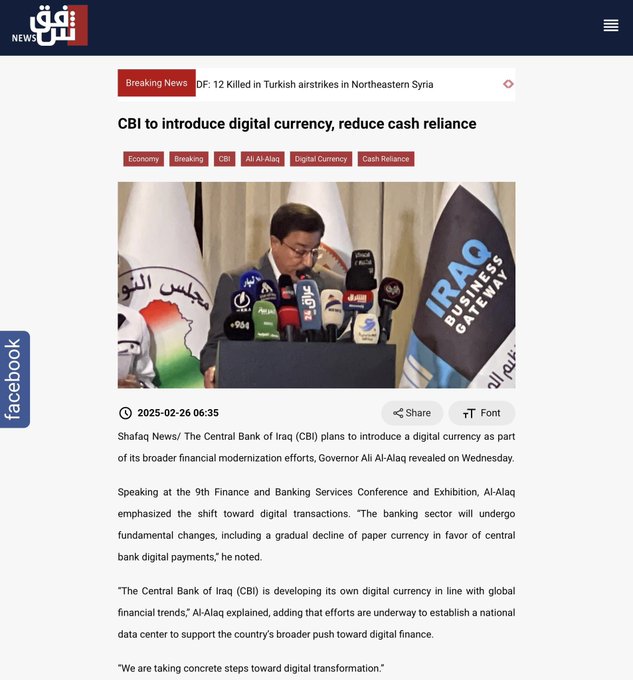
The Central Bank of Iraq announced the signing of a banking agreement with Emirates Islamic Bank. ...a mechanism that will allow individual customers of Iraqi banks in the near future to invest (partially) in Islamic bonds issued by Emirates Islamic Bank or other issuers with a similar credit rating in the United Arab Emirates."


For retail investors to invest in bonds of another country, understanding and managing currency exchange rates is crucial, as the value of the investment in your home currency will fluctuate based on those rates. 


Here's a more detailed explanation:


Currency Risk:

When you invest in bonds denominated in a foreign currency, you are exposed to currency risk, meaning your return on investment can be affected by changes in the exchange rate between the foreign currency and your local currency. 


Exchange Rate Fluctuations:

Exchange rates constantly fluctuate, and a weaker exchange rate for the foreign currency could mean a lower return when you convert your investment back to your local currency. 


Impact on Returns:

The returns on your foreign bond investment, including both principal and interest, will be converted back to your local currency using the prevailing exchange rate at the time of conversion. 


Hedging Strategies:

To mitigate currency risk, you can consider hedging strategies, such as using forward contracts or other derivative instruments, to lock in an exchange rate at the time of investment. 


Financial Institution Role:

Financial institutions, like Raymond James, will confirm foreign currency trades in the U.S. dollar equivalent and highlight the risks associated with this type of investment. 


As a retail investor, it's important to understand the potential impact of exchange rate fluctuations on your investment returns and to consider your risk tolerance when investing in foreign bonds. 


© Goldilocks


https://cbi.iq/news/view/2808


https://www.twentyfouram.com/education/fixed-income-101-comparing-yields-in-different-currencies#:~:text=Hedging%20the%20currency%20risk%20of%20a%20bond,done%20simply%20by%20using%20an%20FX%20forward.&text=Changes%20in%20monetary%20policy%20and%20exchange%20rates,when%20comparing%20relative%20value%20across%20different%20markets.


https://home.treasury.gov/data/treasury-international-capital-tic-system-home-page/help-files/frequently-asked-questions-treasury-international-capital-form-s-purchases-and-sales-of-long-term-securities-by-foreigners

MNT: WHAT WILL ALLOW THE IRAQ DINAR TO RI? @DINARREVALUATION #iraqidinarinvestor


Parliament will not be suspended" .. Parliamentary Legal Committee reveals the plan for sessions during Ramadan, 27 FEB

  Parliament will not be suspended" .. Parliamentary Legal Committee reveals the plan for sessions during Ramadan

Member of the Parliamentary Legal Committee, Mohammed Anouz, confirmed on Thursday that the Iraqi Parliament will not be suspended early due to the upcoming legislative elections, stressing that the Council has a moral and constitutional responsibility to continue holding its sessions and approving the remaining laws.

Anouz added to Shafaq News Agency that the first and second legislative chapters are sufficient to complete the reading, discussion and voting on many laws, stressing that the Council will resume its sessions next week.

He pointed out that Parliament sessions during the month of Ramadan will be in the evening, i.e. after breakfast, to ensure the continuation of legislative work before the end of the current session.

It is noteworthy that the current session of the Iraqi Council of Representatives began on January 9, 2022, and is scheduled to continue for four years, which means that it will end on January 8, 2026. 

According to the amended Electoral Law No. 12 of 2018, legislative elections must be held 45 days before the end of the parliamentary term. 

Accordingly, the next elections are expected to be held in late November 2025. 

Recently, the Independent High Electoral Commission began its technical and logistical preparations to ensure that the elections are held on the scheduled date, in coordination with the Prime Minister’s Office. link


MAJEED: THERE IS A DIGITAL IRAQI DINAR!!, 27 FEB

 MAJEED

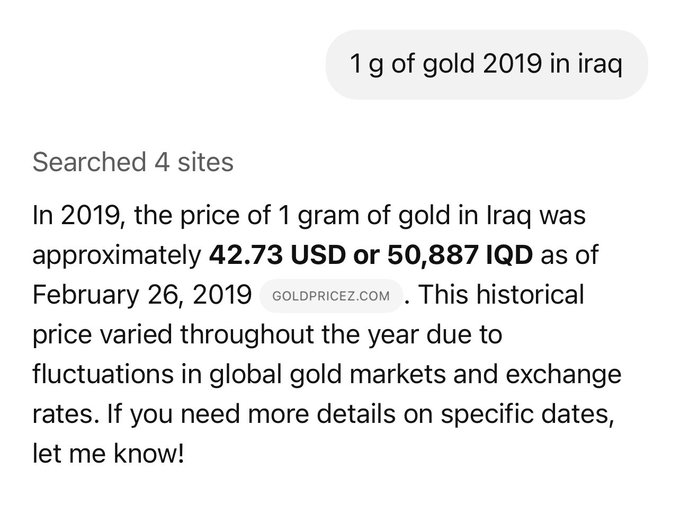
1- video from 2019 saying there is digital dinar and it will be back by 1 g of gold 2- 1 g of gold in Iraq in 2019 worth $42 3- did the calculation today it showed based on the reserve of Iraq and based on how much the IMF request from Iraq (back up your currency with 10% of your gold reserve)…..Ariel did the calculation and it got to $42 4-Iraq announced today they are releasing the digital Iraqi dinar the one they spoke about in 2019 saying it will be back by 1 g of gold worth $42
Image
Image
Quote
ȺɾìҽӀ
@Prolotario1
I will give you something directly from one of my sources for the 1st time without any input from me. You can play around with the math on your own time. Anon- As of February 2025, Iraq’s foreign reserves stand at approximately $740.7 billion USD, per Central Bank of Iraq (CBI) x.com/majeed66224499…
Show more
Image


Frank26: RIght now WE ARE waiting for the new exchange rate! #iraqidinarinvestor #dinarrevaluation


Is Iraq facing a cash crisis?, 27 FEB

 The amount of money sold, domestically and internationally, by the Central Bank in dollars this year has exceeded $62 billion, resulting in the receipt of dinars in equivalent proportion, averaging approximately 80.6 trillion dinars for the year. Non-oil revenues generated from taxes, fees, and customs by the end of October 2024 amounted to 14.3 trillion dinars. Combined, these revenues total around 95 trillion dinars. However, by the end of October, Iraq's total expenditures had reached 122 trillion dinars. With two months of expenditures still unaccounted for, it is evident that the dinar reserves derived from oil-based dollar revenues have been exhausted. 


This comes despite reports from the Central Bank's Foreign Currency Selling Window, which indicate that total transfers abroad (remittances and credits) this year have reached the highest level in seven years—34% higher than last year. Similarly, dinars returned to the Central Bank and subsequently to the Ministry of Finance in proportion to this increase. So why is there talk of a cash shortage affecting the distribution of December salaries for some ministries in Baghdad and the November salary allocations for the Kurdistan Region?

According to reports from the Iraqi Ministry of Finance on revenues and expenditures, total expenditures for the first nine months of this year amounted to 94.5 trillion dinars, including 85 trillion dinars in operating expenses and 9.5 trillion dinars in investment expenses. However, according to the Ministry of Finance's October report, total expenditures had climbed to 122.7 trillion dinars, with operating expenses accounting for 100.6 trillion dinars and investment expenses rising to 22 trillion dinars.

Looking back at previous months, it becomes evident that average monthly expenditures ranged between 10 and 11 trillion dinars. For instance, total expenditures from the beginning of the year to July were 73 trillion dinars, increasing to 83 trillion dinars in August and 94 trillion dinars in September—demonstrating consistent monthly spending within this range. However, expenditures surged dramatically in October, reaching 28.2 trillion dinars and bringing the total for the year to 122 trillion dinars by the end of that month. This significant jump was driven by increases in both operating and investment expenditures. Operating expenditures, which typically ranged from 9 to 10 trillion dinars per month, rose to 15.6 trillion dinars in October, while investment expenditures, previously averaging 1 trillion dinars per month, soared to 12.6 trillion dinars in the same period.

As a result of the excessive expenditures in October, the Ministry of Finance now lacks the cash needed to cover expenses at the end of the year. October's spending was nearly triple the average monthly expenditure of previous months.While total revenues for the first 10 months exceeded expenditures, 

converting the full oil revenue—received in dollars—into Iraqi dinars or conducting domestic transactions in dinars has not been feasible which is due to government policies mandating that all domestic transactions must be conducted in dinars, while foreign transactions must be conducted in dollars and processed through remittance.

According to the Iraqi Ministry of Finance, October's expenditures rose so significantly that the total amount of dinars generated from selling dollars domestically and internationally, combined with non-oil domestic revenues, was insufficient to cover the spending. Total expenditures for the month reached 28 trillion dinars, approximately 18 trillion dinars more than in previous months. It remains unclear how the Ministry of Finance plans to manage expenses for the remainder of the year, as 95% of Iraq's currency is held outside the banking system, which amounts to 95.5 trillion dinars out of a total of 101.3 trillion dinars by the end of November 2024.

The underlying issue here highlights the weaknesses in Iraq's monetary system and the absence of a coherent expenditure and revenue policy. Despite having not spent 60% of its allocated budget, the Ministry of Finance is already encountering significant challenges. Had the budget been fully implemented as planned, cash shortages would likely have arisen mid-year rather than at year-end.

In conclusion, is it true that Iraq has cash problems? Yes, Iraq is indeed facing cash problems. However, these issues are not caused by low oil revenues, declining oil prices, or a shortage of money or dollar issuance. Instead, the root cause lies in the government's economic expenditure policy, which allowed spending to surge by approximately 300% in a single month.


HCL may need a stronger Iraqi dinar due to inflation, cash control & reform pressures #iqd #HCL#iraq

  Follow & Join Our Community 📌 BLOG:  https://dinarevaluation.blogspot.com/ 📌 TELEGRAM:  https://t.me/DINAREVALUATION 📌 X (TWITTER):...